A young group of actors are preparing an updated version of Shakespeare's ROMEO & JULIET. Two boys perform the central roles - both of them struggling with their own questions of love alongside their roles on stage. And as rehearsals begin, reality soon starts to interfere with the play.
A group of people are standing along the platform of a railway station in La Ciotat, waiting for a train. One is seen coming, at some distance, and eventually stops at the platform. Doors of the railway-cars open and attendants help passengers off and on. Popular legend has it that, when this film was shown, the first-night audience fled the café in terror, fearing being run over by the "approaching" train. This legend has since been identified as promotional embellishment, though there is evidence to suggest that people were astounded at the capabilities of the Lumières' cinématographe.
A behind the scenes featurette focussed on Hammer Film Productions' 1971 film 'Doctor Jekyll & Sister Hyde.'
Working men and women leave through the main gate of the Lumière factory in Lyon, France. Filmed on 22 March 1895, it is often referred to as the first real motion picture ever made, although Louis Le Prince's 1888 Roundhay Garden Scene pre-dated it by seven years. Three separate versions of this film exist, which differ from one another in numerous ways. The first version features a carriage drawn by one horse, while in the second version the carriage is drawn by two horses, and there is no carriage at all in the third version. The clothing style is also different between the three versions, demonstrating the different seasons in which each was filmed. This film was made in the 35 mm format with an aspect ratio of 1.33:1, and at a speed of 16 frames per second. At that rate, the 17 meters of film length provided a duration of 46 seconds, holding a total of 800 frames.
A young woman of the Tarahumara, well-known for their extraordinary long distance running abilities, wins ultramarathons seemingly out of nowhere despite running in sandals.
The camera slowly pans through a room as Smolders offers various observations and memories.
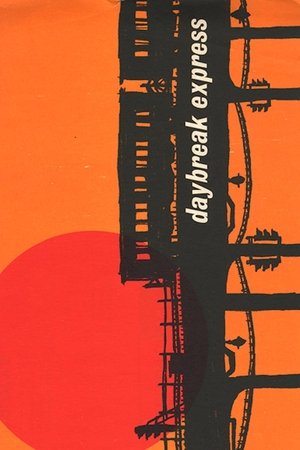
Set to a classic Duke Ellington recording "Daybreak Express", this is a five-minute short of the soon-to-be-demolished Third Avenue elevated subway station in New York City.
The Man Killers
Made for screening at the U.S. Pavilion at the 1974 World's Fair in Spokane Washington, USA, which had a Native-American environmental theme, MAN BELONGS TO THE EARTH depicts the history of air, water, and earth pollution, and how environmentalists are trying to solve these problems using various technologies.
Young men are faced with a medical commission for army recruits and asked to choose where they want to get to, at least theoretically.
The 1966 visit of Hollywood movie star Kirk Douglas at the legendary Polish State Film School in Lódz.
A satirical look at the Soviet-block hairdressing contest which was held in Warsaw in 1971.
An overview of the making of Rocky Balboa (2006)
An investigation of how Hollywood's fabled stories have deeply influenced how Americans feel about transgender people, and how transgender people have been taught to feel about themselves.
Shot in 1960 on the set of Jonas Mekas' 'Guns of the Trees'. Dedicated to Ron Rice.
The documentary »I Choose to Live« presents a touching confession of a young girl who after losing her mother, tried to end her life. Later on she struggled with self-destructive behaviour and also an eating disorder. In this documentary the young girl is portrayed by the actress Nina Rakovec. The theme of mental health of youngsters is highlighted with the help of the professional counsellors.
Calçada
Natalia Tena guides viewers on a behind-the-scenes look at the filming of Harry Potter and the Order of the Phoenix.
They set off, looking for work in far-off places, but disappeared along the way. Inspired by Shiv Kumar Batalvi’s “birha” poetry, the film traces the longing on both sides: on the part of those who are missing, and those that wait for them to return.
This is an animated documentary about FOOD! I interviewed vegetarian, vegan, pescetarian and meat eater about their opinions about food and life choices. Then I animate real food with stop-motion technique based on the interviews. By putting the conversations in different context, the food speak for themselves.