Director Guy Hamilton and several of the stars of Agatha Christie's "Evil Under The Sun" walk you through the making of the film.
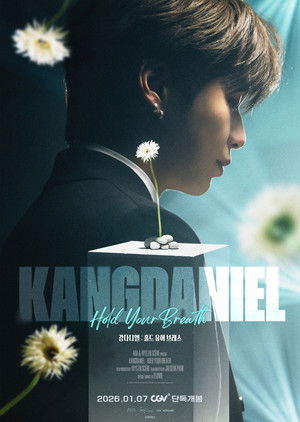
The finale of the LOVE YOURSELF Tour attended by 2.06 million people through 62 concerts in 24 cities around the world, spectacular performances and special effects that filled the Seoul Jamsil Olympic Stadium and the live atmosphere of the last day of the LOVE YOURSELF Tour.
Documentary about the making of the sequel to Superman.
A collection of music videos and behind the scenes footage released to promote Kanye West's upcoming debut album, College Dropout. The compilation features the videos to the previously unreleased "Two Words", "Slow Jamz", "Through the Wire", "All Falls Down", the three versions of "Jesus Walks", and "The New Workout Plan", all previously unseen before its release.
54-minute long documentary on the making of Frank Henenlotter's cult classic, Brain Damage.
When Francois Truffaut approached Alfred Hitchcock in 1962 with the idea of having a long conversation with him about his work and publishing this in book form, he didn't imagine that more than four years would pass before Le Cinéma selon Hitchcock finally appeared in 1966. Not only in France but all over the world, Truffaut's Hitchcock interview developed over the years into a standard bible of film literature. In 1983, three years after Hitchcock's death, Truffaut decided to expand his by now legendary book to include a concluding chapter and have it published as the "Edition définitive". This film describes the genesis of the "Hitchbook" and throws light on the strange friendship between two completely different men. The centrepieces are the extracts from the original sound recordings of the interview with the voices of Alfred Hitchcock, Francois Truffaut, and Helen Scott – recordings which have never been heard in public before.
Gary Russell of Marvel Comics' Doctor Who Magazine investigates the world of BBV. In a relatively short space of time and with relatively small amounts of money, Bill Baggs has produced a series of videos which have a special appeal for Doctor Who fans. Stranger Than Fiction looks at the development of BBV's production techniques, through story, rehearsal and shooting. There's a chance to discover the origins of the scripts, as well as to see lost scenes from the Stranger videos and The AirZone Solution. This fascinating behind the scenes story is told with revealing, on the spot Hi-8 footage, together with exclusive star interviews.
In January 1996 filming began on a new episode of Doctor Who set in San Francisco, but shot in Vancouver, Canada. Sylvester McCoy flew out to join the production team to re-create his role as the Seventh Doctor and to hand over to Paul McGann. In this behind-the-scenes video diary, Sylvester gives us a personal account of his final days as the famous Timelord. Reminiscing about the "old days" and drawing comparisons with the experience of working on this latest adventure, he talks to Paul McGann, Daphne Ashbrook (Dr Grace Holloway) from the new production and Anneke Wills (Polly) from the show's past. All shot on Hi-8 camcorder.
This documentary is featured on the DVD for Captain Blood (1935), released in 2005.
In 1928, as the talkies threw the film industry and film language into turmoil, Chaplin decided that his Tramp character would not be heard. City Lights would not be a talking picture, but it would have a soundtrack. Chaplin personally composed a musical score and sound effects for the picture. With Peter Lord, the famous co-creator of Chicken Run and Wallace & Gromit, we see how Chaplin became the king of slapstick comedy and the superstar of the movies.
A documentary incorporating footage of Montgomery Clift’s most memorable films; interviews with family and friends, and rare archival material stretching back to his childhood. What develops is the story of an intense young boy who yearned for stardom, achieved notable success in such classic films as From Here to Eternity and I Confess, only to be ruined by alcohol addiction and his inability to face his own fears and homosexual desires. Montgomery Clift, as this film portrays him, may not have been a happy man but he never compromised his acting talents for Hollywood.
Jacqui Getty's behind-the-scenes look at Gia Coppola's directorial debut Palo Alto, starring Emma Roberts, James Franco, Jack Kilmer, Nat Wolff, and Val Kilmer.
This one hour TV special promoting the release of Can't Stop the Music featured the film's stars (The Village People, Valerie Perrine, Steve Guttenberg and Bruce Jenner) with guest appearances by Cher, Hugh Hefner and others.
Amateur and professional bodybuilders prepare for the 1975 Mr. Olympia and Mr. Universe contests as five-time champion Arnold Schwarzenegger defends his Mr. Olympia title against Serge Nubret and the shy young Lou Ferrigno.
Released two years after James Dean's death, this documentary chronicles his short life and career via black-and-white still photographs, interviews with the aunt and uncle who raised him, his paternal grandparents, a New York City cabdriver friend, the owner of his favorite Los Angeles restaurant, outtakes from East of Eden, footage of the opening night of Giant, and Dean's ironic PSA for safe driving.
The story of Leon Vitali, who surrendered his promising acting career to become Stanley Kubrick's devoted right-hand man.
Ahead of the release of upcoming fantasy film ‘Black Adam’, sit down with Dwayne Johnson as he discusses his starring role as the eponymous superhero.
On The Red Carpet presents an in-depth look at the making of All of Us Strangers.
Working men and women leave through the main gate of the Lumière factory in Lyon, France. Filmed on 22 March 1895, it is often referred to as the first real motion picture ever made, although Louis Le Prince's 1888 Roundhay Garden Scene pre-dated it by seven years. Three separate versions of this film exist, which differ from one another in numerous ways. The first version features a carriage drawn by one horse, while in the second version the carriage is drawn by two horses, and there is no carriage at all in the third version. The clothing style is also different between the three versions, demonstrating the different seasons in which each was filmed. This film was made in the 35 mm format with an aspect ratio of 1.33:1, and at a speed of 16 frames per second. At that rate, the 17 meters of film length provided a duration of 46 seconds, holding a total of 800 frames.
This colorful documentary chronicles the events of the 1968 Winter Olympics in France. The events made international celebrities of skater Peggy Fleming and skier Jean-Claude Killy for their gold-medal performances. The camera accurately catches the speed of bobsleds and downhill racers and ski jumpers as they race for the gold. President Charles DeGaulle is shown observing the action over 13 days, which saw France earn the best performance to date in the winter games.