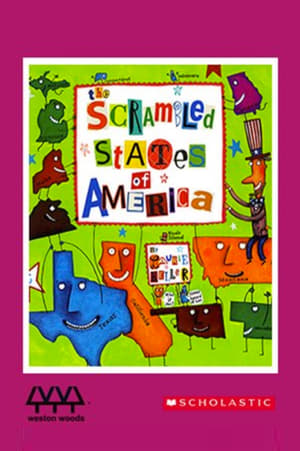
Disenchanted with their fixed places on the map, the states swap spots in hopes that each can get to see a different part of the country and do something different for a change.
Slated for inclusions on the Boston based Infinity Factory educational program alongside Map Projections, Digging to China explores a familiar childhood activity on a global scale.
Un jour en Italie
Explores the distinctive features of the major rivers of the continent, and discusses their contributions to the farming, recreation, transportation and hydroelectric power of North America.
Many geneticists and archaeologists have long surmised that human life began in Africa. Dr. Spencer Wells, one of a group of scientists studying the origin of human life, offers evidence and theories to support such a thesis in this PBS special. He claims that Africa was populated by only a few thousand people that some deserted their homeland in a conquest that has resulted in global domination.
Decolonising the Curatorial Process is a forty-minute documentary which explores decolonial strategies in an academic and curatorial context. The film features academics, activists and practitioners, and contains case studies of institutions that are deploying critical, self-reflective forms of curatorial practice. The Museum of London Docklands exhibition on slavery and the sugar industry is examined as an example of how an institution can decolonise the curatorial process, utilise the work of artists in a museum context, and critically examine East London's imperial history. The Pitt Rivers museum in Oxford, who are working with Maasai activists from Kenya and Tanzania on a project centred on repatriating the museum's collection of sacred Maasai artefacts, also features in the film.
Země jihu – Vietnam
Před velkými dešti
It shows the Neretva river from its source to the shores of the Adriatic Sea. The document also captures the original four-hundred-year-old bridge in Mostar.
Od severu k jihu
This short-length documentary takes us to Agadir, a city in Morocco that was struck by an earthquake in 1960. The film, made by an expatriate Moroccan who lost family and friends in the disaster, is a memorial to that tragedy and to the past he left behind when he came to North America. Partly allegorical, it employs varying techniques to offset reality from fantasy sequences.
Presents a geographic overview of the Rocky Mountain region. Discusses the significant role that this region of natural resources has played in the development of the continent
Echoes from the Tian Shan
A New Yorker journeys to the jungle in the Darien Gap of Panama to reconnect with an indigenous tribe he met and photographed 20 years ago. Their reunion highlights the profound power of photos and the human connection that transcends cultural barriers.
This documentary shows the characteristics and location of major plains and plateaus of North America, and discusses some of the ways in which they have affected man's use of the land.
Although it crosses six countries and is over 3,500 kilometers long, the Zambezi is one of the least known rivers in the world. So it's time to take to the water and discover this mystical, ever-changing river, whose mood changes from day to day, kilometer to kilometer, and which is the very essence of life for millions of animals and people in this often drought-stricken, water-scarce region!
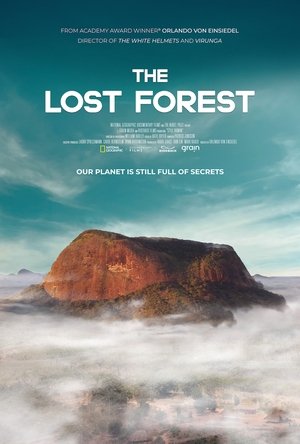
How would natural habitats develop without human interference? In this documentary we follow an international team of scientists and explorers on an extraordinary mission in Mozambique to reach a forest that no human has set foot in. The team aims to collect data from the forest to help our understanding of how climate change is affecting our planet. But the forest sits atop a mountain, and to reach it, the team must first climb a sheer 100m wall of rock.
Minnesota: A History of the Land vividly brings to life the epic story of the people and landscapes of Minnesota. From the retreat of the last ice sheets to the growth of today’s suburbs – the series seeks to entertain as it enriches our understanding of Minnesota’s past, present, and future. A visually stunning and groundbreaking 4-part documentary series featuring nature videography from across the state, never before seen historic images, state-of-the-art animations and historic recreations. Original soundtrack by award-winning composer, Peter Ostroushko.
The Gold Rush, Phoenicia as a sea power, political change in Africa, and the Panama Canal are some of the topics considered in showing how different kinds of maps can be used to gain insights into events and patterns of history.
Choque de Civilizações