The second version of the American television game show.
Two families go head to head as they try to name the post popular answer to survey-based questions posed to 100 people for a chance to win a jackpot prize.
Holly & Stephen's Saturday Showdown is a CITV children's game show show which was broadcast on the ITV Network from January 2004 to July 2006.
Family Feud: La batalla de los famosos
Wer weiß denn sowas?
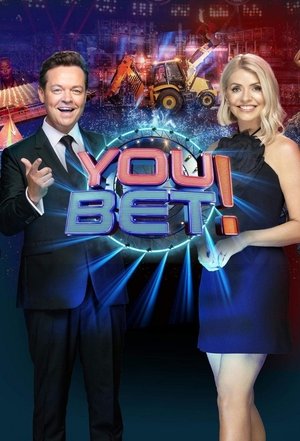
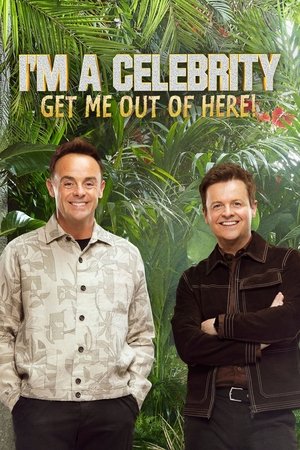
A gameshow hosted by Ant and Dec filled with stunts, sketches, and special guest appearances.
A game show based on the Carmen Sandiego computer game series created by Brøderbund Software.
Blockbusters is a British television game show based upon the American game show of the same name in which contestants answer trivia questions to complete a path across or down a game board of hexagons.
Blankety Blank is a British comedy game show based on the 1977–1979 Australian game show Blankety Blanks. The British version ran from 18 January 1979 to 12 March 1990 on BBC One, hosted first by Terry Wogan and later by Les Dawson. Regular members of the celebrity panel on this version included Kenny Everett, Lorraine Chase, Gareth Hunt, Gary Davies, and Cheryl Baker. A revival fronted by Lily Savage was produced by the BBC from 26 December 1997 to 28 December 1999, followed by ITV from 7 January 2001 to 10 August 2002. This version was produced by Grundy, then Thames.
Wizarding World fans put their Harry Potter knowledge to the test for the ultimate honor to be named House Cup champion.
50/50 was a British children's game show that was broadcast on BBC1. It was broadcast from 7 April 1997 to 12 July 2005. Two schools in the UK put forward 50 students, each child given a number from 1–50 which they wear during the show, before each round a random number generator picks which students will take part in the next game. The t-shirt colours were originally green and orange but this was changed to blue and yellow. They sit opposite each other in raised seating while the game takes place in between them. Most of the children will not get an opportunity to play in a game, but there are question rounds and observation rounds where points are won by the number of correct answers. The games usually consist of inflatable obstacle courses similar to those found in Get Your Own Back, Fun House and Run the Risk.
Games World was an entertainment video games show that was broadcast on Sky One each weekday from 1 March 1993–2 October 1998. The overall concept of Games World was similar to GamesMaster.
Strike it Lucky was a popular British television game show from 29 October 1986 to 23 August 1999, originally produced by Thames Television for ITV, and presented by the British comedian Michael Barrymore. It was based on the American show of the same name that aired in 1986. In its formative years, it became well known for the outlandish and often highly eccentric contestants it featured - Barrymore would often spend over 5 minutes talking to them. The introductory footage of the prizes on offer were also noteworthy, often filmed in black-and-white with a slapstick style. In 1987, it was the fifth most watched programme on UK television. The Thames Television version of the show was recorded at Teddington Studios, and later Pinewood Studios. From 1996, the new version aired under the title Strike it Rich!; this being the title of the short-lived American game show Strike it Rich! on which it was based, and it moved to The London Studios. The reason for the name change was that the show was now being co-produced by LWT with Fremantle, so despite now being owned by the same company as Fremantle, Thames were unwilling to allow LWT use of the original title. There is also the factor that when the show was first exported to the UK, the Independent Broadcasting Authority's prize limits were still in place, and "Rich" was probably dropped from the title because of the relatively low value of prizes on offer; by the time it returned as Strike it Rich! the limits had been lifted and it was giving away a substantially higher value of prizes.
Stephen Mulhern hosts this remake of the 1980's game show where contestants have to guess a catchphrase based on animated picture clues. The puzzle is revealed one square at a time. It could be a book, a movie or a catch phrase. The winner with the most money can go on to win up to £50,000.
Four participants, two teams and one premise: don't drop the ball. English actor and comedian Paddy McGuinness presents this new game show, that combines brains with physical abilities. A new twist to the classic question-answer game show. If the participants answer correctly, then the ball will fall directly on them. However, if they provide the wrong answer, they will have to run so they can catch the ball before it touches the ground, and stay in the competition to win the grand prize of 10,000 pounds.
Le Juste Prix is a French adaptation of the American game show The Price Is Right that airs on TF1. It first premiered in 1988 and ran until the original version was canceled in 2001. In 2002 a brief sequel, Le Juste Euro, ran on France 2 and was hosted by Patrice Laffont, it only ran for two episodes. On July 27, 2009 a new version of Le Juste Prix premiered on TF1. The current version is hosted by Vincent Lagaf with Gerard Vivès as announcer.
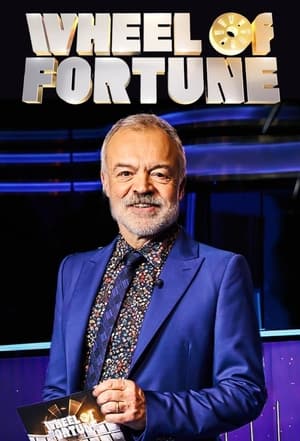
This game show sees contestants solve word puzzles, similar to those used in Hangman, to win cash and prizes determined by spinning a giant carnival wheel.
GamesMaster was a British television show, screened on Channel 4 from 1992 to 1998, and was the first ever UK television show dedicated to computer and video games.
The Mole is a reality television game show which was originally created in 1999 by Woestijnvis. It was conceived by Michiel Devlieger, Bart de Pauw, Tom Lenaerts and Michel Vanhove, and won the famous Rose d'Or in Montreux, Switzerland, in 2000. The format has been licensed in 40 countries from all around the world. The show aired on TV1 (now VRT 1) for 3 reasons between 1998 and 2003; in 2016 it was revived and moved to VIER (now Play4).