Directed by Jean-Marc Boivin in 1977, Glace Extrême is a documentary about mountaineering and extreme skiing at the Aiguille Verte and the Grand Pilier D'angle in the Mont-Blanc massif chain in France, with the legends of mountaineering Jean-Marc Boivin, Patrick Gabarrou and ski champion Patrick Vallencant. It was broadcast in the Carnet de L'Aventure on France 2 in 1980.
Refuges
Paragot and Bérardini: two climbers who fill all climbing enthusiasts with admiration. In Fontainebleau, Saussois, the Alps, the Andes, the Himalayas, and all over the world, they have left their names attached to the most difficult routes and the most prestigious peaks. Here, they recount only the climbs they completed together: famous expeditions to Aconcagua and Huascarán, firsts in the Alps and the Dolomites. An unwavering friendship, comical and tragic adventures—this is what they share with us in the warm atmosphere of their memories. "La Cordée des Voyous" will be included in Jean Afanassieff's film "La Grande Cordée," which deals with post-war proletarian mountaineering.
Pierre Mazeau has managed to unite three of his passions which seem to have nothing in common, at a very high level: mountaineering, jurisprudence and policy. The Everest mountaineer, rescued from the Freney Pillar, the passionate jurist, the former sports minister, privy counsellor, and president of the French Constitutional Court is a charismatic personality. This sensitive film portrait follows a line, which Pierre Mazeaud himself has quoted: “Alpinism belongs to those who provide themselves with means to reach their goals, to those who are fully committed to a goal, to those, who know the value of solidarity of men, and to those who are aware that true human existence can only be fulfilled by proceeding with a team of roped-partners.”
Chamonix - Mont Blanc, Une histoire de conquêtes
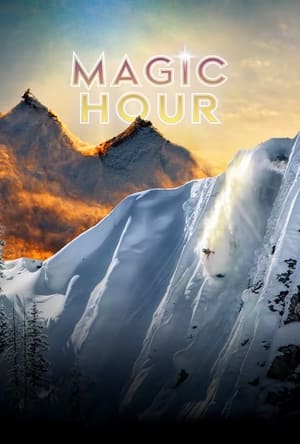
From the mind of Chris Benchetler comes TGR's latest short film collaboration. Improvisation is the silver thread that weaves this crew together. Just as the Grateful Dead did not fit their music into an established category, this short film finds a cast of some of the world’s best athletes on a spontaneous journey of skiing, snowboarding, surfing, and music, complete with a soundtrack comprised of only Grateful Dead music.
Nicolas Jaeger, a French physician specializing in sports and high-altitude physiology, conducted an experiment by spending two months on the highest peak in the Peruvian Andes, Huascarán. From July to September 1979, Nicolas Jaeger lived alone for 60 days at an altitude of 6,700 meters and studied the effects of hypoxia on his body. He documented his experience on film and later in his book, "Carnet De Solitude," published in 1979.
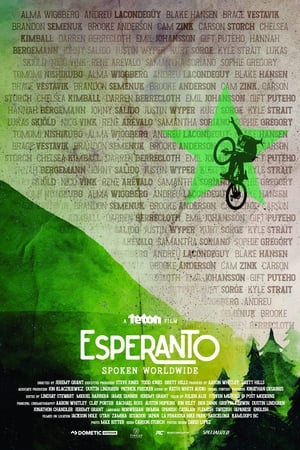
Esperanto is TGR’s latest action-packed mountain bike film with an added twist. Mixing the rock stars of the sport with a cast of unknown and up-and-coming heroes, the film explores how we share our dreams through a universal two-wheeled language no matter what our native tongue may be. The sacred ritual of the ride might sound different all across the world – whether it’s a full-face getting pulled down to drop into a big jump line or wheeling a beat-up bike out of a mud hut to pedal to school – but it’s a universal process no matter what language we speak. There are more than 7000 languages spoken on Earth. In 1887 a Polish-Jewish doctor named L.L. Zamenhof created a new one, a universal second language based on a combination of existing widely-spoken European languages. Its goal, to help bring people together from different ideologies, beliefs, and nations and ultimately to help end war. The language was called Esperanto. Translated into English it means ‘one who hopes.’
Film about the 10th Olympic Games in Grenoble in 1968. Using a subjective camera, Ertaud and Languepin take the pulse of the Games, cutting out the eyes and slowing down the movement when necessary. The dominant figure at the Grenoble Winter Games is Frenchman Jean-Claude Killy, whose three gold medals matched Toni Sailer's 1956 feat. The filmmakers bet on his winning streak, and include commentary from him as he prepares for each race. Another athlete, Marielle Goitschel, is treated insightfully on screen and wins the women's slalom. Ice dancing fans will appreciate the coverage of winner Oleg Protopopov and his partner Ludmila Belousova. President Charles De Gaulle was present for the spectacular Opening Ceremony.
The story of Enrique Herreros (1903-1977), cartoonist, advertiser, poster designer, talent manager, actor, producer and filmmaker, and the most daring of mountaineers; the man who, along with his companions from the so-called “other Generation of '27,” brought Hollywood to Madrid's Gran Vía, turning a grey and sinister post-war city into the capital of an incipient and ambitious cultural industry.
Petit Suisse
At once a high-level musician, member of the October Group, entertainer, theater artist, film actor, mountaineer, and skier, Maurice Baquet, always on the move, structured his life around two common threads: the cello and the mountains. He once defined himself as a "cellist-skier," "all alone" in this category, which prompted James Couttet, world ski champion, to say: "Of all the skiers I know, he's the best cellist." Echoing this, Professor at the Conservatoire National Supérieur, André Navarra, added: "Of all the cellists I know, he's the best skier." Throughout his varied yet coherent career, Baquet helped to project a joyful and artistic image of the mountains. Who better to talk about Maurice and all his adventures than his alter-ego: Cérébos, the faithful cello that never left his side? From Paris to Chamonix, from the stage to the granite slabs and snowy slopes, this film follows Cérébos, crossing the century and above all... smiling!
A team of 12 men, 5 sailors, a doctor, a writer, a film crew, and 3 mountaineers, Jean-Marc Boivin, Thierry Leroy, and Dominique Marchal, set off by sailboat from Mar del Plata in Argentina to reach Riso Patron in Chile, via the Strait of Magellan, the Patagonian Channels, and Falcon Fjord. Their goal is to climb Riso Patron and then make the first crossing of the Campo de Hielo Sur glacier, or Hielo Continental Patagónico, to meet up with the sailors in Puerto Williams on Navarino Island in Chile, a village at the end of the world. After three attempts and an accident for Leroy, who was repatriated, they gave up, crossed the glacier and rejoined the boat, to set off for Cape Horn to climb the South face, knowing that the weather was good one day a month... On January 20, 1983, Jean-Marc Boivin and Dominique Marchal succeeded in making the first ascent of the South face of Cape Horn.
After suffering a catastrophic and almost fatal spinal cord injury, professional rugby player Ed Jackson's world changed forever. Follows Ed's journey on his recovery as he achieves the mental and physical heights of Snowdonia, the Alps and Himalayas to the life-altering challenges closer to home.
Georges Livanos, nicknamed the Greek but pure child of Marseille, amateur mountaineer, opened more than 500 routes in the Calanques, 40 in the Dolomites, and repeated many of the greatest routes in the Alps in the company of the best climbers of his time, d friends, and especially his wife Sonia. He is also the author of the classic "Beyond the vertical". This report follows for a day the legend, still 71 years old, of his apartment in the Marseille city in the Calanques. As a true Provençal, he speaks without filter of the exploits that made him famous, gives his opinion on modern climbing and on life in general: the portrait of a great climber and above all of a fascinating character with a sense of humor sharp.
The ski film 'Butter' was produced, filmed and edited by Constantine Papanicolaou aka CP. The movie documents the sport of skiing in Lake Tahoe at the turn of the century when it was going through a very big change from it traditional history. This movie features the skiing of Peter Tanksersley, Shane Anderson, Jamie Burge, Charlie Smith, Ricky Gotterdam, Chris Elardo, Tom Cooley, Todd Loveless, Brian Lungren, Casey Hakansson, Clint Fiala, Drew Campbell, Brett Webb, June Ide, Hart Eddy, Travis Ramos, Kyle Needham, David Keam, Rodd Adams, Kent Kreitler, and Chris Mathews.
Biography of ski instructor, mountain guide, mountaineer and filmmaker-lecturer Lionel Terray. Film-portrait of an emblematic figure of French mountaineering in the 1950s and 1960s, reconstructing the life, the great races and the expeditions of the "conqueror" of the most difficult walls and summits of Europe, the Himalayas, the Andes and North America. Marcel Ichac produced in 1966, the day after the Gerbier accident, this illustrated tribute by bringing together personal archive documents, unpublished animated sequences or extracts from expedition images as well as comments taken from the autobiographical texts of Lionel Terray " The Conquerors of the Useless" and "Battle for Jannu". This film, presented at the Cannes Film Festival, has won numerous awards at specialized film festivals, including the Trente Festival and the Banff Festival.
Guido Magnone designs cardboard boxes by hand for his parents' small business. A painter friend loves his brushwork and pushes him to attend the Beaux Arts. He takes an external competition, wins it, befriends the sculptors César and Féraud, surrealists, a handful of bohemians. He then discovered the mountain and quickly became one of the best climbers of his generation. He made prestigious conquests such as the west face of the Drus in the Alps, the first ascents of Fitz Roy in Patagonia with Lionel Terray or Makalu in the Himalayas... Magnone also participated in the creation of the UCPA and will be president of the Groupe de Haute Montagne from 1961 to 1965. From 1977, Guido returned to his first passion: sculpture, to devote himself fully to it around 1990. He began to exhibit again in 1996. In 2002, he exhibited his sculptures in Paris , Bourg-la-Reine, Aosta then in Etroubles in 2009.
In 1959, Cesare Maestri and Toni Egger are said to have been the first to climb the more than 3,000-metre-high granite needle of Cerro Torre. Egger had a fatal accident on the descent and Maestri was unable to prove that they had reached the summit. Reinhold Messner searches for the truth in this documentary.
It was a sporting feat, a national feat, but also and above all a technical feat: on October 15, 1978, three French mountaineers, for the first time, reached the summit of Everest: Pierre Mazeaud, Nicolas Jaeger, Jean Afanassieff, accompanied by Kurt Diemberger, Austrian mountaineer and cameraman. A performance broadcast live on the radio thanks to the France inter teams and filmed for television by TF1. Christian Brincourt, a great French reporter, tells us about this expedition and questions the members of the expedition on their motivations. With Pierre Mazeaud (expedition leader), Jean-François Mazeaud (doctor), Claude Deck, Raymond Despiau, Nicolas Jaeger, Walter Cecchinel, Jean Afanassieff, Kurt Diemberger.