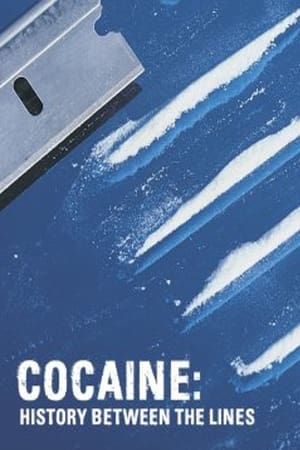
Cocaine has always gotten a bad rap, and for a reason. It is a drug used by the rich and the poor legally and illegally, Mexican cartels fought over it with Colombia once associated with the brutal cocaine wars, and a source of tension between the American and Mexican borders on the people who are illicitly bringing in cocaine from one side of the border to another and will do anything to do it. So it can be surprising at times to the viewer throughout the course of the documentary special, that it was never always like this.
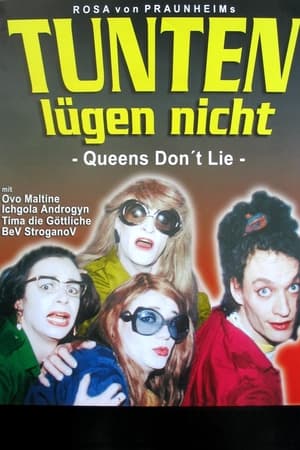
Bosom buddies BeV StroganoV, Ovo Maltine, Ichgola Androgyn and Tima die Göttliche are four Berlin drag queens who met in the mid 1980s. These four queens became Germany’s most popular drag performers and have been busy fertilizing the German cultural scene. Besides being performers, they are also political activists – in AIDS awareness, anti-gay violence, the sex workers movement and the struggle against the extreme right and racism. The film tells their story.
Documentary on Antoine de Caunes, a French television presenter, comedian, actor, journalist, writer and film director.
Robert Llewellyn examines the enduring appeal of submarine movies, finding a beached Cold War Russian nuclear sub on the Medway and WWII German U-boat pens on the French coast.
Alex Norton discovers how showbusiness has handled the portrayal of the Scottish accent. For over 100 years audiences have struggled to understand our braw brogue: silent Harry Lauder films attempted an accent in the captions, and in Hollywood's golden era , everyone wanted to paint their tonsils tartan- but as examples from Katharine Hepburn, Orson Welles and Richard Chamberlain show, they couldnae. Then Disney made Brave and proved that it disnae have to be all bad!
Four Black transgender sex workers in Atlanta and New York City break down the walls of their profession.
This short travelogue depicts snippets of locations in Hollywood, California, most of them as seen from the streets. Considerable time is taken showing the kinds of architecture of private homes. There are images of various important buildings, and a depiction of the Hollywood Bowl. Finally, there is a sequence revolving around the premiere of the film “Dirigible” (1931) at the famed Chinese Theatre.
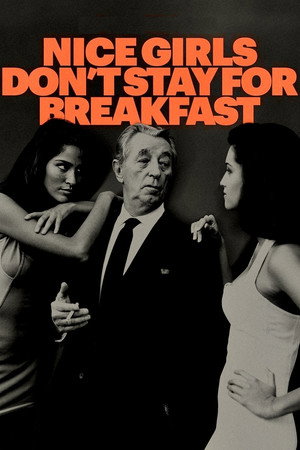
In the late 1990s, iconic photographer Bruce Weber barely managed to convince legendary actor Robert Mitchum (1917-97) to let himself be filmed simply hanging out with friends, telling anecdotes from his life and recording jazz standards.
When former child star Aaron Schwartz (Mighty Ducks, Heavyweights) returned to the acting world as an adult, he found himself always being asked this recurring question: 'how is he still normal having been a child star?' After seeing one too many sensationalized 'where are they now' publications he began to notice that being a child actor carried with it a stigma that seemed impossible to break. Aaron explores why the Stigma of being raised in Hollywood exists, and why child stars are so often misunderstood.
The story of Tasmanian-born actor Errol Flynn whose short & flamboyant life, full of scandals, adventures, loves and excess was largely played out in front of the camera - either making movies or filling the newsreels and gossip magazines. Tragically he was dead from the effects of drugs and alcohol by the time he was only 50 & the myths live on. But there is another side of Flynn that is less well known - his ambitions to be a serious writer and newspaper correspondent, his documentary films and his interest in the Spanish Civil War and Castro's Cuba
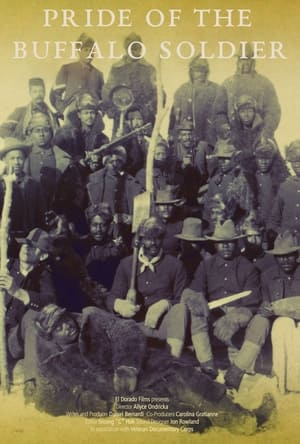
Pata Seca (1828), a man whose back bore the whip marks of his enslavers , whose eyes held the haunted memory of being forced to breed over 200 slave children in order to sustain his master’s plantation. Men broken but unbowed, transformed from field hands into soldiers from the civil war to Vietnam. This documentary weaves together authentic narratives from the 1800s, accompanied by original images and footage, highlighting the significant influence that Black men in uniform had in Hollywood and addressing ongoing relevant issues to date.
Black Is the Color highlights key moments in the history of Black visual art, from Edmonds Lewis’s 1867 sculpture Forever Free, to the work of contemporary artists such as Whitfield Lovell, Kerry James Marshall, Ellen Gallagher, and Jean-Michel Basquiat. Art historians and gallery owners place the works in context, setting them against the larger social contexts of Jim Crow, WWI, the civil rights movement and the racism of the Reagan era, while contemporary artists discuss individual works by their forerunners and their ongoing influence.
Explores the life and death of one of the first onscreen flappers. By the time she appeared in The Flapper, she had completed more than seventeen films, but beneath the glitter of success Olive had her share of tragedy. Her death under mysterious circumstances just before her 26th birthday shocked the world.
A documentary exploring the importance of revival cinema and 35mm exhibition - seen through the lens of the patrons of the New Beverly Cinema - a unique and independent revival cinema in Los Angeles.
When a British-born actor abandons his Hollywood career to volunteer to Join the Kurdish YPG to fight ISIS in Syria, many see him as a selfless hero battling America's most insidious enemy. But others think he's a hot-tempered narcissist, staging a publicity stunt to further his career - and when his service ends, neither the UK nor the US welcome him back. Through incisive interviews with the actor, his supporters, his detractors, and top-tier experts - and featuring the actor's own jaw-dropping helmet-cam video of deadly battles with and interrogations of ISIS fighters - Heval gives viewers unprecedented access into a war against evil and one man's controversial role in it.
James Brown changed the face of American music forever. Abandoned by his parents at an early age, James Brown was a self-made man who became one of the most influential artists of the 20th century, not just through his music, but also as a social activist. Charting his journey from rhythm and blues to funk, MR. DYNAMITE: THE RISE OF JAMES BROWN features rare and previously unseen footage, photographs and interviews, chronicling the musical ascension of “the hardest working man in show business,” from his first hit, “Please, Please, Please,” in 1956, to his iconic performances at the Apollo Theater, the T.A.M.I. Show, the Paris Olympia and more.
Lacey Schwartz grew up in a typical upper-middle-class Jewish household in Woodstock, NY, with loving parents and a strong sense of her Jewish identity - despite the open questions from those around her about how a white girl could have such dark skin. She believes her family's explanation that her looks were inherited from her dark-skinned Sicilian grandfather. But when her parents abruptly split, her gut starts to tell her something different. At age of 18, she finally confronts her mother and learns the truth: her biological father was not the man who raised her, but a black man named Rodney with whom her mother had had an affair.
The life and career of comedian Rose Marie is documented through interviews with friends and colleagues as well as never-before-seen home movies shot by the actress herself.
An investigation into accusations of teenagers being sexually abused within the film industry.
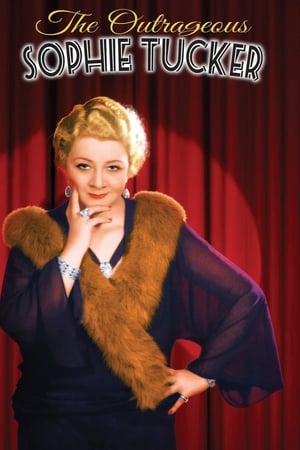
The rags to riches story of Sophie Tucker, an iconic superstar who ruled the worlds of vaudeville, Broadway, radio, television, and Hollywood throughout the 20th century. Before Beyoncé, Lady Gaga, Madonna, Bette Midler, Marilyn Monroe, and Mae West, Sophie Tucker was the first woman to infatuate her audiences with a bold, bawdy and brassy style unlike any other. Using all of "The Last of the Red Hot Mamas" 400-plus recently rediscovered personal scrapbooks, authors Susan and Lloyd Ecker take you on their seven-year journey retracing Tucker's sixty-year career in show business.`