Set in 1948, the historic story of India's first Olympic medal post their independence.
The story of Rudolf Nureyev, whose escape to the West stunned the world at the height of the Cold War. With his magnetic presence, Nureyev emerged as ballet’s most famous star, a wild and beautiful dancer limited by the world of 1950s Leningrad. His flirtation with Western artists and ideas led him into a high-stakes game of cat and mouse with the KGB.
Connor McDavid: Whatever it Takes follows the most physically and emotionally challenging offseason of Connor McDavid's career. This documentary is the remarkable comeback story of one of the NHL's best players after what could have been a career ending or altering injury. A world-class medical team led by Mark Lindsay, supervised McDavid's gruelling rehabilitation program which combined advanced sport science and imaging techniques with Connor's sheer will to overcome, allowing him to return to the Edmonton Oilers lineup for the 2019-20 home opener. McDavid not only came back, but is faster and stronger than ever and having the best season of his young career. McDavid enters the 2020 All-Star break leading the NHL in scoring, and has his Edmonton Oilers in the hunt for 1st Place in the Pacific Division.
The year is 1893 and India is under British occupation. In a small village, the tyrannical Captain Russell has imposed an unprecedented land tax on its citizens. Outraged, Bhuvan, a rebellious farmer, rallies the villagers to publicly oppose the tax. Russell offers a novel way to settle the dispute: he challenges Bhuvan and his men to a game of cricket, a sport completely foreign to India. If Bhuvan and his men can defeat Russell's team, the tax will be repealed.
Documentary about Alberto Spencer, Ecuadorian-Uruguayan footballer, regarded as the best Ecuadorian footballer of all time.
Una historia europea
The first biographical film on the famed Mexican artist, traces his life from childhood through his Cubist period, his leading role in the Mexican mural renaissance, his fame as a muralist in the USA, and his later years. The film explores Rivera's life and work, including his stormy relationship with Frida Kahlo and the destruction of his famous mural at Rockefeller Center. Shot on location in Mexico and the United States, the film includes a remarkable collection of archival film and photographs, much of which has not been seen before. The text is drawn from the writings of Rivera and Kahlo and from other historical texts. Using Rivera's own words, this richly detailed film brings to life the difficulty he faced in his transition from studio artist to public and political artist, and the conflicts that arose from that point onward.
Diamantino
Oscar-winning filmmaker Julia Reichert reflects on the social, economic and personal forces that led to her career as a pioneering documentarian.
Revealed in independant movies such as My Own Private Idaho, blockbuster movie star in Point Break and Speed, hero of the digital era in The Matrix, virtuoso killer in John Wick, Keanu Reeves is one of the most intriguous stars of his generation. However, after 25 years in the spotlight, he stays an enigma whose chaotic career seems to go on without a guilding principle. Today, nobody could question his unique status as he reluctantly became a social network icon, and a role model for the « woke » generation.
Every day, Paris’ six railway stations welcome over 3,000 trains and more than a million travelers coming from France and all over Europe. The stations’ sizes are impressive: Gare du Nord is bigger than the Louvre or Notre-Dame de Paris. These railway stations are architectural landmarks and a model of urban planning despite the radical changes they’ve undergone since their construction in the middle of the 19th century. How did the railway stations manage to absorb the boom of travelers in just a few decades? What colossal works were necessary to erect and then modify these now essential buildings? From the monumental glass walls of Gare du Nord to the iconic tower of Gare de Lyon, to the first-ever all-electric train station, each has its own story, technical characteristics, and well-defined urban image.
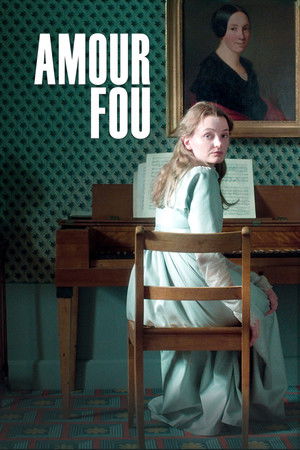
In late 19th century France, the Countess Louise, wife of a wealthy general, sells the earrings her husband gave her on their wedding day to pay off her secret debts, then claims to have lost them. Her husband quickly learns of the deceit, which is the beginning of many tragic misunderstandings, all involving the earrings, the general, the countess, and her new lover, the Italian Baron Donati.
In the occupied Netherlands near the end of WWII, a young teenager, Jeroen Boman (Maarten Smit) is sent to the Dutch countryside to avoid the war in Amsterdam. While living with his adopted family, Jeroen meets and becomes friends with a Canadian soldier named Walt Cook, who is stationed at the same town he is staying at. Joroen and Walt spend a lot of time playing around and eventually a romantic relationship develops between them. The boy’s sexual curiosity leads him to have a sexual experience with Walt, an encounter that is shown with some vague detail but without actually showing any nudity, even though sexual intimacy between the two of them is implied. Overall, the movie handles this difficult subject with an elegant style and feeling, without having the adult-child relationship overwhelm the viewer and thus allowing the movie to be seen as just a wartime relationship between two people that marks an important time in a young boy’s life.
The story of acerbic 1960s comic Lenny Bruce, whose groundbreaking, no-holds-barred style and social commentary was often deemed by the establishment as too obscene for the public.
Agnes "Astra" Huston, a fortune teller at a run-down fair, is found strangled in her bedroom. As the police question five suspects, their interactions with her are shown in flashbacks from their point of view.
The life and career of comedian Rose Marie is documented through interviews with friends and colleagues as well as never-before-seen home movies shot by the actress herself.
Shoshana Damari was the first Israeli diva. She graced local and international stages, stirring millions with her beguiling voice and spectacular performance. Yet behind the larger-than-life persona and her memorable songs was a woman about whom we know little. She didn’t like to be interviewed and never volunteered details about herself and her family. Hers was the life of a Hollywood legend and she paid the price for it. This is a story about fame and loneliness, acclaim and loss, daring and compromise. For the first time, the woman behind the crown, the cloak and the palace will come to light.
The TV dramatization of PO Hviezdoslav's epic tells of a time when the feudal system as a social force begins to disappear. Its only salvation is to merge with the people. Ežo is a supporter of this idea.
Assigned to oversee the development of the atomic bomb, Gen. Leslie Groves is a stern military man determined to have the project go according to plan. He selects J. Robert Oppenheimer as the key scientist on the top-secret operation, but the two men clash fiercely on a number of issues. Despite their frequent conflicts, Groves and Oppenheimer ultimately push ahead with two bomb designs — the bigger "Fat Man" and the more streamlined "Little Boy."
In 1894, French officer Alfred Dreyfus is wrongly convicted for the treasonous acts of another man, Major Esterhazy. When investigations begin into the dubious evidence used in the trial, an institutional coverup begins, aided by fears of army disgrace and anti-Semitic paranoia against Dreyfus. But a determined group, headed by prominent author Émile Zola, leads a mounting public call to reopen the Dreyfus case.