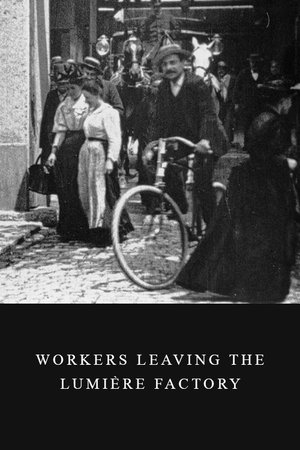
“The workers leave the Lumière factory.” Workers pass through the gate of the Lumière factory and are followed by a carriage drawn by two horses.
Worldy renowned for his masterpiece The Housemaid (1960), Kim Ki-young debuts with his first short film I Am a Truck (1953), which was sponsored by UN and made a year after the armistice of the Korean War. This film is a fascinating glimpse into the mind of a soon-to-be powerful auteur and influential filmmaker in the post-war Korean cinema, if not the whole history of Korean cinema.
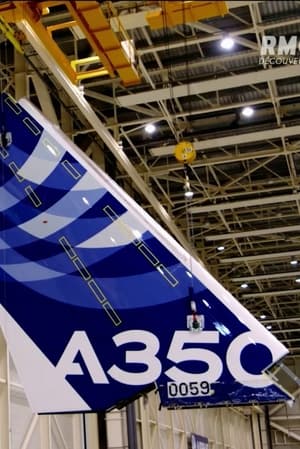
Making of: Airbus A350
Megastructures: Airbus Beluga XL
The sights and sounds of a kimchi factory in Vietnam.
This documentary, produced by Paul Burnford, features how products are made in factories. It uses an example of a jack-in-the-box produced by Mattel.
Following Inside Hotel Chocolat series on Channel 5, this Channel 4 special takes you behind the scenes at one of Britain’s largest independent chocolate makers. Covering product development both in the inventing kitchen and in the cocoa fields in Ghana.
Following Inside Hotel Chocolat series on Channel 5, this Channel 4 special takes you behind the scenes at Britain's largest independent chocolate maker at one of their busiest times of the year, as they dream up a new luxury Easter egg, retro flavours and enticing sweet treats.
A short documentary exploring the grueling cycle of child labor in Pakistan through the story of two children, one working at a brick kiln and the other at a car mechanic shop.
With graphic re-enactments of industrial accidents, the More High Impact Forklift Safety Video gives viewers a scared-straight lesson on the importance of forklift safety. This forklift video is great for training your forklift operators on accident awareness and prevention.
Megacities is a documentary about the slums of four different metropolitan cities.
When a massive Chinese factory complex attempts a high-stakes expansion in rural Ethiopia, three women in search of prosperity have their faith in industrialization tested to the limit. Filmed over four years with singular access, Made in Ethiopia lifts the curtain on China’s historic but misunderstood impact on Africa, and explores contemporary Ethiopia at a moment of profound crisis. The film was awarded the Jury Special Mention at Tribeca Festival.
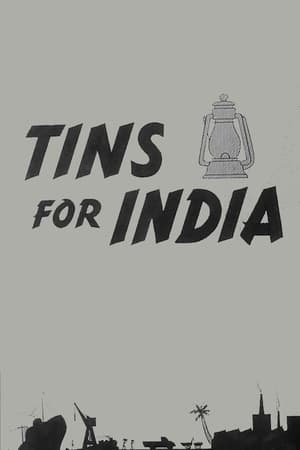
Documenting the production of kerosene tins and their reuse in rural India, this early short by Bimal Roy observes industrial labor and everyday life with a restrained, humanist perspective.
Umbrellas in the Sun takes its title from the 1981 video compilation of the same name released by chic Belgian label Les Disques du Crépuscule (TWI 099), and features selected clips from that project, as well as footage from A Factory Video (Fact 56), A Factory Complication (FBN 7) and A Factory Outing (Fact 71). Plus previously unseen material - the definitive genre document! Featuring cover art by Crépuscule design director Benoît Hennebert, the DVD contains 23 clips filmed between 1979 and 1987 and runs for over 2 hours. The audio soundtracks have been digitally remastered. The disc is Region 0 (multi-region), NTSC format.
A cinema verite study of the world of the blue-collar worker and the economic and psychological bind in which he is caught.
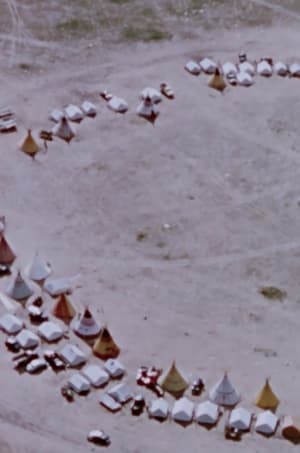
On the Kainai (Blood) First Nations Reserve, near Cardston, Alberta, a hopeful new development in Indigenous enterprise. Once rulers of the western plains, the Bloods live on a 1 300-square-kilometer reserve. Many have lacked gainful employment and now pin their hopes on a pre-fab factory they have built. Will the production line and work and wages fit into their cultural pattern of life? The film shows how it is working and what the owners themselves say about their venture.
In Portugal, the daily life of a bronze foundry, specialized in the semi-industrial production of spare parts for the naval field, is compared with the freedom of spirit characterizing the "pottery of monsters" on a village square where everyone gathers.
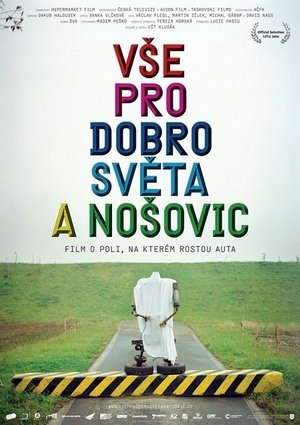
An original portrayal of a small Czech village where – as the locals put it – an UFO has landed in the form of a kilometre-long silverish factory: a Korean Hyundai automobile plant. The village, hitherto famous mostly for its sauerkraut and the “Radegast” beer was thus turned into an industrial zone – the largest greenfield investment project in the Czech Republic’s history. Nonetheless, for a long time many farmers resisted selling the land upon which the factory was now standing. Eventually, they all succumbed under the pressure from the neighbours, and even the anonymous death threats. The filmmakers returned to Nošovice two years after the dramatic property buyouts, at the time when the factory has just started churning out cheap cars. Combining the perspectives of seven characters, they have composed a portrayal of a place suddenly changed beyond recognition that is playful and chilling at the same time: a politically engaged absurd flick about a field that yields cars.
In a futuristic, antiseptic food factory, workers select healthy chicks, while the rejects are carried along a conveyor belt until they are crushed by a mallet and drop into a garbage bin. A single black chick appears among the yellow and is shoved toward the garbage bin. Before the mallet strikes, the gasping chick rebels.
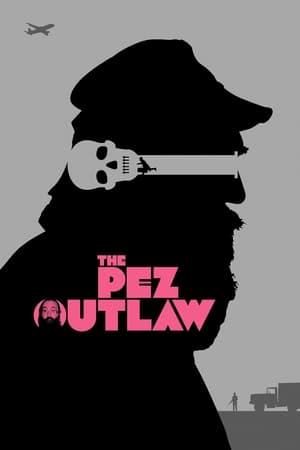
Steve Glew, a small-town Michigan farmer, boards a plane for Eastern Europe soon after the fall of the Berlin Wall. His mission is to locate a secret factory that holds the key to the most desired and valuable pez dispensers. If he succeeds, he will pull his family out of poverty and finally find a purpose in his mundane life.