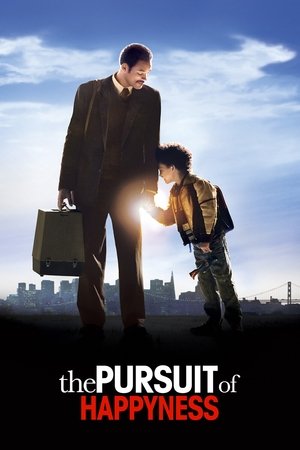
A struggling salesman takes custody of his son as he's poised to begin a life-changing professional career.
Set against Paris' oldest bridge, the Pont Neuf, while it was closed for repairs, this film is a love story between two young vagrants: Alex, a would be circus performer addicted to alcohol and sedatives and Michele, a painter driven to a life on the streets because of a failed relationship and an affliction which is slowly turning her blind.
When her best friend's father is falsely accused of stealing the town's prized jingle bells, a young amateur sleuth and her friends must find the real thief before Christmas.
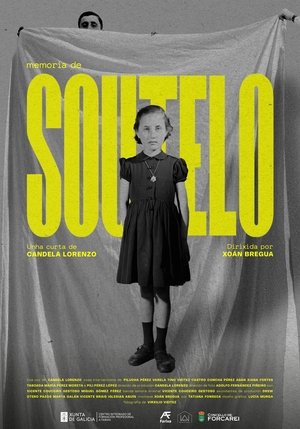
An exploration —manipulated and staged— of life in Las Hurdes, in the province of Cáceres, in Extremadura, Spain, as it was in 1932. Insalubrity, misery and lack of opportunities provoke the emigration of young people and the solitude of those who remain in the desolation of one of the poorest and least developed Spanish regions at that time.
From the moment we got engaged and set a wedding date, we began thinking about the reasons we chose one another. What was so special about this relationship that we decided to spend our lives together? Would our love be the same if we were born in another time or at another place? What is love exactly? Driven by those questions, we decided to embark on a one year journey around the world to research whether love, one of the highest values in our lives, is universal, or it is completely conditioned by the circumstances around us.
Police Commissioner Jules Maigret returns to the small village where he spent his childhood at the request of the Countess of Saint-Fiacre, who has received a disturbing anonymous letter.
Walt is a lonely convenience store clerk who has fallen in love with a Mexican migrant worker named Johnny. Though Walt has little in common with the object of his affections — including a shared language — his desire to possess Johnny prompts a sexual awakening that results in a tangled love triangle.
A portrait of a group of youngsters in Agger at the west coast of Jutland. They listen to the raw metalrock. They dress in leather and rivets. And that doesn't exactly lessen the generational divide.
A struggling actor’s commute to a callback takes an abrupt detour, thrusting him into an eye-opening LA excursion with an unlikely companion.
A fatalistic car crash in Mexico city sets off a chain of events in the lives of three people: a supermodel, a young man wanting to run off with his sister-in-law, and a homeless man.
Two troubled men face their terrible destinies and events of their past as they join together on a mission to find the Holy Grail and thus to save themselves.
The story of a group of actresses who, in the Spain of the seventies, and in the midst of the democratic Transition, decided to appear nude in the films of that time of radical political change, defying the rigid and deeply rooted social rules.
Liliana Cavani's "The Night Porter" is a film that, fifty years after its release, continues to spark debate and mixed reactions. The story, set in Vienna in 1957, follows doorman Max Aldorfer and his former concentration camp prisoner, Lucia, who reunite after years in a hotel.
October 1st, 1957. Dusk descends on Tiananmen Square, Peking. Fireworks crackle light across the night sky, above a city alive with National Day festivities and celebrations. Two intrepid New Zealand film-makers - Rudall and Ramai Te Miha Hayward - are there, documenting the life and times of communist China. The distinction of being the first English speaking foreigners to film unfettered in communist China was significant. The invitation to visit China was facilitated through the New Zealand China Friendship Society. They filmed in Canton, Shanghai, Peking (Beijing) and Wuhan. It was a small window of opportunity for Westerners to gaze on a country that was largely a mystery to the outside world since 1949. The unfortunate irony was that two of the documentaries; “Wonders of China”, and “Inside Red China”, were considered to be communist propaganda, and were not distributed outside of New Zealand.
Aging parents of disabled adults, they worry about their child's life after their disappearance. A moving insight into the daily life of a family home in the Vendée region, which offers them the prospect of a peaceful future.
Marina Carrère d'Encausse lifts the veil on the intimate questions that preoccupy her as well as society at large: those related to the end of life. The doctor-journalist introduces Antoine, her partner, who is suffering from Charcot's disease, an incurable illness, and who wishes to choose how he ends his life. Is the current law in France sufficient? Should it simply be better enforced, allowing better access to palliative care? Should assisted suicide and euthanasia be legalized? Marina meets with patients concerned about the end of life, caregivers, and politicians in France, as well as in Belgium, Switzerland, and Canada, countries where euthanasia and assisted suicide are legal.
Convinced he'll graduate with honors because of his thesis paper, a stuffy Harvard student finds his paper being held hostage by a homeless man, who might be the guy to school the young man in life.
Examines the implications of Christian Nationalism, how it distorts not only our constitutional republic, but Christianity itself, and asks the question: What happens when a faith built on love, sacrifice, and forgiveness grows political tentacles, conflating power, money, and belief into hyper-nationalism?
Monty is a mechanic struggling to make ends meet as he raises his three young daughters. When the court awards custody of his daughters to his shady ex-wife, Monty desperately tries to win them back with the help of Julia, a beautiful, Ivy League-educated attorney. Monty and Julia couldn't be less alike, but a flame is ignited... touching off a firestorm of love and conflict.
"I often say sociology is a martial art, a means of self-defence. Basically, you use it to defend yourself, without having the right to use it for unfair attacks." (Pierre Bourdieu) The world has witnesses who speak out loud what others keep to themselves. They are neither gurus, nor masters, but those who consider that the city and the world can be thought out. The sociologist, Pierre Bourdieu is one such witness." Over a three- year period, Pierre Carles' camera followed him through different situations: a short conversation with Günter Grass, a lively conference with the inhabitants of a working-class suburb, his relations with his students and colleagues and his plea that sociology be part of the life of the city. His thinking has a sort of familiarity, which means it is always within our reach. It is the thinking of a French intellectual who has chosen to think his times.