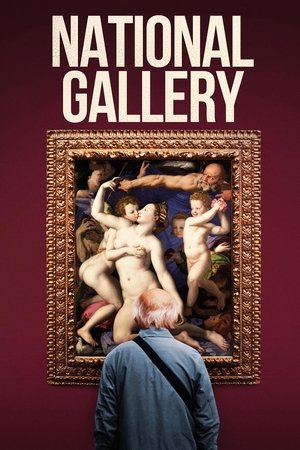
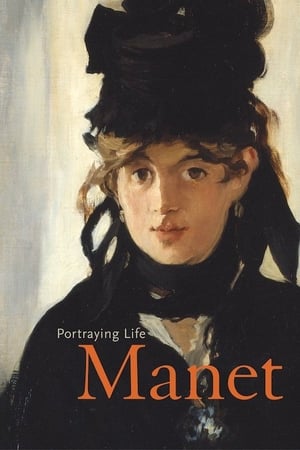
How the art in the Detroit Institute of Art connects to life's experiences and the neighborhood.
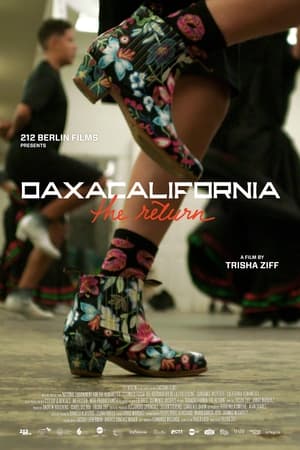
Five female artisans from the Innu, Franco-Quebecois, and Zapotec peoples discuss their work. Their techniques, objects, and textile traditions give rise to stories that overlap. Their clothing reflects on identity and otherness.
A documentary made for Konrad Mägi exhibition "The Light of the North" in Torino, Musei Reali (2019-2020), about Mägi's life and his legacy.
An installation film that consists of a six-hour-long monologue performed by Edith Clever, who reads texts by Syberberg and many different authors, such as Johann Wolfgang von Goethe, Heinrich von Kleist, Plato, Friedrich Hölderlin, Novalis, Friedrich Nietzsche, Eduard Mörike, Richard Wagner, William Shakespeare, Samuel Beckett, and Chief Seattle.
Man Ray, the master of experimental and fashion photography was also a painter, a filmmaker, a poet, an essayist, a philosopher, and a leader of American modernism. Known for documenting the cultural elite living in France, Man Ray spent much of his time fighting the formal constraints of the visual arts. Ray’s life and art were always provocative, engaging, and challenging.
Sam Roddick explores the enduring appeal of Botticelli's masterpiece The Birth of Venus, one of the most celebrated paintings in western art. A joyous celebration of female sexuality, its journey to worldwide fame was far from straightforward and it lay in obscurity for centuries. Artist and entrepreneur Sam explains why Botticelli's nude was so revolutionary, and explores its impact on contemporary culture with artists such as Terry Gilliam, who memorably reinvented Venus for his Monty Python's Flying Circus animations.
Black Is the Color highlights key moments in the history of Black visual art, from Edmonds Lewis’s 1867 sculpture Forever Free, to the work of contemporary artists such as Whitfield Lovell, Kerry James Marshall, Ellen Gallagher, and Jean-Michel Basquiat. Art historians and gallery owners place the works in context, setting them against the larger social contexts of Jim Crow, WWI, the civil rights movement and the racism of the Reagan era, while contemporary artists discuss individual works by their forerunners and their ongoing influence.
Shows how to use and care for crayons and some of the crayon techniques. Explains creative drawing, poster making, imprinting a design on cloth and other crafts.
How did the Impressionists view the world? What relationship did they have with technique, with color, with light and with the universe of shapes that made up reality before their eyes? How were their works received? How did they go from being rejected by critics and the public to becoming among the most loved in the world in a few years? Secret Impressionists is an immersive journey into the intimacy of the Impressionists and their paintings which aims to offer a "privileged" visit that stimulates the spectators' curiosity and gives them a perspective on the works complementary to the live experience, allowing spectators in the hall to immerse themselves in the work of painters and grasp unpublished details.
A paralysingly beautiful documentary with a global vision—an odyssey through landscape and time—that attempts to capture the essence of life.
Mark Rothko, a master of abstract expressionism, created 835 paintings during his five-decade career.
This documentary offers an intimate look at the life and legacy of American abstract expressionist Franz Kline. Through personal memories and reflections from those who knew him—such as fellow artist Willem de Kooning, de Kooning’s wife Elaine, and other contemporaries—the film paints a vivid portrait of Kline’s personality, artistic spirit, and lasting influence. Known for his powerful black and white compositions and bold brushwork, Kline is remembered not only for his art, but also for his wit, warmth, and passionate approach to painting. The episode explores both his creative process and the deep friendships that shaped his career.
By drawing a parallel between the Indian Durga Puja festival and other forms of celebrating the divine feminine, Santa Shakti reveals the Sacred Power beyond languages and religions.
The intricate history of UFA, a film production company founded in 1917 that has survived the Weimar Republic, the Nazi regime, the Adenauer era and the many and tumultuous events of contemporary Germany, and has always been the epicenter of the German film industry.
Successfully completed your studies - now what? Raffly already has a lucrative job offer from a large German company, but neither an apartment nor a work permit.
This film documents the youth groups personalities, interests and what they like to do for fun. It also highlights important and relevant issues facing young travellers and their peers in East Cork and Cork City. A film the by the Connect Youth Project. Directed and filmed by the members of the Connect Youth Project in East Cork.
Artist David Choe has led a life of high risk, from hedonistic excesses to being imprisoned at a maximum security facility in a foreign country, and yet has been dramatically rewarded for his exploits. Life didn't change much when he traded a $60k fee in favor of stock in a start-up called The Facebook, but now he is estimated to be worth over $250 million, highlighting a colorful career filled with giant street art installations, porn star affairs and investigative reporting for companies like Vice and CNN. Director and childhood friend Harry Kim guides us through the fantastically surreal life of Choe featuring interviews and appearances by Kevin Smith, Eli Roth, Sasha Grey, Sean Parker, and Shepard Fairey.
Dríades
Tells the history of skateboard art and its evolution through the decades, as iconic and rebellious skateboarders and artists give firsthand experiences and stories about their art that challenged the establishment.
Journey with the musicians of the Berlin Philharmonic and their conductor Sir Simon Rattle on a breakneck concert tour of six metropolises across Asia: Beijing, Seoul, Shanghai, Hong Kong, Taipei and Tokyo. Their artistic triumph onstage belies a dynamic and dramatic life backstage. The orchestra is a closed society that observes its own laws and traditions, and in the words of one of its musicians is, “an island, a democratic microcosm – almost without precedent in the music world - whose social structure and cohesion is not only founded on a common love for music but also informed by competition, compulsion and the pressure to perform to a high pitch of excellence... .” Never before has the Berlin Philharmonic allowed such intimate and exclusive access into its private world.