Two derelicts occupy themselves as they wait for 'Godot' to make an appearance on Pozzo's estate.
GIGI !
Two seemingly homeless men waiting for someone or something named Godot. Vladimir and Estragon wait near a tree on a barren stretch of road, inhabiting a drama spun from their own consciousness.
Three creatures wait in a basement for a mysterious man. But their curiosity might just get the better of them.
Uncertain whether his bus will arrive, a hesitant and anxious young man begins to question the point of waiting. As he stands at the bus stop, his interactions with those who arrive lead him to reflect on the passing of time and how he should face it.
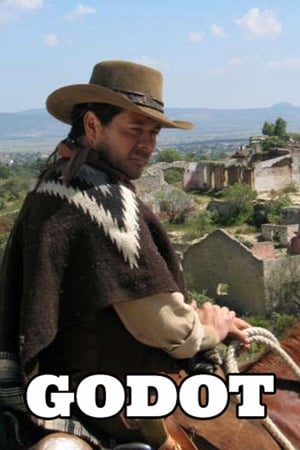
Godot the cowboy knows that someone is waiting for him, but as he tries to reach them, he will get involved in a series of events that could change his destiny. Meanwhile Vladimir and Estragón continue waiting for Godot…
Parisian bon vivant, World War II Resistance fighter, Nobel Prize-winning playwright, philandering husband and recluse…Samuel Beckett lived a life of many parts. Titled after Beckett’s famous ethos “Dance first, think later”, the film is a sweeping account of the life of this 20th-century icon.
Two work colleagues await room service in their hotel room as one of them reveals they plan to leave the office in search of a new life while a cosmic phenomenon occurs above them.
A seasoned theater actor, caught in the endless cycle of performances and fleeting applause, drifts through the absurdity of life, unsure whether to search for meaning or simply surrender to the stage.
Tensions arise between James Joyce and Samuel Beckett during a game of Pitch and Putt golf when a guest fails to show up.
A two-part biography of the Irish writer Samuel Beckett. The first part covers the traumas of his formative years: his ill-fated love affair with his first cousin, the death of his father, and his decorated service with the French Resistance. He had settled in France before the Second World War, met fellow Irishman James Joyce, and begun writing. Patrick Magee's television performance of `Krapp's Last Tape' (1972) is interwoven with key landscapes and personalities from Beckett's life. The second part concludes the story of how Beckett finally began to connect with his audience, principally through `Waiting for Godot'. Includes an interview with the actress Billie Whitelaw, a celebrated interpreter of his work.
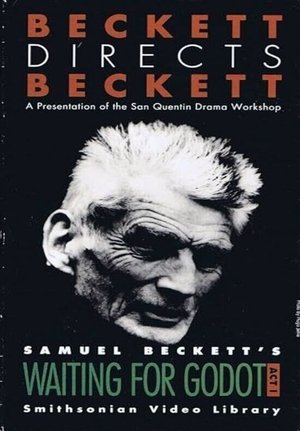
Documentary about the staging of 'Waiting for Godot' in prison.
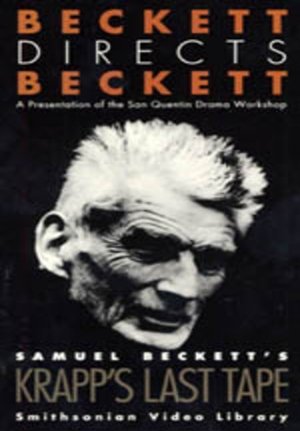
Sitting alone on his 69th birthday, Krapp reflects upon the last 30 years of his life as he listens to an old tape recording of himself he made on his 39th Birthday.
A wordless, silent interview with Samuel Beckett for Swedish Television after Beckett won the Nobel Prize in Literature.
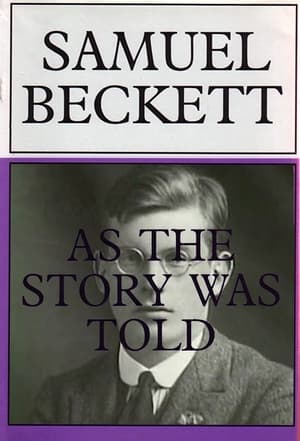
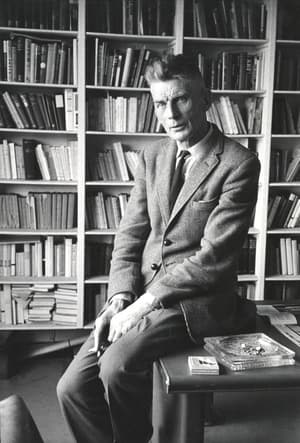
Biography and in-depth look of Beckett and his work.
A documentary which offers insights into the adaptation of the original stage play and the making of this new production of Beckett's work.
As their bodies give way to Parkinson's disease, two New York actors put their hearts into one final Off-Broadway production of Beckett's "Endgame," the play that posits, "there's nothing funnier than unhappiness."
The elusive author of Waiting for Godot cooperated in the production of this portrait, which traces Beckett’s artistic life through his prose, plays, and poetry. Billie Whitelaw, Jack McGowran, and Patrick Magee—Beckett’s great dramatic interpreters—appear in selected extracts from the plays; Beckett specialist David Warrilow narrates a variety of texts.
Watch drug-addled friends through the eyes of a kaleidoscope. See coloured shapes dance and flail around. Witness people clubbing, getting beaten up, dancing and being used as human guinea pigs – all these in segments held together by two French teenagers finding themselves waiting for Godot. Experiment Three is another trip into the disturbing and bizarre world of public service announcements, contorted into something confronting and colourful.
When it's sunset in Purgatory and dawn on the Ganges it's noon on the Irish Sea. Filmed on Killiney Hill outside Dublin with John Manning remembering Samuel Beckett. The text echoes the Purgatory.