Six episodes of the original series, restored and on the big screen for the first time, and a special retrospective documentary encompass this Fathom Event.
The marks of the violence of the Chilean state, against its own compatriots. Flicker Film. 35mm B & W Still Photography. Silent.
Arms dealers from several companies vie to sell the most expensive and highest tech weapons to a South American dictator. There are complications; understanding the exact nature of how 'gifts' are used to grease the wheels of a sale, a religious conversion from one of the salesman and a romance that begins to grow between two competitors.
Early 80's, Sara is a good-family girl, she has never been with a man, does not drinks, does not take drugs. Following her love, she enters in "El Calentito" a bar where the group "las Siux" is singing.
A New York City beautician is mistakenly hired as the school teacher for the children of the president of a small Eastern European country.
After the World War I, Mussolini's perspective on life is severely altered; once a willful socialist reformer, now obsessed with the idea of power, he founds the National Fascist Party in 1921 and assumes political power in 1922, becoming the Duce, dictator of Italy. His success encourages Hitler to take power in Germany in 1933, opening the dark road to World War II. (Originally released as a two-part miniseries. Includes colorized archival footage.)
In Russia, criticizing the war in Ukraine or Vladimir Putin’s regime has become a crime. Thousands of ordinary citizens are being arrested, tried, and imprisoned. They are called “Politzek”: political prisoners. Filmed clandestinely over the course of more than a year, Politzek gives a platform to those who, despite the fear, continue to speak out against Putin’s repressive Russia. Through the intersecting stories of a teenager sentenced to five years in prison for criticizing the government on social media, a young artist jailed for placing anti-war stickers, a human rights activist, and two theater directors facing Kafkaesque trials, the film unveils the machinery of state repression in Russia. With rare footage, broken yet unyielding voices, this is a story of silenced resistance.
A recap movie of mostly Eternal Summer with some of season one. Focuses on Haru and Iwatobi. Also includes never before seen scenes and includes cameos from High Speed characters.
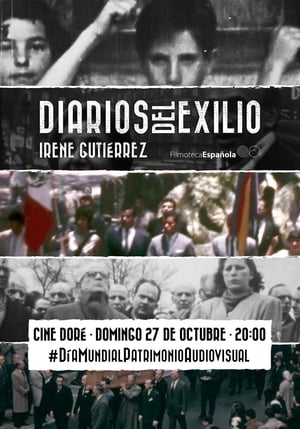
"Golpe a golpe" (Family coup) was a Chilean television sitcom from the 1970s and 1980s. In this series, the family of the stern anti-communist dictator Augusto Pinochet found themselves forced to share their home with the spirit of the late former socialist president Salvador Allende, who was portrayed by a puppet. This short film aims to salvage this show's existence by extracting fragments from its surviving material.
A chronicle on the days without Jorge Julio López, key witness and complainant on the first trial on genocide in Argentina, dated in 2006. López, who had survived through concentration camps on the late seventies argentinian dictatorship, disappeared for the second time the day the court decision meant to condemn his kidnappers was about to be read.
A history of the political and social repression carried out by the ruthless regime of Spanish dictator Francisco Franco between 1936 and 1975 that focuses on the lives of gays and lesbians during those dark years and the death of the Spanish gay poet Federico García Lorca.
Du Club Dorothée aux Mystères de l'amour : Les coulisses d'une success story
This special cut of the anime series recaps the events of the slice of life comedy where lewd manga artist Kakushi Goto tries to hide his profession from his adorable daughter, Hime. What ensues is a ton of hijinks and a lot of heart in this emotional adventure. The Kakushigoto Theatrical Edition isn’t just a recap; it also includes some all-new footage, which makes it the perfect watch for repeat viewers or those looking to experience it for the very first time.
Simon and Kamina live in an underground city monitored by the village chief. When Simon stumbles upon an artifact and beastmen invade from the surface, Simon and Kamina rebel against them.
In 2019, Nicolás was archiving photographs for J.M. Blanch when he discovered a secluded, uncataloged image depicting an artifact that resembled a ticking time bomb. Intrigued by the photo, Nicolás recorded an interview with Blanch to learn the story behind the mysterious object.
In Cold War-era West Berlin, American Coca-Cola executive C.R. 'Mac' MacNamara is tasked with playing babysitter to his boss' spoiled 17-year-old daughter Scarlett, who proves more difficult than anticipated when she reveals that she is pregnant by a Communist.
A mind-bending, thrilling journey exploring the fragility and wonder of planet Earth, one of the most peculiar, unique places in the entire universe, brought to life by the only people to have left it behind – the world’s most well known and leading astronauts. This edit combined episodes one and ten to create a new movie.
A compilation film of the Kintama Arc, episodes 1–4 in the third season, featuring additional footage. The movie is a part of the "Gintama 20th Anniversary Project."
Kabukicho's delicate balance is maintained by four powerful figures known as the "Four Devas," who keep each other's influence in check. Among them is Otose, the "Empress" of the district. Despite having no real power herself, the sole reason she retains her position as one of the Four Devas and can contend with rival factions... is the presence of Kabukicho's strongest man—Sakata Gintoki—by her side. Then, a young woman approaches Gintoki, asking to become an apprentice at Yorozuya. Unbeknownst to him, she is Tsubaki Hirako, formerly of the Uekibachi Family and infamouslyknown as "Killer Hirako." Now, as Jirochou schemes to dominate Kabukicho, Otose becomes a target. Gintoki is given anultimatum: Join the Jirochou Family to save her, or refuse and watch Otose be attacked—while hehimself is marked for death.
The film is a controversy on democracy. Is our society really democratic? Can everyone be part of it? Or is the act of being part in democracy dependent to the access on technology, progression or any resources of information, as philosophers like Paul Virilio or Jean Baudrillard already claimed?