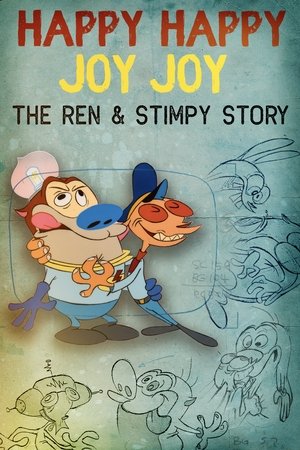
Exploring the rise and fall of the groundbreaking animated series Ren & Stimpy and its controversial creator, John Kricfalusi, through archival footage, show artwork and interviews with the artists, actors and executives behind the show.
George Lucas discusses how Joseph Campbell and his concept of the Monomyth (aka the Hero's Journey) and other concepts from mythology and religion shaped the Star Wars saga.
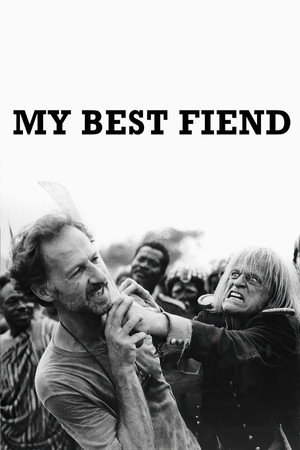
A film that describes the love-hate relationship between Werner Herzog and Klaus Kinski, the deep trust between the director and the actor, and their independently and simultaneously hatched plans to murder one another.
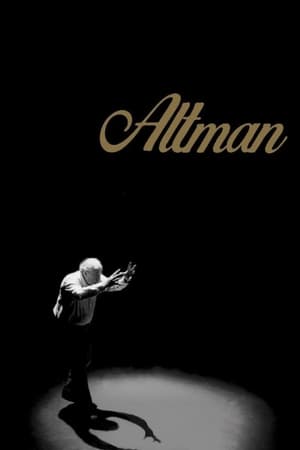
Robert Altman's life and career contained multitudes. This father of American independent cinema left an indelible mark, not merely on the evolution of his art form, but also on the western zeitgeist. With its use of rare interviews, representative film clips, archival images, and musings from his family and most recognizable collaborators, Altman is a dynamic and heartfelt mediation on an artist whose expression, passion and appetite knew few bounds.
Film clips and interviews with biographers and colleagues chart the prolific, six-decade career of maverick actor-director Clint Eastwood.
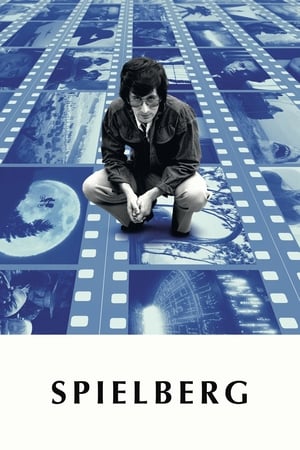
A documentary on the life and career of one of the most influential film directors of all time, Steven Spielberg.
"A week before he passed away, my grandfather shared with me his former aspirations of becoming a filmmaker. After many trials, a narrow escape from the Nazis and immigration to the United States, the dream slowly but surely came true. surely passed out. After his passing, I discovered a treasure trove of dust-covered 8mm film archives that had apparently not been seen by anyone for at least a generation. Mesmerized, what unfolded before me was something something most people, myself included, had never seen before: the development and complete decline of the human body and mind. Motivated by my grandfather's unrealized cinematic dreams, I decided to reconstruct a film that he had already made involuntarily." Lance Oppenheim
In just ten films, Maurice Pialat painfully rose to the top of the cinema, draining into his legend a mad demand for truth as much as memorable fury to achieve it. With "L'Enfance nue", his first feature film at the age of 43, the filmmaker immediately made his mark, this "art of making things authentic", according to Chabrol. But throughout an unclassifiable filmography in the form of an autobiography, from a break-up to his fatherhood in wonder, through the agony of his mother, the filmmaker does not get rid of the feeling of being misunderstood, despite international recognition.
This documentary is a portrait made in Mexico by a group of Argentine exiles, directed by the painter Nicolás Amoroso.
Jacques Rozier or the fierce, independent itinerary of a filmmaker in perpetual disarray, admired by his peers and pampered by the critics.
Jacques Demy’s ability to enchant audiences was rooted in his personal struggles and doubts as a showman, establishing him as one of French cinema’s greatest artists.
A look at Kevin Smith's life and career from his childhood in New Jersey, to the day they cemented his footprints at the world famous TCL Chinese Theater, with a flock of famous folks testifying on Silent Bob's behalf!
Oliver Stone: El outsider
Americans are preoccupied with the news, but need an escape from many of the events reported in the news. These escapes in the past have included dime store novels. The most accessible of these escapes is what are known as the funny papers, the set of serialized comic strips that are included within many newspapers. They appeal to all socio-economic classes, and all ages. Some of the earliest known from the late 19th century include the Yellow Kid, Little Nemo, Happy Hooligan, the Katzenjammer Kids, Mutt & Jeff, and Bringing Up Father. Many cartoonists are seen in action. Some originated their characters, while others have taken over following the passing of the originator. The joy of many comic strips are the absurd and the fantastical, which are limited only by the imagination of the cartoonist. Others are grounded in reality, which add to their poignancy within the public mindset.
2020 marks 100 years since the birth of Federico Fellini, the most prominent Italian director and one of the symbols of the insuperable cinematic heyday of mid-20th century. Fellini had always been a mysterious director, not only in his cryptic symbolism but also in his idiosyncratic, excessive mixture of psychoanalysis, Catholicism and faith in the mysterious. In this documentary, his relationship with the paranormal, luck and fate, alongside the coexistence of organized discourse and transcendence to the imaginary, is examined via friends, collaborators and distinguished fans (Friedkin, Gilliam, Chazelle). A great testimony to why rationalists and ideologists have a hard time with his work, ‘Fellini and the Spirits’ is an appropriate yet unexpected tribute.
American filmmaker Stanley Kubrick (1928–1999), one of the greatest in history, but also one of the most reserved, gave few interviews throughout his long career, and none of them were filmed. A first-person journey through his life and work, based on a recorded conversation with French film critic Michel Climent.
George Orwell was one of the most visionary authors of the 20th century, whose novels 1984 and Animal Farm foretold a chilling, authoritarian future. Acclaimed director Raoul Peck interweaves clips, readings from Orwell's diary, cinematic references, and modern-day footage to craft not only a portrait of the writer, but a fresh take on how prophetic his work has become.
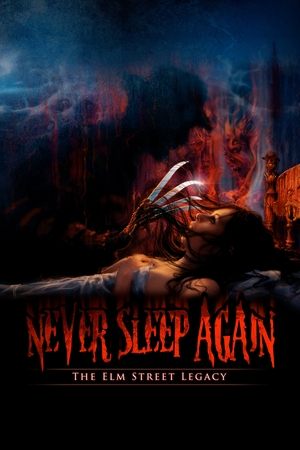
For decades, Freddy Krueger has slashed his way through the dreams of countless youngsters, scaring up over half a billion dollars at the box office across eight terrifying, spectacular films.
Fight alongside Sylvester Stallone as he creates a brand-new director's cut of Rocky IV: ROCKY VS. DRAGO. This feature-length documentary offers a personal and uncompromising look into the editing process, captured by Sly's longtime friend and fellow filmmaker John Herzfeld.
Mark Gatiss explores the life and career of Aubrey Beardsley, an artist who wielded outrage as adroitly as his pen. A lifelong fan, Mark shows how Beardsley was more than just a genius of self-promotion who scandalised the art world of the 1890s. He was also a technological innovator, whose uncompromising attitude still feels remarkably modern.