With script and direction by Pablo Villaça and starring the comedian Geraldo Magela, Morte Cega has as main character a failed filmmaker named Francis (Maurício Canguçu, producer and one of the main actors of the theatrical success "Believe, a Spirit Downloaded Me"). One night, Francis has a frightening dream about Magela, known throughout the country for playing the character O Ceguinho. Determined to make a short film based on this dream, Francis uses his producer friend, Martinho (Carlos Magno Ribeiro, who acted in Villaça's first short, A_ética), to get to the comedian. From then on, the meeting brings unexpected results for everyone involved.
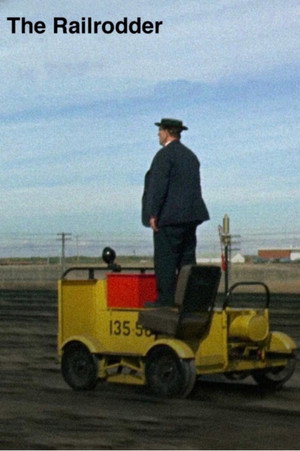
After literally swimming across the Atlantic Ocean, an Englishman takes a country trip across Canada on a railcar.
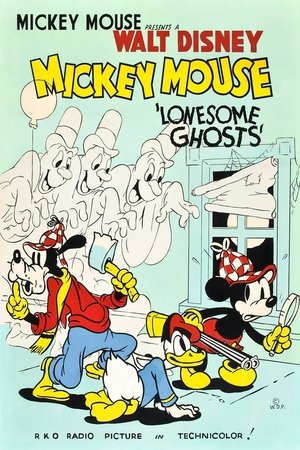
On a dark and stormy night, four bored ghosts decide to have some fun by calling the Ajax Ghost Exterminators.
In this clever satire of toxic men, a cartoon pickup artist is violently torn apart by the women he targets, seen only through his own one-sided, ridiculously misogynistic point of view. Don Hertzfeldt's first student film, he plays the part of a mentally unwell animator who's losing his grip within his own movie; an idea he'd later revisit in other early "meta" shorts "Genre" and "Rejected". Despite being produced at the age of 18 and not intended for exhibition, HBO named it "The World's Funniest Cartoon" in 1998.
In Don Hertzfeldt's second student film, a hapless cartoon character is dragged through a spectrum of cinematic situations by his frustrated animator.
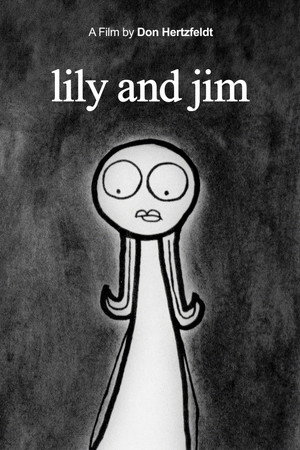
Lily and Jim are interviewed about their disastrous blind date.
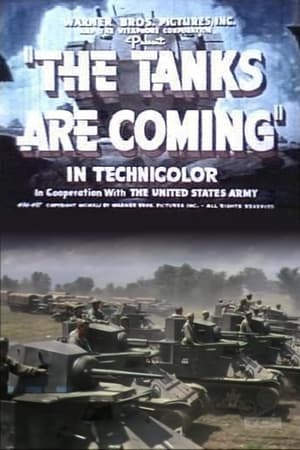
Educational short about the status of battle tanks and tank training in the U.S. Army in pre-War 1941, featuring a comical Army trainee from the Bronx.
Charlie is a clumsy waiter in a cheap cabaret, suffering the strict orders from his boss. He meets a pretty girl in the park and tries to impress her by pretending to be an ambassador. Unfortunately she has a jealous fiancé.
Scrat tries to finish his rather large collection of acorns when things start going nutty.
Follow a day of the life of Big Buck Bunny when he meets three bullying rodents: Frank, Rinky, and Gamera. The rodents amuse themselves by harassing helpless creatures by throwing fruits, nuts and rocks at them. After the deaths of two of Bunny's favorite butterflies, and an offensive attack on Bunny himself, Bunny sets aside his gentle nature and orchestrates a complex plan for revenge.
Remi and Bastien are friends, easygoing, and soon to be nuclear engineers. They are about to choose between friendship and career. But in this world, there are no good or bad choices. There are only choices... And the choice is Remi's.
The Easter bunny brings an egg for Tom and Jerry that hatches into the little duckling. He keeps getting into water he shouldn't: the aquarium, water cooler, bathtub, sink, as the boys keep rescuing it. They try to give the duck back to the Easter bunny - no go. They leave it in the pond at the park and think they're home free, until the duckling brings his friends home.
Tom is shipwrecked on an island, which is inhabited by at least one mouse - Jerry. To thwart the hungry cat, Jerry disguises himself as a cannibal.
A young man in New York has exasperated his father because of his constant carousing and irresponsibility, so his father sends him to his uncle's ranch in the west. The young man arrives in the town of Piute Pass, which is being terrorized by Tiger Lip Tompkins and his gang, the Masked Angels. The Easterner befriends a young woman whose father is being held captive by Tompkins, and he decides to help her.
The seven short films making up GENIUS PARTY couldn’t be more diverse, linked only by a high standard of quality and inspiration. Atsuko Fukushima’s intro piece is a fantastic abstraction to soak up with the eyes. Masaaki Yuasa, of MIND GAME and CAT SOUP fame, brings his distinctive and deceptively simple graphic style and dream-state logic to the table with “Happy Machine,” his spin on a child’s earliest year. Shinji Kimura’s spookier “Deathtic 4,” meanwhile, seems to tap into the creepier corners of a child’s imagination and open up a toybox full of dark delights. Hideki Futamura’s “Limit Cycle” conjures up a vision of virtual reality, while Yuji Fukuyama’s "Doorbell" and "Baby Blue" by Shinichiro Watanabe use understated realism for very surreal purposes. And Shoji Kawamori, with “Shanghai Dragon,” takes the tropes and conventions of traditional anime out for very fun joyride.
One of the "Out of the Inkwell" series of silent short films featuring a combination of live action and hand-drawn animation.
Walking along with his bulldog, Charlie finds a "good luck" horseshoe just as he passes a training camp advertising for a boxing partner "who can take a beating." After watching others lose, Charlie puts the horseshoe in his glove and wins. The trainer prepares Charlie to fight the world champion. A gambler wants Charlie to throw the fight. He and the trainer's daughter fall in love.
The family of a Parisian shop-owner spends a day in the country. The daughter falls in love with a man at the inn, where they spend the day.
A man prepares and goes to work in a bizarre world, where the meaning of human workforce is taken to another level.
The Adventures of Tartarin the Younger