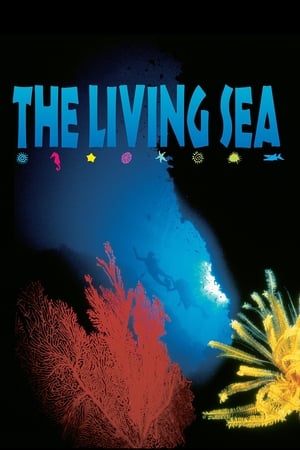
The Living Sea celebrates the beauty and power of the ocean as it explores our relationship with this complex and fragile environment. Using beautiful images of unspoiled healthy waters, The Living Sea offers hope for recovery engendered by productive scientific efforts. Oceanographers studying humpback whales, jellyfish, and deep-sea life show us that the more we understand the ocean and its inhabitants, the more we will know how to protect them. The film also highlights the Central Pacific islands of Palau, one of the most spectacular underwater habitats in the world, to show the beauty and potential of a healthy ocean.
There are few places on earth that have such a diverse variety of terrain and range of climates concentrated in a relatively small area - temperate coastline, scorching arid deserts and tundra, tropical rainforests and frozen snowcapped mountains. And there are few places that are as heavily exploited by humans, yet remain a wilderness.
Living on the prairies during the summer, the Swainson Hawk flies 11,000 km to Argentina for the winter. But toxic pesticides pose a serious threat to these majestic birds. Dr. Stuart Houston and his team use satellite technology along with traditional bird-banding to greatly increase our knowledge of the lives of migratory birds.
The environmental problems caused by fracking in America have been well publicized but what's less known are the gas industry's plans for expansion in other countries. This investigation, filmed in Botswana, South Africa and North America, reveals how gas companies are quietly invading some of the most protected places on the planet.
Jellyfish blooms are making headlines around the world. This is due to the damage they cause to tourism, fishing and our health. How can these creatures, which are over 98% water and have no shell, skeleton or brain, expand so rapidly? Although this is a normal stage in the life cycle of these gelatinous animals, we have to admit that blooms have become much more frequent and massive in recent decades. We're even witnessing jellyfish populations appearing in more and more regions where fish have been replaced by them, such as off the coast of Namibia, in the Black Sea, in the Sea of Japan and in certain areas of the Baltic Sea. What causes this? Why has the role of jellyfish in the ocean been underestimated, even though they outlived the dinosaurs? Are jellyfish on their way to dominating the oceans as they once did? What if they were to be the only ones left?
Just one of the many far-reaching impacts of the slave trade on human history is on agriculture and horticulture. While the French plantation owners on the Caribbean island of Martinique had their gardens laid out, Versailles-style, their enslaved workers continued their tradition of using medicinal wild herbs. Nowadays these herbs represent one of several resources through which the people of Martinique counter the health and ecological ravage caused by the use of pesticides on the banana plantations. Farmers are reclaiming uncultivated lands to grow indigenous vegetables, without any industrial pesticides; they fight boldly for simple biodiversity.
Born to Be Wild observes various orphaned jungle animals and their day-to-day behavioural interactions with the individuals who rescue them and raise them to adulthood. The film unfurls in two separate geographic spheres. Half of it takes place in the rain forests of Borneo, where celebrated primatologist Dr. Birute Galdikas assists baby orangutans; the other half takes place on the arid savannahs of Kenya, where zoologist Dame Daphne Sheldrick works with baby elephant calves.
In Fabrizio Terranova’s film, Donna Haraway – an original thinker and activist, one of the founders of cyberfeminism and the author of A Cyborg Manifesto, which proposed a number of innovative theories about the existence of scientific knowledge – calls for the abandonment of the idea of human exceptionalism and for a conception of the world as complex web of interconnections between people, animals and machines. Jellyfish can be seen flying around her home while she discusses the stories that are necessary for Earth’s preservation and reads her fantastic tale of the art of survival on a broken planet, and of fusion and care between the species.
Two Canadian experts in underwater filming, Mario Cyr and Jill Heinerth, join forces for the first time to record how Arctic wildlife is adapting to the dramatic effects of climate change.
Ocean Oasis is a fascinating journey into the bountiful seas and pristine deserts of two remarkably different, but inextricably linked worlds — Mexico's Sea of Cortés and the Baja California desert.
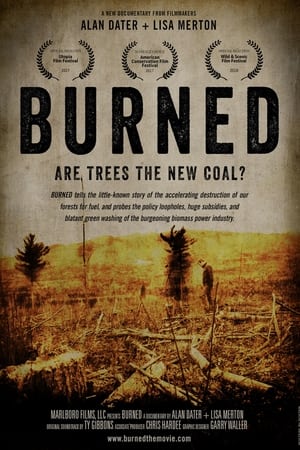
Capturing Americans in communities across the country as they wrestle with the legacy of the coal industry and what its future should be under the Trump Administration. From Appalachia to the West’s Powder River Basin, the film goes beyond the rhetoric of the “war on coal” to present compelling and often heartbreaking stories about what’s at stake for our economy, health, and climate.
With more than 300 days a year, the sun dominates this country so much that it’s even shining from their flag. It’s a barren land, sometimes it’s like it’s from another planet but still familiar. It is land of contrasts and colours with wide landscapes and fascinating deserts. Influenced by various cultures during colonization and now reborn from the shadows of Apartheid in 1990, Namibia gives a beautiful collage of culture, language, art, music and food. Everyone who loves an adventure should travel to Namibia, the precious corner of our world full of incredible natural wonders. The experience of endless landscapes and an unparalleled blaze of colour make Namibia unforgettable. NAMIBIA – THE SPIRIT OF WILDERNESS invites you on a trip whose fascination will never let you go: From the Namib Desert over the breath-taking Fish River Canyon to the spectacular Etosha National Park where you will see wild elephants, antelopes, giraffes, zebras and lions.
In the Nagarhole Tiger Reserve, there is a kingdom named Kabini, which is home to a rogue confederation of animal tribes vying for dominance. But, a lone black panther named Saya is challenging the status quo by staking his claim to the throne.
A look at the enduring relationship between the nomadic shepherds and the Indian wolf, who both defy the pressures of the modern world, in the south central plains of India.
Follows life of Malika, a lioness in South Africa’s Kruger National Park as she battles to survive.
Live and Let Live is a feature documentary examining our relationship with animals, the history of veganism and the ethical, environmental and health reasons that move people to go vegan.
This Academy Award-winning documentary takes a look at children born after the 1986 Chernobyl nuclear plant disaster who have been born with a deteriorated heart condition.
Antarctica is the most extreme continent on our planet—higher, colder, and even drier than any other on Earth, and although it is thousands of miles away, what happens here affects every single one of us.
An award-winning short exploring man-made impacts on New Zealand’s water cycle.
Steve Backshall visits a hedgehog rescue centre in Surrey founded by Brian May. He meets the dedicated staff and discovering the stories behind some of the animals being treated, helps to release a successfully treated hedgehog back into the wild, and offers advice on how to make a garden into a welcoming environment for the creatures.