Miguel Ángel Pérez, better known as “Kankel,” is a well-known and beloved figure in Santander (Cantabria). In this short documentary, he shares his amusing stories from the bullring spanning nearly 60 years, making him Spain's longest-serving bullfighter. The story is told through a series of photographs, all delivered with his characteristic sense of humor.
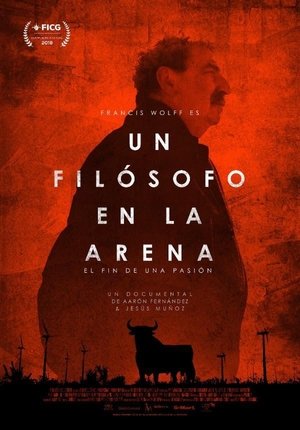
After his retirement, french philosopher and bullfighting enthusiast Francis Wolff decides to embark on a journey to France, Spain and Mexico joined by two mexican filmmakers who hardly know anything about bullfighting, a culture whose days seem to be numbered. During their road trip, they encounter numerous personalities with whom they reflect on mankind’s relationship with animals and nature, but most importantly on our relationship with death and the meaning of the ultimate journey: life itself.
Before orchestrating the greatest bullfighting seasons as an impresario, Simon Casas was a bullfighter—and thus began his journey.
La fiesta sigue
Blas Romero "El Platanito" is a bullfighter who begins to take its first steps in Merida. After a long journey, one day he is lucky enough, his performance is showed on TV and that brings him to top of the charts. From now on, his problems will be centered with the dilemma of having to give up their dreams of making serious classical bullfighting, or jump to a false bullfighting, between slapstick and temerity, which will give offer him numerous well-paid contracts.
Juanito, a peaceful fan of bullfighting, has become picador's assistant to see from the same arena the show in which he brags he is one of the protagonists. Furthermore, he believes he has discovered in a neighbor a potential figure of bullfighting sphere.
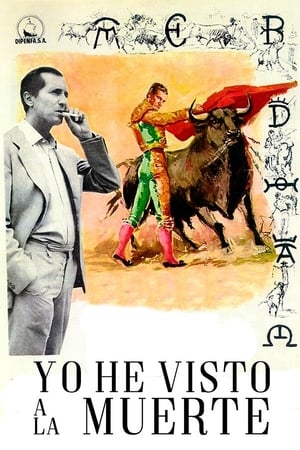
Four real episodes told by their protagonists: Antonio Mejías "Bienvenida" tells the serious goring he suffered in the Plaza de Las Ventas and his recovery process. Álvaro Domecq Romero evokes the last days of the life of the mare "Splendid", the noble animal that was brave and sensitive companion of his father. Andrés Vázquez tells how the times of the "capeas" were in little villages. With him were many unknown kids, who found an anonymous and obscure death. Finally, Luis Miguel "Dominguín", who was with Manolete, in Linares, the afternoon in which he met his death, evokes that tragic afternoon and glosses the bullfighter's human virtues. The four protagonists have seen the death in one way or another and the four tell the indelible impression that remained on them.
Golden hour in the fields and who better for a soundtrack than the Queen of Disco - Sophie Ellis Bextor in her full performance from Kendal Calling 2025! Directed by John Surdevan.
Set against the backdrop of the reconstruction of the Baima villages in Pingwu, the film follows the daily lives of four sisters and their family in the Baima Eri Village. Interwoven with memories from two decades ago, it traces their journey of resilience and renewal amid the sweeping changes of the times. Through their personal stories, the film also reveals the living heritage of the Baima Tibetan culture — its legends, songs, dances, language, and the traditional ritual of Cao Gai — offering a poetic reflection on identity, endurance, and the passage of time.
Utopías y otras especies
Capturing the Electrons documents the life and career of Nobel Prize-winning Hungarian physicist Ferenc Krausz. His research team has generated and measured the first attosecond light pulse and used it for capturing electrons' motion inside atoms, marking the birth of attophysics. In 2023, jointly with Pierre Agostini and Anne L'Huillier, he was awarded the Nobel Prize in Physics.
Since 1964, Tjorven, Båtsman, Uncle Melker, and Malin have lived in the hearts of generation after generation. In this short look back, we follow the journey from the children’s nervous screen tests to life behind the camera on the archipelago island where a TV classic took shape.
“Cinema, Poetry, and Trains in Tîrgu Neamț” might serve as the subtitle for this film, which Copel Moscu composes in a deliberately atomised manner, capturing the rhythm of a small provincial town in late-1980s Romania: cinema as escapism, pouring rain à la George Bacovia, and a vague love story between a woman projectionist and a railwayman come one after the other over the course of this somewhat comical elegy, whose meanings do not achieve the poignant depths of Moscu’s other films.
Set in the Rann of Kachchh, this documentary explores the life and music of the late folk poet Mushir Ali, whose songs reflect themes of love, spirituality, and the ephemeral nature of life. Through his verses and the desert’s vastness, the film captures the mystical Sufi traditions that thrive in this remote region.
A Turkish woman in Brighton shares her visual diary. Witness her ups and downs, her intimacy and vulnerability. After revealing hers, the film invites you to confront your ‘tiny little things’. It presents a slice-of-life experience with an abstract flow and deals with one’s existence in this world. There is no escape from family and the things in your mind, even if you are thousands of miles away. The meaning changes constantly, and the camera becomes the extension of her mind. And somebody put that voice in her brain.
The Forgotten President: Kim Young-sam's Era of Reform
La gran bogeria (Joan Dausà)
FORESTELLA THE WAVE IN CINEMA
Why must a woman change her surname after marriage or divorce? This autoethnographic film explores the issue of women’s changing surnames in Turkey. Some women have taken their cases to the European Court of Human Rights to defend their legal and personal identities. What do men think about this? How do women feel? And what unfolds between the lines of these everyday experiences? The film seeks to make these struggles and emotions visible.
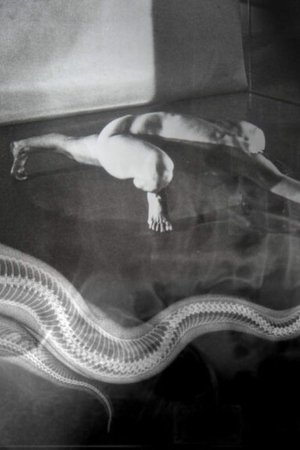
The life of Shona mbira player Gwanzura Gwenzi coexists in both the traditional and modern worlds: he works in the city for a large western corporation; at his rural homestead, he is the family head who hosts all-night spirit ceremonies, called bira. His sister Francisca is the family medium for the spirit of Kaodza, their great-grandfather. The highlight and centerpiece of the film is a bira, perhaps the only one ever completely captured on film. We see the various stages and liturgical components of the ceremony, culminating in the arrival of the spirits late at night. Francisca’s daughter, now-famous mbira player Stella Chiweshe becomes possessed by a snake spirit. Kaodza arrives through Francisca, and the family confers with the spirit in an extraordinary scene that shows how ancestors interact with the living. (Description credit: Villon Films)