More and more fair trade labels are entering the market and are being positively received by consumers. In 2012, around five billion euros were spent on fair trade products. But is it really always fair where it says fair? Filmmaker Donatien Lemaître visited plantations in Mexico, the Dominican Republic and Kenya. The investigative documentary reveals how international corporations try to improve their image with the help of the fair trade concept - at the expense of small producers and their employees.
This documentary from 1987 looks at the serious malaise that plagued the US manufacturing sector at the time. No longer competitive in the world market, and forced to buy more than it could sell, the US nevertheless continued to bask in the glow of past glory rather than face its immediate predicament. Meanwhile, Japan and other Pacific Rim countries were gaining economic ground, perhaps permanently. This film was part one of the series, Reckoning: The Political Economy of Canada.
This documentary focuses on boom-and-bust economic cycles, most notably that of Alberta oil during the '70s and early '80s. When the bust hit after a drop in world oil prices, those business people who knew how to "ride a tornado" cut their losses and moved on, while others were left devastated. When Newfoundland was faced with a possible oil boom of its own in the mid-'80s, it took the lessons of Alberta to heart. Part 3 of the series, Reckoning: The Political Economy of Canada.
The documentary shares powerful stories from across the U.S. and explores what it means to find economic security in America and the diverse paths people take to get there. While the families featured in the documentary represent different backgrounds, perspectives, and political leanings, all of them share the same dream of financial stability, as well as powerful stories of dignity, struggle, hope, and resolve.
Who is Giorgia Meloni, Italy’s Prime Minister since 2022, and how does she carry out her duties as head of state? How has a 45-year-old woman managed to win over a fragmented and deeply patriarchal Italy by ascending to the most powerful political office in her country and making her mark on the international stage? What fascist legacy does she carry?
Maxed Out takes us on a journey deep inside the American debt-style, where everything seems okay as long as the minimum monthly payment arrives on time. Sure, most of us may have that sinking feeling that something isn't quite right, but we're told not to worry. After all, there's always more credit!
In an historic final interview, filmmaker and music promoter Aaron Russo goes in depth on the insider-knowledge given to him by a member of the Rockefeller family. Russo was told– prior to 9/11– of plans to stage terror attacks, invade foreign nations, and kickstart a high-tech police state control grid that would track the populations’ every move with implantable RFID microchips. This information-packed presentation is filled with never-before seen footage. Throughout the film, Alex Jones breaks down the latest activities of the New World Order and how it ties into what Russo predicted.
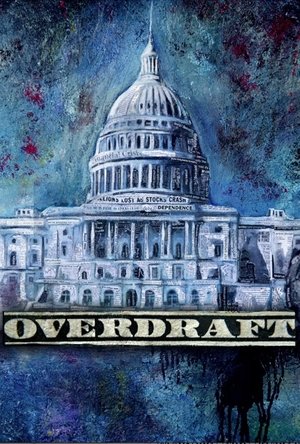
Overdraft is an award-winning film featuring leading thinkers and policymakers from across the aisle exploring major topics such as entitlement programs, defense spending, tax reform and the choices that America’s debt forces on individuals and businesses. Independently produced, Overdraft was launched in August 2012, and made available for broadcast on public television for two years through the National Educational Telecommunications Association (NETA).
Based on Thomas Ferguson's book Golden Rule: The Investment Theory of Party Competition and the Logic of Money-Driven Political Systems this film offers an in depth look at the influence of money in politics--analyzing social forces and events that the mainstream media and scholarship have largely distorted or kept hidden. It also analyzes the meaning of democracy.
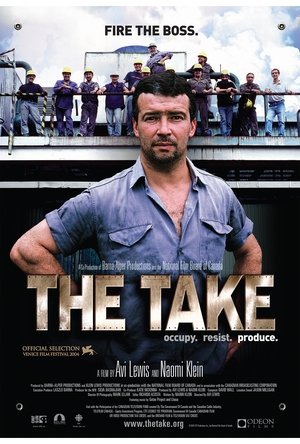
In suburban Buenos Aires, thirty unemployed ceramics workers walk into their idle factory, roll out sleeping mats and refuse to leave. All they want is to re-start the silent machines. But this simple act - the take - has the power to turn the globalization debate on its head. Armed only with slingshots and an abiding faith in shop-floor democracy, the workers face off against the bosses, bankers and a whole system that sees their beloved factories as nothing more than scrap metal for sale.
Un jour en Italie
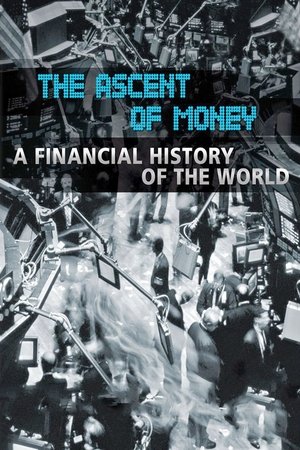
British historian and author Niall Ferguson explains how big money works today as well as the causes of and solutions to economic catastrophes in this extended version The Ascent of Money documentary. Through interviews with top experts, such as former Federal Reserve Chairman Paul Volcker and American currency speculator George Soros, the intricate world of finance, including global commerce, banking and lending, is examined thoroughly.
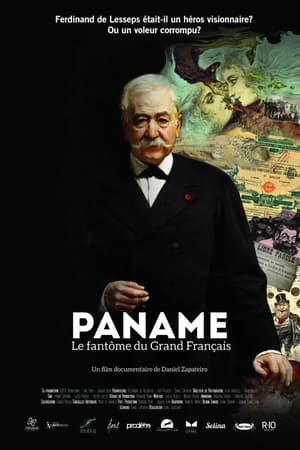
Ferdinand de Lesseps, known as “The Great Frenchman”, will embark in the greatest adventure of his life: To unite the Pacific and Atlantic oceans through a Canal in the Isthmus of Panama – without knowing that this will cost him his reputation, thousands of innocent lives and the biggest financial scandal of all time, up to that point: the famous “Scandal of Panama”. Today, the French capital is known as “Paname”.
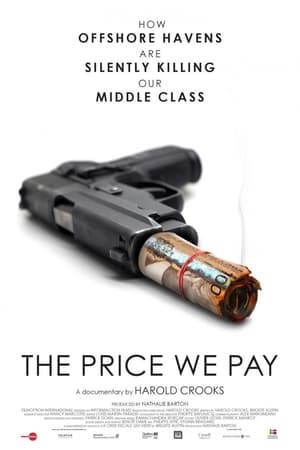
A documentary on the history and present-day reality of big-business tax avoidance, which has seen multinationals depriving governments of trillions of dollars in tax revenues by harboring profits in offshore havens.
A documentary on the rise and fall of Project Cybersyn, an attempt at a computer-managed centralized economy undertaken in Chile during the presidency of Salvador Allende.
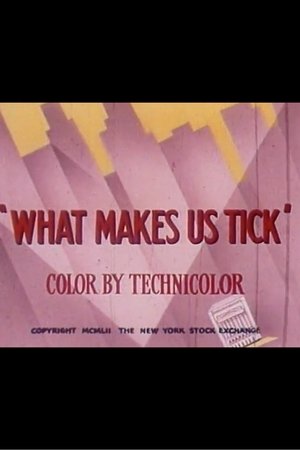
An optimistic overview and explanation of the stock market with animated examples.
Violence dans les Champs
Très chère électricité
DEBT is the story of a frantic pursuit: the search for the responsible for the televised cry of hunger of Barbara Flores, an eight-year-old Argentinean girl. Buenos Aires, Washington, the IMF, the World Bank and Davos; corruption and the international bureaucratic lack of interest.
Emmy-winning journalist Danny Schechter investigates America's mounting debt crisis in this latest hard-hitting expose. The film reveals the unknown cabal of credit card companies, lobbyists, media conglomerates and the Bush administration itself who have colluded to deregulate the lending industry, ensuring that a culture of credit dependency can flourish. Schechter exposes the hidden financial and political complex that allows the lowest wage earners to indebt themselves so heavily that even house repossessions are commonplace.