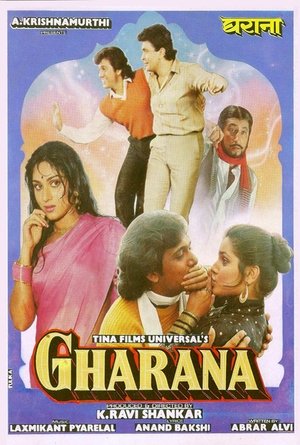
Three siblings attempt to reconcile over their mother's suicide, torn between mourning and greed.
In a single afternoon a man comes to grips with the power of his past when his estranged family becomes tangled in its web. Shot in a continuous take.
When Benny's younger brother, Loren, suddenly reappears after being missing for months, the two are forced to reckon with the drastically different ways they have chosen to live their lives.
When a young man drops out of school to care for his agoraphobic mother he too finds himself increasingly insulated from the outside world.
Khorshid, a blind child growing up in Tajikistan, is constantly distracted by music and sounds. This frequently causes him to be late to his job as an instrument tuner even though he runs the risk of being fired at a time when his family is in danger of being evicted from their house.
Ramprasad's entire family gathers under one roof for 13 days after his death, to perform and observe the Hindu traditions and rituals called the tehrvi. During the course, the family’s dynamics, politics, and insecurities come out, and then they realise that the importance of people and things are only evident in retrospect.
Two parents deal with the effects when their son is accused of murdering his girlfriend.
One family's experiences with life and death.
To stop his oldest brother from drinking himself to death, Ronan enlists the help of their estranged priest brother and long-lost sister, sparking a chaotic family reunion, a botched intervention, and an unexpected journey into forgiveness and reckoning.
An innocent father and his blind daughter with a doll spend their days within the walls of a bunker during the final stages of civil war in Sri Lanka. The surprising third character connects the father, daughter and the doll in a sorrowful manner. The blood tears they shed during the darkest hours are unheard by many. The characters represent the current stages of the tamils in Sri Lanka. The ones who died, disappeared and the living dead.
In 1908, eighth grader Alma Richards quits school to work as a ranch hand. A chance meeting with a professor motivates him to resume his education, leading him to compete in high jump at the Stockholm Olympics and win a gold medal.
Kittu Puttu is a 1977 Indian Kannada-language comedy drama film directed by C. V. Rajendran and produced by Dwarakish. The film stars Vishnuvardhan, Dwarakish, Manjula, K. Vijaya and Vaishali Kasaravalli. The film was widely appreciated for its songs and story upon release. The songs tuned by Rajan–Nagendra were huge hits.
Chandanada Gombe is a simple love story. Anant Nag is a landlord. Lakshmi's father is a school teacher who is struggling to find a bridegroom for Lakshmi. They get married with the help of relatives. Anant Nag unfortunately dies in an accident. The rest of the story continues about the life of a struggling widow and her child in a traditional society amid village politics.
One of the early films of Chhabi Biswas featuring him as a leading man, before he came to be associated with the dominating patriarch roles that have become iconic in Bengali cinema, the film is a tale of the love, relationships and ideals of two generations. Nutubihari is an idealist who has given up his love for Kalyani for the sake of his beliefs. He marries Bimala and becomes a lawyer, fighting for the rights of the poor against the feudal lords. Meanwhile, Kalyani comes to ask refuge after she becomes a widow and is inexplicably accepted by Bimala with a lot of warmth. As the years pass Kalyani's daughter Mamata and Nutu's oldest son Arun fall in love and wish to get married. However, the new-found fame and fortune turns his head and Nutu begins to resemble all the ideals and vices that he had always despised. On the other hand in an ironical turn of events, Arun comes to occupy the position once held by his father, highlighting the generational conflict of ideals.
Beren is a young girl preparing for her university entrance exams. After returning from a camp she attended, Beren suddenly falls ill. At this time, her father Salih is abroad for work, and her stepmother Nurdan, who loves her like her own daughter, calls her brother Doğu to stay with them, thinking it will be good for her. However, shortly after Doğu and his wife Nergis arrive, events unfold that will deeply affect everyone's lives. Because Beren has become physically and psychologically ill due to a spell cast on her.
Rajashekhar earns the enmity of his business partners when he opposes their illegal plans. Circumstances force him to run from the police and he is separated from his wife in the process.
Widower Tripp Spence goes on the run from the IRS with his 12-year-old baseball-phenomenon son Derrick. They assume new identities and flee to Las Vegas, where Derrick, now known as Mickey, joins a team that makes it to the Little League World Series. But will fame give away his true identity?
Olavu Geluvu is a 1977 Indian Kannada-language film, directed by H. R. Bhargava and produced by S. A. Srinivas. The film stars Rajkumar, Lakshmi, Balakrishna and Sampath. The film has musical score by G. K. Venkatesh.
The movie is based on the play Saahukaara written by B. P. Dhuttharagi. The film was a musical blockbuster with all the tracks composed by G. K. Venkatesh considered evergreen hits. Rajkumar became popular as a playback singer with the track Yaare Koogadali from the film which became an instant hit among the audiences. He would then go on to sing regularly for his films. The film was remade in Telugu in 1975 as Thota Ramudu starring Chalam, in Tamil in 1975 as Pudhu Vellam starring Sivakumar and in Malayalam in 1976 as Themmadi Velappan starring Prem Nazir.
The biggest boxing fight of 1960 takes an unexpected turn with the help of a powerful twin connection.