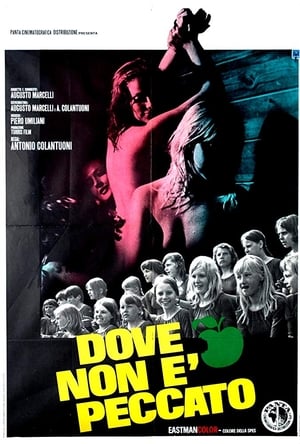
Documentary that shows the changing attitude towards immigrant labor in The Netherlands. The documentary follows three immigrants that arrived in Holland 30 years ago to work in a bakery.
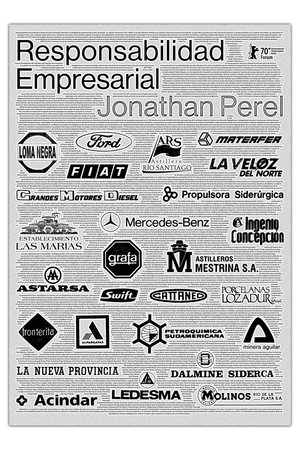
Images of Argentinian companies and factories in the first light of day, seen from the inside of a car, while the director reads out documents in voiceover that reveals the collusion of the same concerns in the military dictatorship’s terror.
Finland’s first nature documentary. The filmmakers’ expedition leads them all the way to the Åland Islands and the Karelian Isthmus.
Finnish award-winning barista Kalle Freese travels to San Francisco with his girlfriend to start an instant coffee start-up with big goals. At stake are Kalle's health, relationship and the newly formed start-up.
Kelet is a twentysomething black trans woman, whose greatest dream is to be on the cover of Vogue magazine. For the Finnish-born and Manchester-raised Kelet, such models as Naomi Campbell and Iman served as role models giving her strength – and during the darkest times, kept her alive. After coming out, then 19-year-old Kelet was cut off from her family and she moved back to Finland on her own.
A newspaper clip of a 30-year-old movie makes our middle-aged protagonist in the middle of his peak years to look for his best childhood friend. The journey leads him back to his teenage years in the 1990s depression, over-generational substance abuse and past encounters. This partly essayistic, autobiographical documentary tells the story of friendship and generational experiences while also pondering on the causes and effects of destinies in the judgmental atmosphere of our society.
How to Fix the World? is a comprehensive and informative documentary about direct action in the 1990s and 2000s, directed by Jouko Aaltonen. In the documentary, anarchists, climate activists, and squatters openly describe their experiences and link them to mainstream phenomena in society. A wide range of archive material sheds a light on the history of direct action and activism in the Finnish society.
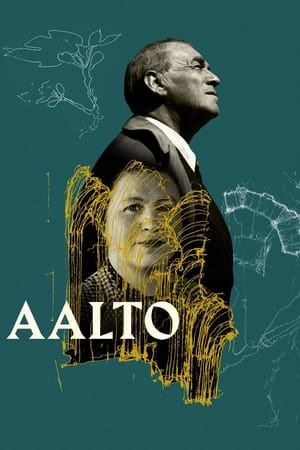
Aalto is one of the greatest names in modern architecture and design, Aino and Alvar Aalto gave their signature to iconic Scandic design. The first cinematic portrait of their life love story is an enchanting journey of their creations and influence around the world.
Starting with a long and lyrical overture, evoking the origins of the Olympic Games in ancient Greece, Riefenstahl covers twenty-one athletic events in the first half of this two-part love letter to the human body and spirit, culminating with the marathon, where Jesse Owens became the first track and field athlete to win four gold medals in a single Olympics.
Documentary movie about a Finnish professional ice hockey player, Jere Karalahti. More than 50 people have been interviewed for the documentary film, such as Jere's family, coaches, journalists, fellow players and childhood friends. A profound documentary consists of archive material and dramatized scenes in addition to interviews.
As the first African team ever to do so, Somalia has just signed up for the Bandy World Championships. The young players don't live in Somalia; they live in Borlänge, Sweden, where xenophobia has taken hold.
Entrepreneur is a universal nature documentary about Finnish entrepreneurs. This warm and carnevalistic film portrays humans in the middle of ordinary everyday survival. The main protagonists come from two totally different kinds of landscapes, from two diffent time zones. There is a scenery of contemporary modern society and just a few hundred kilometres away we find a rural and nostalgic universe with forgotten people and land.Our first protagonists are Fellini-like family, going from village to another, trying to sell meat from a small meat truck and also run a tiny funfair business. The father, the mother and their four children are working together and trusting only in themselves, not in the help of society. While countryside family is counting coins, the other pair of entrepreneurs, the two well-educated women from the capital area, have invented a vegetable protein product called Pulled Oat, and have become millionaires. But have they also made a world a little bit better?
Located nearly 80 kilometres north of Berlin, Germany, the former municipality of Ravensbrück was home to a prison between 1939 and 1945 that became a concentration camp designed specifically for women. It was built by order of Heinreich Himmler, a high dignitary of the Third Reich and head of the SS. Of the more than 130,000 people who were deported there, almost 90,000 never returned. Based on witnesses, international experts and computer-generated images, the document reveals the atrocities committed in Ravensbrück.
For a hundred years, the Association of Finnish Student Unions (SYL) has acted as the mouthpiece for Finnish university students. SYL opened its doors to the world and was a pioneer in both student health care and housing production. At the same time, there have been marches both for developing countries and against the Soviet Union.
When filmmaker Mari Soppela took her children and husband to live for a year on a sacred mountain in her native Finland, she was fulfilling a lifelong dream to share the arctic wilderness of her childhood with her family. But when years later her children turn the camera onto her, she is forced to confront her motivation for filming their lives in this searching and searingly honest cinematic exploration of identity, belonging and motherhood. Filmed over the course of 27 years, Mother Land challenges us all to examine the landscapes we carry within us and the narratives we create to make sense of our lives.
Known as one of Finland’s most prominent rock institutions, Tavastia club celebrated half a century of being in the business, whilst withstanding the challenges of a global pandemic. In this rockumentary, director Antti Kuivalainen takes us through the history of Tavastia, as the club which brought rock ‘n’ roll to Finland.
A different history of the Cold War: how Estonians under Soviet tyranny began to feel the breeze of freedom when a group of anonymous dreamers successfully used improbable methods to capture the Finnish television signal, a window into Western popular culture, brave but harmless warriors who helped change the fate of an entire nation.
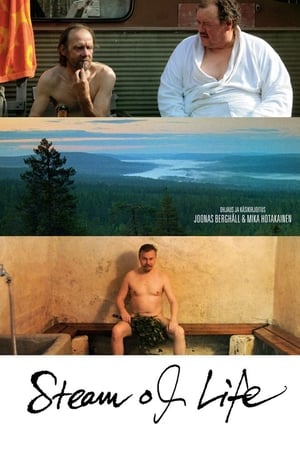
Finnish men in sauna, speaking straight from the heart.
A dramatic documentary film that deals with the Nazi rise to power in Germany in the 1930s and the development of the persecution of Jews up to the Holocaust. The film tells about the attitude of the Finnish government to the request for the handover of the Finnish Jews presented by Heinrich Himmler in the summer of 1942. The main focus of the film is the life of Jewish refugees in Finland in the years 1938-1942 and the attitude of the Finnish government to their handover in the fall of 1942.
Neuroatypical extroverted Australian Andy charms the introverted elite of the “Happiest Country in the World” and talks himself into teaching at Aalto University in Helsinki. His achievements are praised and Andy acts as the spearhead of Finnish educational projects in Africa, refugee camps in the Middle East and even the Nevada desert for the Burning Man festival. At the peak of his career representing Finland in the Netherlands, Andy is attacked. A head injury causes PTSD and the deal is done. Almost everything possible in the Finnish healthcare system goes wrong and Andy falls through the safety nets of the Nordic welfare state into a “black hole.” Andy receives a bewildering number of different F-code diagnoses and eventually ends up in a closed ward, holding the unofficial world record for the most different F-code diagnoses given to one person.