Acclaimed Finnish director Rauni Mollberg made several scandalous yet widely appreciated films. Former co-worker Veikko Aaltonen’s eye-opening documentary The Dinosaur looks at the relentless, often disturbing directing techniques behind Mollberg’s art and success.
A People’s Radio – Ballads from a Wooded Country is a carnivalesque portrayal of the Finnish landscape of the soul and abode. The short film is based on the iconic YLE programme “People’s Radio”, and its visual material has been created by the road movie method of driving across summery Finland. The film paints a panorama of what Finland looks like today. Its narration progresses through humour into civic anarchy, ultimately also towards the longing for human connection.
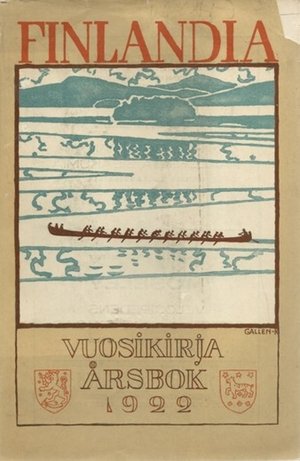
A documentary from Erkki Karu, one of the earliest pioneers of Finnish cinema: This government-produced propaganda film introduces the nature, sports, military, agriculture and capital of Finland.
Sámi artefacts from the Finnish National Museum are returning home to Sápmi, while the holy drums of the Sámi people are still imprisoned in the basements of museums across Europe. The returning objects symbolise the dignity, identity, history, connection to ancestors and a whole world view that was taken from the Sámi people. Director Suvi West takes the viewer behind the scenes of the museum world to reflect on the spirit of the objects, the inequality of cultures and the colonialist burden of museums.
Welcome to the curious, surprising and always outspoken world of straight men who go Gay4Pay. Curiously, there is a disproportionate percentage of men working in gay porn who identify as straight. Why would a straight man do gay porn? What motivates him to try this or make a career of it? Why is there such keen interest and debate into the sexuality and personal lives of these men? And what does it say about us, the viewer that so much of gay porn is dominated by images of straight men?
A dramatic documentary film that deals with the Nazi rise to power in Germany in the 1930s and the development of the persecution of Jews up to the Holocaust. The film tells about the attitude of the Finnish government to the request for the handover of the Finnish Jews presented by Heinrich Himmler in the summer of 1942. The main focus of the film is the life of Jewish refugees in Finland in the years 1938-1942 and the attitude of the Finnish government to their handover in the fall of 1942.
Finland has long been the promised land for long hair and heavy rock music, however jazz has it’s own place here too! Then again maybe jazz is just the general name we give to music we can’t quite classify. And the original soundscapes brought forth by guitarist Heikki Ruokangas are just that; hard to classify. In Ruokangas’ creations, elements of jazz meld together with the strums and tweaks of modern classic guitars to create an aggressive medley of sound. The end result is a skillful and intense break from traditional guitar song.
Arguing that advertising not only sells things, but also ideas about the world, media scholar Sut Jhally offers a blistering analysis of commercial culture's inability to let go of reactionary gender representations. Jhally's starting point is the breakthrough work of the late sociologist Erving Goffman, whose 1959 book The Presentation of the Self in Everyday Life prefigured the growing field of performance studies. Jhally applies Goffman's analysis of the body in print advertising to hundreds of print ads today, uncovering an astonishing pattern of regressive and destructive gender codes. By looking beyond advertising as a medium that simply sells products, and beyond analyses of gender that tend to focus on either biology or objectification, The Codes of Gender offers important insights into the social construction of masculinity and femininity, the relationship between gender and power, and the everyday performance of cultural norms.
Set against the vibrant spectacle of the jaripeo, a symbol of Mexican cowboy tradition and machismo, this story unveils a hidden world of queer desire and quiet rebellion. As glances and gestures disrupt the rigid norms of masculinity, the rodeo becomes a stage for our protagonists to navigate identity, community, and the search for belonging in an oppressively traditional space.
For 18-year-old Finnish–Kosovan Fatu, a simple visit to the grocery store feels as nerve-racking as a lunar expedition: for the first time in his life, he’s wearing makeup in public. Luckily his best friend Rai, a young woman on the spectrum of autism, is there to ferociously support him through the voyage.
The concept of machine-made knit was known as early as the 1850s, but it was only during the 1920s that the quality of the material had improved. When the plant known as "Atlas" was introduced in 1931, the shop windows drew a lot of attention, and Aho & Soldan was ordered to make a promotional film. In this well-paced film, we see the jersey production step by step.
The life of the bullfighter Andrés Roca Rey during a day of bullfighting, from the moment he dresses up to the moment he undresses.
TV document about the Finnish music producer Atte Blom.
You could be forgiven for mistaking Charlie Siem for James Bond. Whether he's driving an orange Porsche to his cliff-top Monaco mansion, ordering martinis or looking suave in a designer suit, he is a man on a mission. It isn't to hunt down SPECTRE, but to find perfection in everything he does. Whether it's performing on stage, recording albums, or selecting a suit, Charlie demands the best, of himself and others. Despite an entourage dubbed ‘Charlie's Angels', he's lonesome, and complains that people can't relate to him. Danish filmmaker Eva Mulvad, with patience and panache, delves into this life of privilege to find commonalities of ambition and desire.
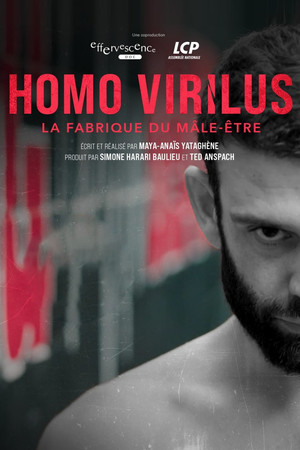
In Man Made, Sunny tries to find out what society's ideas regarding masculinity entails. Does testosteron define your masculinity? Can men be victims? And do men suffer under these ideas? In the twentieth century, feminists have fought for the freedom of women and subsequently their emancipation. Is now the time for the emancipation of men, are they next to be set free?
Aslam sells medicines for sexual problems on the pavements of Meena Bazar near Jama Masjid in Delhi. Khalifa Barkat presides over an wrestling gym (akhara) in the adjacent park and puts a group of young men through the moral and physical grind of wrestling. Through the park and the market pass hundreds of men every day. Majma explores the instability of working class lives and its impact on male sexuality and gender relations.
During the Continuation War, there were dozens of POW camps in Finland. About the third of 70,000 prisoners died during the first year of war. Most of the archives of the camps were destroyed and the majority of the war crimes were never revealed.
This film is part of a project that has listened to over 40,000 people on masculinity issues and has resulted in a documentary and a tool book based on this publicly available study through an agreement with the Social Information Consortium (CIS) of the University of São Paulo.
Shawn Huff and Ervin Latimer Jr. are the children of African-American basketball players Leon Huff and Ervin Latimer Sr. who arrived in Finland in the 1970s. They have grown up to become Finnish social and political influencers through their fathers' perseverance, ambition and the societal racism that has been passed down through the generations to their sons. The sons channel the experiences of their silent fathers into action and both generations fight for a more equal world.
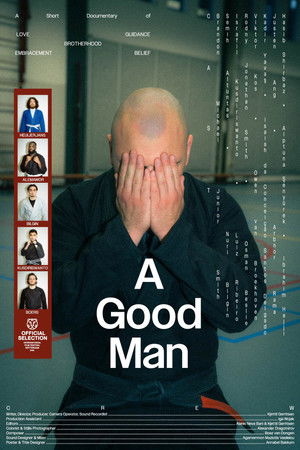
After the birth of his grandson, Bobby Roth undertakes a cinematic investigation as to what constitutes being a "good man" in today's world. This voyage of discovery leads him to interview more than fifty of his friends, both men and women who he considers to be "good people," about their views on everything from how they were parented to their thoughts on feminism, change, and regrets they might have. Their answers both surprises and enlighten both the viewers and Bobby, himself.