In 1910, the Pennsylvania Railroad successfully accomplished the enormous engineering feat of building tunnels under New York City's Hudson and East Rivers, connecting the railroad to New York and New England, knitting together the entire eastern half of the United States. The tunnels terminated in what was one of the greatest architectural achievements of its time, Pennsylvania Station. Penn Station covered nearly eight acres, extended two city blocks, and housed one of the largest public spaces in the world. But just 53 years after the station’s opening, the monumental building that was supposed to last forever, to herald and represent the American Empire, was slated to be destroyed.
Theodore Roosevelt was America's 26th president and a larger-than-life legend whose incredible story must be seen to be believed. Narrated by George C. Scott, this documentary weaves extremely rare archival footage with meticulous recreations alongside the music of John Philip Sousa in a dynamic panorama of the great events of Teddy Roosevelt in the early years of the 20th century.
Discover the fascinating story of Elizebeth Smith Friedman, the groundbreaking cryptanalyst who helped bring down gangsters and break up a Nazi spy ring in South America. Her work helped lay the foundation for modern codebreaking today.
Exploring the Panama Canal is a fascinating journey through the land of mystery and adventure and the Canal that divides it. Through rare archival footage, you'll experience the history of the Canal, from its failed beginnings to the Herculean effort of 35,000 men to build this most strategic of ocean routes. You'll witness the Canal in operation from a front-row seat in the Command Center, towers and computer stations that control the locks. Spectacular location shooting takes you ashore into the exotic Republica de Panama where you'll delight in the native culture, history and bustling lifestyles of Panama City and Colon. Exploring the Panama Canal - an unforgettable voyage you'll enjoy for years to come!
Doomed attempt to get to California in 1846. More than just a riveting tale of death, endurance and survival. The Donner Party's nightmarish journey penetrated to the very heart of the American Dream at a crucial phase of the nation's "manifest destiny." Touching some of the most powerful social, economic and political currents of the time, this extraordinary narrative remains one of the most compelling and enduring episodes to come out of the West.
The bombing of the Alfred P. Murrah Federal Building in Oklahoma City in April 1995 is the worst act of domestic terrorism in American history. This documentary explores how a series of deadly encounters between American citizens and federal law enforcement—including the standoffs at Ruby Ridge and Waco—led to it.
Afro-Antillean workers hired for the construction of the Panama Canal are brought from their homes to work in conditions that were not those promised. They, the descendants of African slaves and domesticated from England, manage to raise their voices against American injustices.
An account of the devastating 1906 San Francisco earthquake and the subsequent effort to rebuild.
In the spring of 1927, after weeks of incessant rains, the Mississippi River went on a rampage from Cairo, Illinois to New Orleans, inundating hundreds of towns, killing as many as a thousand people and leaving a million homeless. In Greenville, Mississippi, efforts to contain the river pitted the majority black population against an aristocratic plantation family, the Percys, and the Percys against themselves. A dramatic story of greed, power and race during one of America's greatest natural disasters.
In the 50s and 60s, deep in the American countryside at the foot of the Catskills, a small wooden house with a barn behind it was home to the first clandestine network of cross-dressers. Diane and Kate are now 80 years old. At the time, they were men and part of this secret organization. Today, they relate this forgotten but essential chapter of the early days of trans-identity. It is a story full of noise and fury, rich in extraordinary characters, including the famous Susanna, who had the courage to create this refuge that came to be known as Casa Susanna.
Based on eight years of continued prosperity, presidents and economists alike confidently predicted that America would soon enter a time when there would be no more poverty, no more depressions -- a "New Era" when everyone could be rich. But when reality finally struck, the consequences of such unbound optimism shocked the world.
Shortly before dawn on August 21, 1992, six heavily armed U.S. marshals made their way up to the isolated mountaintop home of Randy and Vicki Weaver and their children on Ruby Ridge in Northern Idaho. Charged with selling two illegal sawed-off shotguns to an undercover agent, Weaver had failed to appear in court and law enforcement was tasked with bringing him in. For months, the Weavers had been holed up on their property with a cache of firearms, including automatic weapons. When the federal agents surveilling the property crossed paths with members of the family, a firefight broke out. The standoff that mesmerized the nation would leave Weaver injured, his wife and son dead, and some convinced that the federal government was out of control. Drawing upon eyewitness accounts, including interviews with Weaver’s daughter, Sara, and federal agents involved in the confrontation, Ruby Ridge is a riveting account of the event that helped give rise to the modern American militia movement.
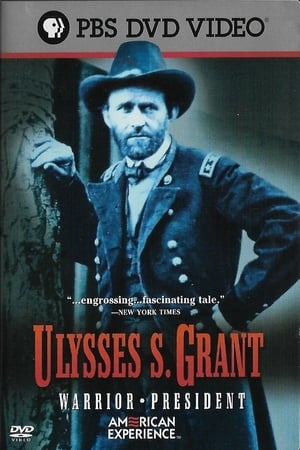
As a general, he had fought to preserve the Union. As president, he helped to oversee the transformation from union to nation. As a former president, he was the embodiment of the very idea of national union, and of America's entry onto the world stage. As a dying general, he was the symbol of the nation's greatest and most traumatic war. The story of Ulysses S. Grant's life, from his first days on the Ohio frontier to his last days out-writing death in the Adirondacks, is an endlessly fascinating one. Few public figures have ever held a such a firm grip on the American popular imagination. Grant was a man whose rise from obscurity made him a hero to millions who could see themselves in him. An ordinary man who faced and met extraordinary challenges, his successes and failures seemed to encapsulate the national character. He was so popular with the American public that, despite his two scandal-ridden terms as president, he was nearly nominated to run for a third term.
On August 8, 1908, at a racetrack outside Paris, Wilbur Wright executed what was, for him, a routine flight: a smooth take-off banking into a couple of tight circles, ending in a perfect landing. The flight took less than two minutes, but it left spectators awestruck. While the combined talents of Wilbur and Orville Wright had produced the first plane capable of controlled flight , their distrust of others had almost cost them the credit for their invention. Now, having proved to the public that they had mastered the sky, the reserved brothers from the small town of Dayton, Ohio, became world celebrities.
Five shorts spanning a century on lives impacted by the Panama Canal. Men, women and children who are influenced by the existence of the "Canal", the event that changed the history of not only a country but the world.
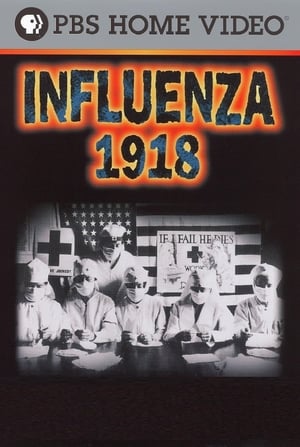
Influenza 1918 is the story of the worst epidemic the United States has ever known. Before it was over, the flu would kill more than 600,000 Americans - more than all the combat deaths of this century combined.
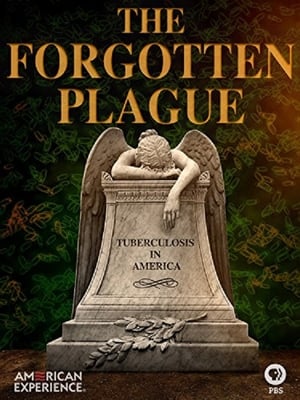
Tuberculosis is the deadliest killer in human history, responsible for one in four deaths for almost two centuries. While it shaped medical pursuits, social habits, economic development and public policy, TB and its impact are poorly understood.
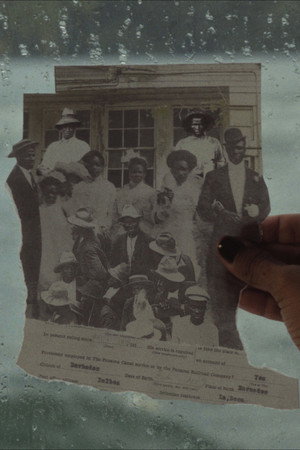
Born into poverty in Panama, Cirilo McSween’s journey is one of defiance, resilience, and triumph over systemic barriers. Against the backdrop of Jim Crow America, he confronts racism while pursuing the American Dream. From his arrival in the U.S. as an ambitious immigrant to his rise as a trailblazing entrepreneur and civil rights activist, McSween’s life stands as a testament to determination and community. Through tireless advocacy for equality and opportunity, he helped shape both Panama’s identity and Chicago’s civil rights movement. A confidant of Dr. Martin Luther King Jr., a pioneering insurance executive, and a philanthropist empowering underserved communities, McSween’s story bridges nations and generations. CIRILO, A Legacy Untold illuminates a transformative figure whose legacy continues to inspire across the Americas.
Filmed over five years in Kansas City, this documentary follows four transgender kids – beginning at ages 4, 7, 12, and 15 – as they redefine “coming of age.” These kids and their families show us the intimate realities of how gender is re-shaping the family next door in a unique and unprecedented chronicle of growing up transgender in the heartland.