A costume designer is sent to the Catskills for an interactive theatre piece set in the 1920s. When she arrives things seem dark, strange and off. She soon realizes she is part of a student film.
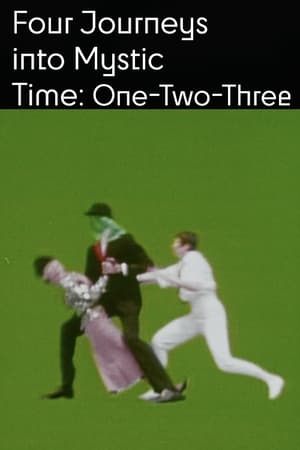
Five more-or-less distinct sections, all featuring "Freak" Orlando, a woman played by the late Magdalena Montezuma, who appears in various guises and deformities throughout.
This film tell us about intricate attitudes in male collectives on navy. The film bore in poetical form with respect for differently minded heroes.
An abandoned seaside resort. The shooting for a fantasy film about the end of an era wraps up. Two women, both members of the film crew, one an actrice, the other a director, Apocalypse and Joy, are on the verge of concluding their love affair.
The film is an allegory in which the attempt is made to show the inner process of movement of the composer's soul at the time of the birth of music.
The film appears like a ritual with splendids and crypteds psalms. The Great Master of Order (Marcel Mazé, new fetish actor after Aloual) seduces the young male prey with a running cinema projector which carves Murnau's Nosferatu extracts on their bodies. Metamorphosis, rituals passages, Eros and Thanotos, illusion and reality, film into the film are the themes and images in perpetual osmosis in this Stéphane Marti's opus.
Egotistical faded star Hedy Lamarr visits a plastic surgeon to be transformed into the "14-year-old girl" she believes herself to be. She is then caught shoplifting by Mary Woronov and is put on trial, with Tavel as the judge and her five ex-husbands the jury. Hedy remains self-centered and detached throughout, posing and primping and bursting out renditions of "I Feel Pretty" and "Young at Heart."
Attempts to showcase how the creation of art directly correlates to the perception we have of ourselves and the life around us as shown through the eyes of a struggling family.
Two men. Friends? Enemies? Lovers? Brothers? One is nothing, success or failure depends on two.
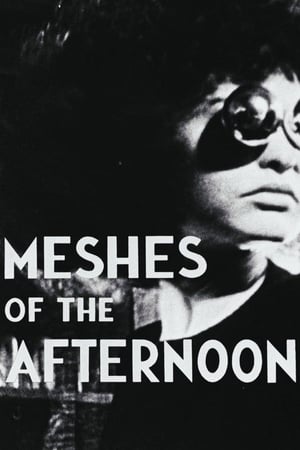
A girl gets in a car accident and wanders through the woods, encountering all kinds of nightmarish things.
Experimental short film depicting the life, perhaps real, perhaps a dream, of a young girl named Emi. Emi travels to the city where she encounters her counterpart, Sari, and falls in love with…a vampire?
While under the effects of anasthesia in a dentist's office, a young man and woman fantasize a romantic triangle between themselves and the dentist.
Dislocation in time, time signatures, time as a philosophical concept, and slavery to time are some of the themes touched upon in this 9-minute experimental film, which was written, directed, and produced by Jim Henson. Screened for the first time at the Museum of Modern Art in May of 1965, "Time Piece" enjoyed an eighteen-month run at one Manhattan movie theater and was nominated for an Academy Award for Outstanding Short Subject.
Julie, a teen who died from a PCP overdose in the early '70s, searches from beyond the grave for her younger brother Bob, who now in the '90s is an obese watch seller suffering with sucrose intolerance.
Hoping to find a sense of connection to her late mother, Gorgeous takes a trip with her friends to visit her aunt's ancestral house in the countryside. The girls soon discover that there is more to the old house than meets the eye.
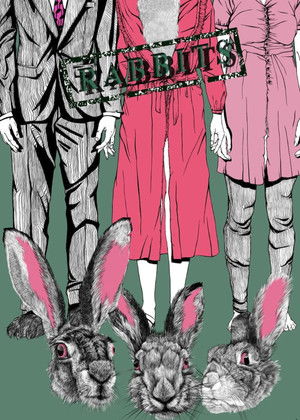
A story of a group of humanoid rabbits and their depressive, daily life. The plot includes Suzie ironing, Jane sitting on a couch, Jack walking in and out of the apartment, and the occasional solo singing number by Suzie or Jane. At one point the rabbits also make contact with their “leader”.
Drawing inspiration from a poem penned by Castro Alves, this film vividly captures the political, cultural, and intellectual climate of Brazil during the late 1970s. At its core, the story revolves around four distinctive embodiments of Christ's image: a black man, a soldier, an Indian, and a guerrilla fighter. These courageous individuals, hailed as the harbingers of doom in the tupiniquim lands, valiantly combat the insatiable avarice and oppressive "civilizing" brutality propagated by the formidable John Brahms—a foreign exploiter devoid of morals.
How do we represent the ideas of gender? This short reflects about this topic, as we see an unidentified character, suited up, and with a paper bag over his head, walking down the hallway of its high school.
F.M. discovers that different sonic frequencies induce different patterns of behaviour in listeners, first in his own studio but later in the local "H-Burger" restaurant where the passive muzak appears to be wiping people's emotions.
Three friends meet in a central cheerful pastime. After strolling along the boulevards, they are in nature. The dark side of the forest reveals the subconscious of each. And none of them are unaware of the existence of the world of the forces that awaken in man hidden until the time of the dark side of their personalities. The metaphor of the film is laid bare hidden from direct view the laws of nature to be reckoned with, are unaware of their presence, man.