Two egg-shaped clown performers try out new ways to impress audiences.
High school student Aoi Aioi lives with her elder sister, Akane, after a tragic accident took their parents away 13 years ago. Because Akane has since been taking care of her single-handedly, Aoi wants to move to Tokyo after her graduation to relieve her sister's burden and pursue a musical career, inspired by Akane's ex-boyfriend Shinnosuke "Shinno" Kanamuro. Shinno was part of a band until he left for Tokyo to become a professional guitarist after the sisters' parents passed away, and he was never to be seen again.
Poème Électronique is an 8-minute piece of electronic music by composer Edgard Varèse, written for the Philips Pavilion at the 1958 Brussels World’s Fair. The Philips corporation commissioned Le Corbusier to design the pavilion, which was intended as a showcase of their engineering progress. The pavilion was shaped like a stomach, with a narrow entrance and exit on either side of a large central space. As the audience entered and exited the pavilion, the electronic composition Concret PH by Iannis Xenakis (who also acted as Le Corbusier's architectural assistant for the pavilion's design) was heard. Poème électronique was synchronized to a film of black and white photographs selected by Le Corbusier which touched on vague themes of human existence.
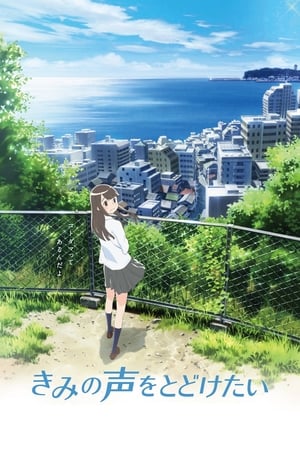
The story focuses on high school girl Nagisa Yukiai who lives in a seaside town. She has believed her grandmother's story that spirits dwell in words and they are called "kotodama" (word spirit). One day, she strays into a mini FM station that has not been used for years. As an impulse of the moment, she tries to talk like a DJ using the facility. But her voice accidentally broadcasted reaches someone she has never expected.
An animated telling of Kobe Bryant's titular poem, signaling his retirement from the sport that made his name.
Kohata Anime Studio is a place full of dreams where animation is made. Baja was raised in this studio by the people who create animation. Floating in a pond outside are his friends the ducks. One night, when all the people are no longer at the studio, Baja takes a peek outside and finds that his duck friends are being attacked by a cat. Will Baja be able to save his friends? A wondrous night adventure begins.
500 years into the future, the earth is a dry wasteland destroyed by humans. Doctor Alma, a fluffy, brilliant Vulkeet (a cross between a parakeet and vulture) who drives a Vespa, must cure the only creatures left who can save the world by bringing back the rain - the bizarre and loveable Homeys who have fallen ill with a mysterious sickness.
Short animation by Shynola & Ruth Lingford
In 1971, graduate student Gloria Orenstein received a call from Surrealist artist Leonora Carrington that sparked a lifelong journey into art, ecofeminism and shamanism. This short film uses art, animation and storytelling to celebrate this wild adventure. Now more than 40 years later, award-winning Dr. Gloria Feman Orenstein is a feminist art critic and pioneer scholar of women in Surrealism and ecofeminism in the arts. Her delightful tale brings alive an often unseen history of women in the arts.
A little girl is taken on a mind-bending tour of her distant future.
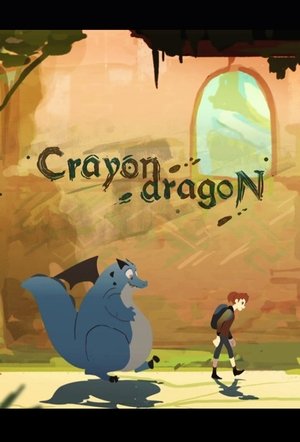
A girl is commissioned to paint over an old concrete illustration, in which to her surprise, sinks into. She befriends a painted dragon who has a wing missing.
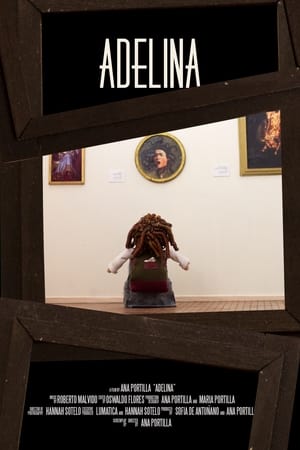
Adelina, going for the first time to a museum, discovers her artistic side.
A young boy imagines his mother to be an airplane who travels to exotic lands.
A series of short animated segments, without dialog, explore major characters of modern society, such as the plastic surgeon, the fashion-obsessed woman, the rumor-monger, and others, leading to a concluding comment on the progress of civilization.
Extracorpus
Autumn is in the air as the Kitauji High School concert band prepares for the National Competition. The band hears troubling news that Asuka Tanaka, vice president of the club and one of the key euphonium players in the band, may quit! Asuka is beautiful and charismatic and everyone relies on her, but she also has a cool side and never reveals her true self. Kumiko doesn’t get along with Asuka initially, but her feelings change when she learns that Asuka may actually drop out. Asuka has feelings about the euphonium that she cannot tell anyone else…
Poland, 1970. When popular protests erupt in the streets due to rising prices, the communist government organizes a crisis team. Soon after, the police use their truncheons and then their firearms. The story of a rebellion from the point of view of the oppressors.
After losing her parents, young flower selling Midori is put up by a fairground group. She is abused and forced to slavery, until the arrival of an enigmatic magician of short stature, who gives her hope for a better future.
Seemingly at random, the wings and other bits of moths and insects move rapidly across the screen. Most are brown or sepia; up close, we can see patterns within wings, similar to the veins in a leaf. Sometimes the images look like paper cutouts, like Matisse. Green objects occasionally appear. Most wings are translucent. The technique makes them appear to be stuck directly to the film.
The next piece begins! Kumiko is now in her second year at Kitauji High School, and with a new year comes new problems. As if making it to Nationals wasn't hard enough, Kumiko is tasked with mentoring the concert band's troublesome first years – each with their own distinct personality and problems to solve. With Kumiko busy juggling both the concert band and her new role as senpai, how does her relationship with Shuuichi fit into the picture?