In 18th-century Edo, Tsutaya Juzaburo rises from a poor background to become a leading publisher. Despite political changes threatening his career, he works to shape Edo’s cultural scene through innovative books and collaborations with artists.
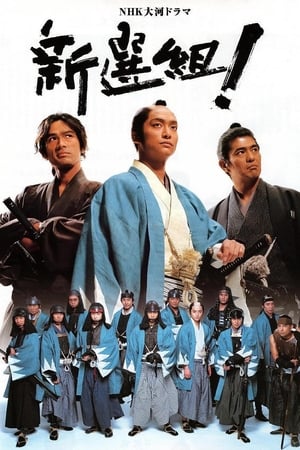
Shinsengumi! is a Taiga drama television series produced by Japanese broadcaster NHK. It was a popular drama about the Shinsengumi, a Japanese special police force from the Bakumatsu period.
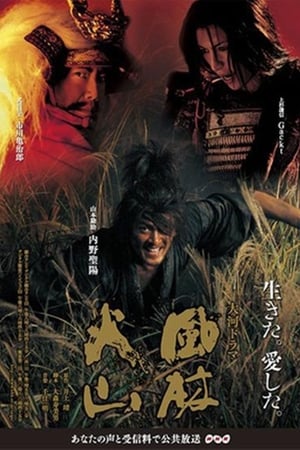
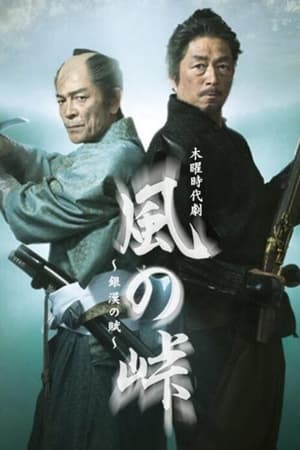
Fūrin Kazan was the 46th NHK Taiga drama beginning on January 7, 2007. It was aired throughout 2007. The four characters from left to right are wind, woods, fire, and mountain. The title is a reference to the war banner used by Takeda Shingen, which in turn was taken from Sun Tzu's The Art of War. It means "Swift as the Wind, Silent as a Forest, Fierce as Fire and Immovable as a Mountain."
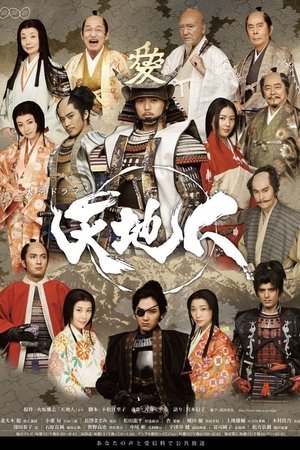
Tenchijin is the 48th NHK Taiga drama. It airs on NHK from January 4, 2009 every Sunday from 20:00 to 20:44 JST to November 22, 2009 spanning 47 episodes. The story centers on the life of the 16th century samurai Naoe Kanetsugu. Production began on April 27, 2007. The story is based on the novel Tenchijin by Masashi Hisaka and was adapted for screen by scriptwriter Eriko Komatsu. The series' music composer was Michiru Oshima. The protagonist of the drama, Naoe Kanetsugu, was taught by Uesugi Kenshin in his youth that to conquer the world is a trifling matter, but what matters is to live one's life with righteousness. After Uesugi's death, Naoe supports Uesugi Kagekatsu, who holds the destiny of Echigo province.
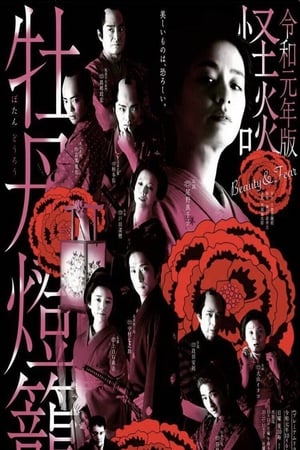
One hundred years ago, the two died untimely deaths, although they had a strong bond. In the Edo period, the reincarnated man met a geisha named Osome, a wandering spirit who could not attain Buddhahood.
Collection of short stories about women in various periods of Japanese history. Based on famous Japanese novels.
It is said that the Shinsengumi, led by Isami Kondo, delayed the start of the Meiji restoration by 10 years. This is a large-scale historical drama that tells about their life path up to the battle of Ikedaya.
Centered around Masujiro Omura, who became a commander for the Choshu clan, and founded the modern Japanese millitary system.
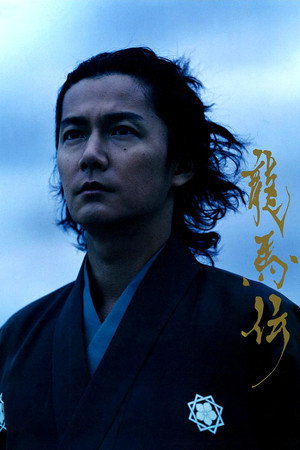
The chronicles of Sakamoto Ryoma, a pre-revolutionary who helped shape the face of modern Japan. In order to study swordsmanship, Ryoma heads for Edo where he meets many people who influence his thinking. He becomes close friends with men like Katsu Kaishu and Saigo Takamori and later establishes a naval training school in Kobe. Ryoma's controversial political views make him a target for shogunate assassins but his fervent belief in a classless society helps forge the Choshu-Satsuma alliance which ultimately brings about the Meiji Restoration.
峠の群像
元禄太平記
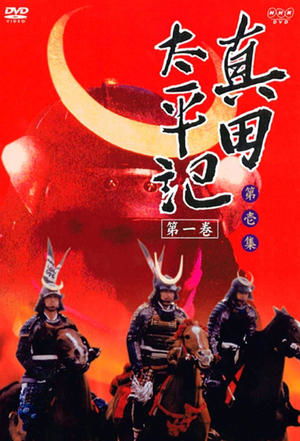
Set in Japan several centuries back. It depicts the struggles of three historical warriors, Dosan Saito, Nobunaga Oda and Mitsuhide Akechi.
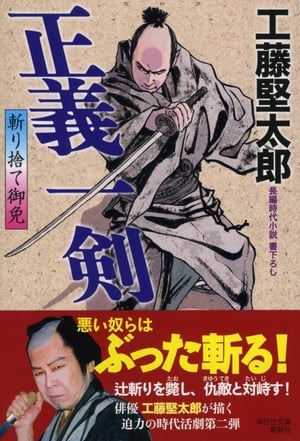
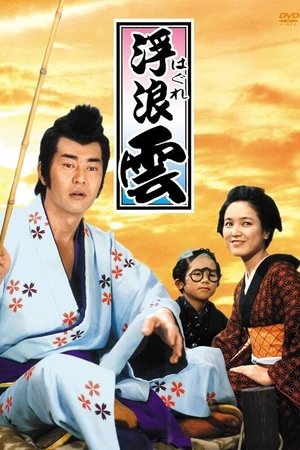
Saotome Mondonosuke, "Hatamoto" (direct servant of the shogun), a handsome man with a scar on his forehead in the form of a crescent moon, a favorite of the shogun. He is a master of martial arts, who owns the style of Moroha-ryu seigan-kuzushi (fencing), Yoshin-ryu tai-jutsu (the art of fighting without weapons) and even military science, but in the era of Genroku (1688-1704) all these skills are not in demand, and this brings boredom to Mondonosuke. To dispel boredom, this so-called "bored gentleman" walks around the city, and when he hears about some incident, he rushes to the place and defeats evil with his invincible swordsmanship. Mondonosuke has a 17-year-old sister, Kikuji (Yukiko Kashiwagi), and Kikuji's lover, Kirishima Kyoya (Takao Kataoka), becomes his right hand.
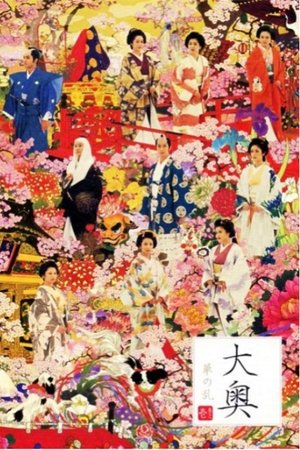
During the reign of the shogun, Iemitsu, an epidemic causes the population of men to greatly drop, leading to an ooku where the role of men and women are reversed. Thus, “the women become the shogun, served by 3000 handsome men”
Set at the end of the 12th century when several wars for control of Japan disrupted a long era of peace, this tale of "Heike" (another name for the Taira clan) focuses on Taira Kiyomori who fights alongside other members of his clan to at first successfully overcome the Minamoto clan and their bid for power. Battles and intrigue abound, as the puppet Emperor and Buddhist monks take sides in the power struggle. At issue is Kiyomori's parentage, not an unusual problem for the nobility in that era where clandestine liaisons among courtiers and the upper classes were common.
The story chronicles the life of Yagyū Munenori.
Depicting Date clan’s internal strife that occurred during a peaceful Edo period governed by the 4th Tokugawa shogun.
The story chronicles the life of Nagao Kagetora.
The Story is about three daughters of a "Hatamoto" during the end of the Edo period and the Meiji Restoration.
The story chronicles the life of Ii Naosuke.