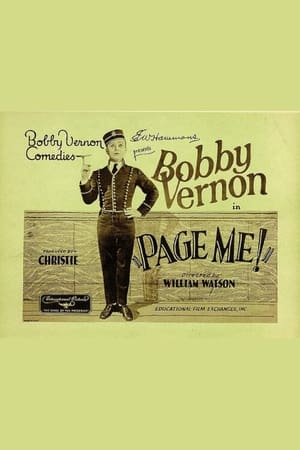
Bernie Cates requests the services of the most absent-minded waiter he's ever seen, who pours water before setting the glasses, endlessly repeats questions, brings wrong orders, and ruins everything- but the bill.
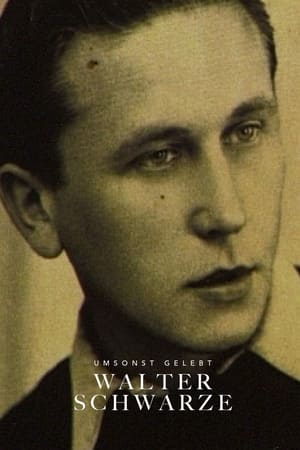
“This film is part of a series of films on gay men who survived the Nazi era. I met Walter Schwarze when he was already in his eighties. My camera recorded his first public account of his five-year incarceration as a homosexual at Sachsenhausen concentration camp. He was in his fifties when he met Ali in his hometown of Leipzig; the two men became partners and remained close until his demise. And yet, Walter told me, he felt he had lived in vain because he had not had the good fortune of today's gays, who are able to grow up in freedom. Walter Schwarze died of cancer on May 10, 1998.” Rosa von Praunheim
The 1920s saw a revolution in technology, the advent of the recording industry, that created the first class of African-American women to sing their way to fame and fortune. Blues divas such as Bessie Smith, Ma Rainey, and Alberta Hunter created and promoted a working-class vision of blues life that provided an alternative to the Victorian gentility of middle-class manners. In their lives and music, blues women presented themselves as strong, independent women who lived hard lives and were unapologetic about their unconventional choices in clothes, recreational activities, and bed partners. Blues singers disseminated a Black feminism that celebrated emotional resilience and sexual pleasure, no matter the source.
Best known for his work in video, Richard Fung has made the politics of gender, ethnicity, and sexual orientation his central focus. Chinese Characters (1986) examines the ambiguous relationship of gay Asian men with white gay porn.
Documentary about the ten days the director spent in Moscow, during the 1986 Moscow Youth Festival, as kind of a gay delegate.
Alex and Gershon are both playwrights and lovers. Although Gershon is older and they are not both sucessful, they manage to maintain a long term relationship.
The original documentary on the Wigstock festival, back in the day when it was a much smaller affair in Thompkins Square Park. A full day of peace, love, and wigs…
Inspired by a poem by William Blake: a short experimental film about the perception of vision.
A depiction of a girl’s uneasy state of mind as it wavers between life and death.
A newly arrived guest of a Hollywood hotel charms and amazes the regulars, and they decide to invite him to their Christmas dinner.
AMG auteur Richard Fontaine started making short, silent posing-pouch snapshot films in the mid-1950s and moved on to sound titles like In the Days of Greek Gods (1958) and Muscles from Outer Space (1962), which featured narratives as well as nudity. Fontaine's films are among the first gay-campaigning documents in American cinema--he often managed to include references to the lowly status of the homosexual. His first feature-length erotic film, In Love Again (1969), is more like propaganda than porn. (from: http://www.glbtq.com/arts/film,3.html)
In this educational short film, tips are given on proper nourishment.
In Search of Avery Willard iIlluminates the life and work of the groundbreaking, and mostly forgotten, artist Avery Willard — photographer, filmmaker, writer, publisher, leatherman, pornographer.
Danny ponders a way for rival gangs to avoid violence at an upcoming dance.
An elegant and humorous film—in the guise of a serious anthropological treatise—spotlights "The Perfect Human," a model of the modern Dane created by our wishful thinking.
A single mother who buries herself in work and a grandfather who hides in his own little world. The imaginative machinations of an eight year old girl may mean salvation for this family darkened by loss.
With the loss of Patroclus (his undeclared male lover), Greek warrior Achilles returns to the Trojan War.
This anti-homosexual social "scare" short film focuses on the dangers of young boys talking to strangers.
The story is the bridges the gap of Assassin's Creed II and Assassin's Creed Brotherhood. After the destruction of Monteriggioni in the year 1500, Ezio met with Leonardo Da Vinci to gather information about the Pope's son, Cesare Borgia. Leonardo tells Ezio of Cesare's rise to power.
A boat builder and his family attempt to set sail in his handmade boat, 'The Damfino'.