How did Nazi Germany, from limited natural resources, mass unemployment, little money and a damaged industry, manage to unfurl the cataclysm of World War Two and come to occupy a large part of the European continent? Based on recent historical works of and interviews with Adam Tooze, Richard Overy, Frank Bajohr and Marie-Bénédicte Vincent, and drawing on rare archival material.
The first woman to appear in front of an Edison motion picture camera and possibly the first woman to appear in a motion picture within the United States. In the film, Carmencita is recorded going through a routine she had been performing at Koster & Bial's in New York since February 1890.
In 1948, French singer Charles Aznavour (1924-2018) receives a Paillard Bolex, his first camera. Until 1982, he will shoot hours of footage, his filmed diary. Wherever he goes, he carries his camera with him. He films his life and lives as he films: places, moments, friends, loves, misfortunes.
Jeffery Robinson's talk on the history of U.S. anti-Black racism, with archival footage and interviews.
A cameraman wanders around with a camera slung over his shoulder, documenting urban life with dazzling inventiveness.
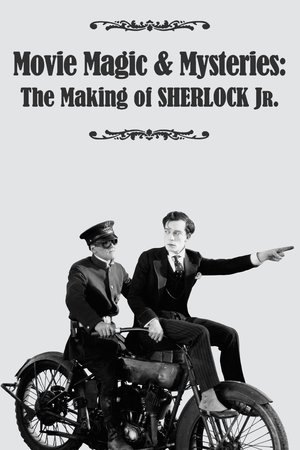
An appreciative, uncritical look at silent film comedies and thrillers from early in the century through the 1920s.
A found-footage essay, Filmfarsi salvages low budget thrillers and melodramas suppressed following the 1979 Islamic revolution.
Crownsville Hospital: From Lunacy to Legacy is a feature-length documentary film highlighting the history of the Crownsville State Mental Hospital in Crownsville, MD.
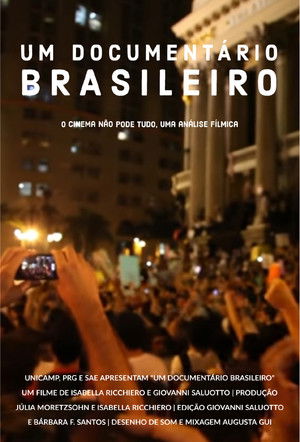
A personal essay which analyses and compares images of the political upheavals of the 1960s. From the military coup in Brazil to China's Cultural Revolution, from the student uprisings in Paris to the end of the Prague Spring.
The enigma of the personality cult is revealed in the grand spectacle of Stalin’s funeral. The film is based on unique archive footage, shot in the USSR on March 5 - 9, 1953, when the country mourned and buried Joseph Stalin.
A film by Louis Aimé Augustin Le Prince, shot in late October 1888, showing pedestrians and carriages crossing Leeds Bridge.
Film historians, and survivors from the nearly 30-year struggle to bring sound to motion pictures take the audience from the early failed attempts by scientists and inventors, to the triumph of the talkies.
A movie follows a regular working day of a woman who works in a factory. She wakes up at 3am and goes to sleep at 10pm.
SONG 5: A childbirth song (the Songs are a cycle of silent color 8mm films by the American experimental filmmaker Stan Brakhage produced from 1964 to 1969).
Tour of the White House with Mrs. John F. Kennedy was a television special featuring the First Lady of the United States, Jacqueline Kennedy on a tour of the recently renovated White House. It was broadcast on Valentine's Day, February 14, 1962, on both CBS and NBC, and broadcast four days later on ABC. The program was the first ever First Lady televised tour of the White House, and has since been considered the first prime-time documentary specifically designed to appeal to a female audience.
Iggy Pop reads and recites Michel Houellebecq’s manifesto. The documentary features real people from Houellebecq’s life with the text based on their life stories.
Basically an artist is also a terrorist, the protagonist thinks in an unguarded moment. And if he is a terrorist after all, then he might just as well be one. Not an instant product, but an experimental feature in which diary material is brought together to form an intriguing puzzle.
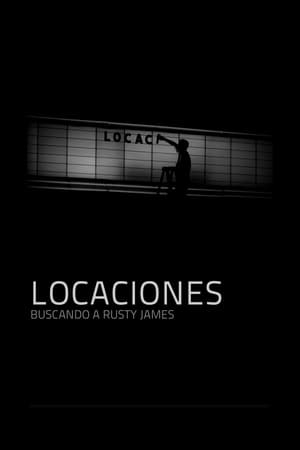
A personal meditation on Rumble Fish, the legendary film directed by Francis Ford Coppola in 1983; the city of Tulsa, Oklahoma, USA, where it was shot; and its impact on the life of several people from Chile, Argentina and Uruguay related to film industry.
The Tet Offensive during the Vietnam War, the Civil Rights Movement, the May events in France, the assassinations of Martin Luther King and Robert F. Kennedy, the Prague Spring, the Chicago riots, the Mexico Summer Olympics, the presidential election of Richard Nixon, the Apollo 8 space mission, the hippies and the Yippies, Bullitt and the living dead. Once upon a time the year 1968.
President Kennedy's birthday celebration was held at the third Madison Square Garden on May 19, 1962, and more than 15,000 people attended, including numerous celebrities. The event was a fundraising gala for the Democratic Party. Features Marilyn Monroe singing to JFK.