A close-up of a snow-bound city, and the men, money and machinery it takes to dig it out.
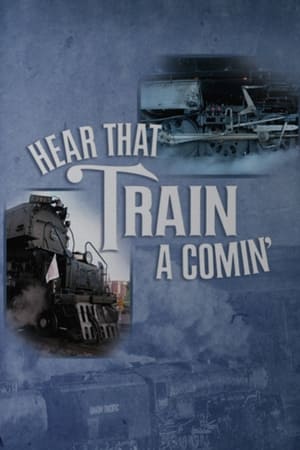
Meet the crew of the Union Pacific Challenger No. 3985, the largest and most powerful steam engine in the world. This colorful documentary is a behind-the-scenes look at the conductors, engineers and mechanics who keep this fickle train running, an engaging history of steam power, and a scenic tour the Great Plains -- from Cheyenne, Wyo., through Denver and across Nebraska to the Omaha headquarters of the Union Pacific.
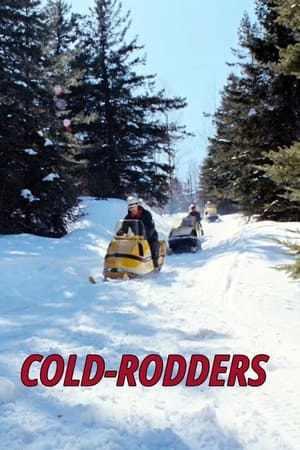
An amusing view of the machine that has taken the country by winter storm: the snowmobile, revving, raring, ready to go. What the motorboat was to the summer lake, this motorized sled now is to the snow-covered fields. This film shows it all--the pull of this sit-down sport, the eagerness of the trade to keep it booming, the daring rivalry of the racing crowd, and the bemused pleasure of the family outing.
This short documentary shows how a city's water supply is purified at a filtration plant. The complex system of the underground mains that supply all parts of the city with water is also illustrated, as is the safeguarding of water supplies on trains, ships and aircrafts.
A film looking at the first 100 years of the Underground Railway in London from 1863 to 1963. A range of well known people and senior managers speak alongside some excellent archive film.
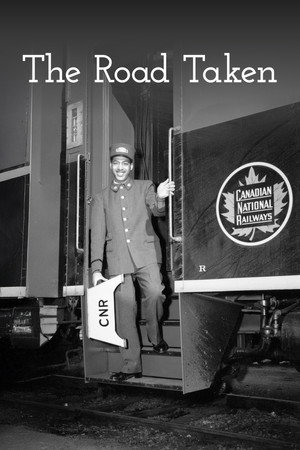
This 1996 documentary takes a nostalgic ride through history to present the experiences of Black sleeping-car porters who worked on Canada's railways from the early 1900s through the 1960s. There was a strong sense of pride among these men and they were well-respected by their community. Yet, harsh working conditions prevented them from being promoted to other railway jobs until finally, in 1955, porter Lee Williams took his fight to the union.
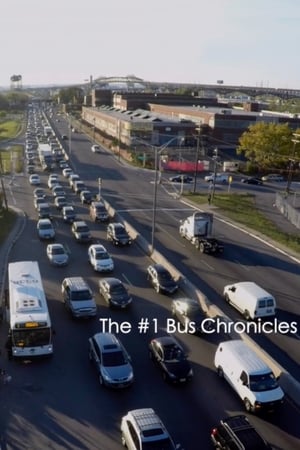
A bus stop on an industrial highway in New Jersey becomes the focus of a timely and intimate examination of marginalized lives in America. 'The #1 Bus Chronicles' interweaves portraits of the lives, pursuits, trials, and dreams of the riders of New Jersey Transit's #1 bus line, taking us into their workplaces, homes, and day-to-day lives.
"The End of the Line - Rochester's Subway" tells the little-known story of the rail line that operated in a former section of the Erie Canal from 1927 until its abandonment in 1956. Produced in 1994 by filmmakers Fredrick Armstrong and James P. Harte, the forty-five minute documentary recounts the tale of an American city's bumpy ride through the Twentieth Century, from the perspective of a little engine that could, but didn't. The film has since been rereleased (2005) and now contains the main feature with special portions that were added as part of the rereleased version. These include a look at the only surviving subway car from the lines and a Phantom tun through the tunnels in their abandoned state, among others, for a total of 90 minutes of unique and well preserved historical information.
America's desire for freedom and the open road resulted in the construction of thousands of highways during the Eisenhower administration. Through interviews, archival footage and photography, America's interstate highway system is revealed to have shaped every aspect of American life and affected the nation's history for better and for worse
Snow Warrior is a love letter to the splendour of winter. It captures the beauty of a northern city through the eyes of a bicycle courier named Mariah.
Cargos - Dans les soutes de la mondialisation
In hand-built, double-hulled canoes sixty feet long, the ancestors of today's Polynesians sailed vast distances using only the waves, the stars, and the flights of birds to navigate. Anthropologist Sanford Low visits the Caroline Islands of Micronesia to meet Mau Piailug, the last navigator initiated on his island and one of few men still practicing this once-essential art. He demonstrates his skill by sailing a replica canoe 2500 miles from Hawaii to Tahiti with no modern navigational instruments.
Britain operates the most experienced diesel and electric railway in tne world. A century and a half ago she invented the steam engine and introduced a new system of transport; and in only nine years British Rail and the British locomotive industry designed, built and tested enough diesel and electric locomotives to replace fifteen thousand steam engines. The transition from steam to new forms of motive power, and its effects on rallwaymen and passengers, is the subject of this film. Produced in association with the Central Office of Information, the British Locomotive Allied Manufacturers' Association and the British Electrical Manufacturers' Association.
A film aimed at showing young people the range of careers open to them if they joined British Rail as an apprentice. It shows the support and education given to apprentices during their training.
A journey from London King's Cross to Peterborough on the fastest Inter-City Special - at a speed of well over 1250 mph! A sped-up four-minute High Speed Train journey promoting the use of the trains throughout the old Eastern Region, set to very early 80s synth music. One of the last BTF productions, and one of only very few to have a copyright date at the end.
Continuing the study of the normal tasks performed by a permanent-way gang, this film deals with the maintenance of switches, common crossings and obtuse crossings. These are the fundamental units from which all track layouts, however complicated are built up.
A transformer weighing 123 tons has to be moved to a remote site in Blaenau Ffestiniog. This documents its movement by rail and road.
The operation of the London Transport central Lost Property Office at Baker Street. Collected in BFI's "London on the Move."

The Nine Road is the busman's name for one of London's oldest and most used bus routes, running between Mortlake and Liverpool Street. The film takes us along the route on a summer's day, and shows the operation and control of the Number Nines from early morning until past midnight. Collected in BFI's "London on the Move."
Film charting the development of the London bus from 1829 to 1979, with the 150th anniversary of Shilibeer's first service, featuring a procession of many of the Museum's historic vehicles. Collected in BFI's "London on the Move."