Short about the disappearance of the body of the political Argentinean writer Rodolfo Walsh after he was shot in an ambush by a special military group in Argentinia on March 25 1977.
A sound system plays Commander Ernesto Guevara's speech, delivered on October 20, 1962, during the Second Anniversary of the Young Communist League, along with a series of archival images of the revolutionary leader visiting factories and meeting with workers.
"The Voice of Innocence" is a documentary that shows how, starting in 1959, the Cuban Revolution put into practice a comprehensive and universal policy of safeguarding the rights of the child, even under the multiple difficulties resulting from the economic, commercial and financial blockade imposed by the United States more than six decades ago. Cuba is one of the main signatories of the Convention on the Rights of the Child, signed on 20 November 1989, when the country had already made extraordinary progress in protecting the rights of the child, in comparison to developed countries, such as the United States, which as of today hasn't yet ratified the Convention.
THE STORY WON’T DIE, from Award-winning filmmaker David Henry Gerson, is an inspiring, timely look at a young generation of Syrian artists who use their work to protest and process what is currently the world’s largest and longest ongoing displacement of people since WWII. The film is produced by Sundance Award-winner Odessa Rae (Navalny). Rapper Abu Hajar, together with other creative personalities of the Syrian uprising, a post-Rock musician (Anas Maghrebi), members of the first all-female Syrian rock band (Bahila Hijazi + Lynn Mayya), break-dancer (Bboy Shadow), choreographer (Medhat Aldaabal), and visual artists (Tammam Azzam, Omar Imam + Diala Brisly), use their art to rise in revolution and endure in exile in this new documentary reflecting on a battle for peace, justice and freedom of expression. It is an uplifting and humanizing look at what it means to be a refugee in today’s world and offers inspiring and hopeful vantages on a creative response to the chaos of war.
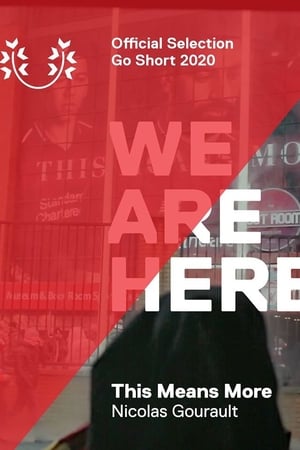
Buenos Aires is a complex, chaotic city. It has European style and a Latin American heart. It has oscillated between dictatorship and democracy for over a century, and its citizens have faced brutal oppression and economic disaster. Throughout all this, successive generations of activists and artists have taken to the streets of this city to express themselves through art. This has given the walls a powerful and symbolic role: they have become the city’s voice. This tradition of expression in public space, of art and activism interweaving, has made the streets of Buenos Aires into a riot of colour and communication, giving the world a lesson in how to make resistance beautiful.
Donald Trump's daughter Ivanka has been appointed to an official role within the White House, but what does she believe in and how much political clout does she actually have?
The visions experienced by a man in the midst of Chile’s social revolt lead him to revisit different moments of his life while his mind wanders through a limbo of images. The journey will help him to finally discover why he’s in that place.
Re-framing the U.S. gun violence debate from Second Amendment rights to public health prevention.
The story of a group of Cubans who arrived in Miami during the Mariel Boatlift and were housed in an improvised camp in the heart of the city. Everyone lived together —men and women, homosexuals and heterosexuals, separated only by cloth curtains that hung from ropes suspended between the beds, like floating walls.
For 40 years, the community-organizing group ACORN advocated for America’s poorest communities, while its detractors accused it of promoting the worst of liberal policies. Riding high on the momentum of Barack Obama’s presidential victory in 2008, ACORN was at its political zenith when a hidden-camera video sparked a national scandal and brought it crashing down. The story involves voter fraud, a fake prostitute, and the rise of Breitbart.com.
In their feature film debut, CARTERLAND, the Pattiz Brothers examine the tragic, yet inspiring story of America's most misunderstood president. While leading the nation through a series of unprecedented crises, Jimmy Carter also confronted climate change and championed social justice at home and abroad. This groundbreaking film draws on archival footage, experts, and insiders to reveal how Carter's selfless leadership and moral integrity ultimately cost him the presidency.
McLibel is a documentary film directed by Franny Armstrong for Spanner Films about the McLibel case. The film was first completed, as a 52 minute television version, in 1997, after the conclusion of the original McLibel trial. It was then re-edited to 85 minute feature length in 2005, after the McLibel defendants took their case to the European Court of Human Rights.
Documentary about the Lyon sex workers who occupied the church of St. Nizier on June 3, 1975.
The First Lady
In South Korea, 2002, the Democratic Party put the presidential nomination to a plebiscite for the first time. Amongst numerous candidates, the one who brought about the most unexpected result was a fringe candidate named Roh Moo-hyun.
A "life without work" - this is the idea propagated by the "Anarchist Pogo Party of Germany" (APPD). In order to spread its unique political concept and to make the background to its activities appear transparent and credible to the voting public, the APPD commissioned a renowned film production company to create a loose mixture of subliminal propaganda and sympathetic trivialization. The film was also to focus on the glorification of the APPD politicians appearing in the election campaign in order to create the basis for a profitable cult of personality. A film that makes it crystal clear, compelling and, of course, intentional that the mob is on its way to power.
Chronicles the life of Allard K. Lowenstein, the political activist and Congressman known for his tireless anti-war and civil rights activism.
In a time of resurgence of social protests, political radicalization and distrust of power, Arendt's thought has never been more relevant: A critical thinker according to some or a conservative according to others, this great figure of the intellectual world remains, in many ways, an enigma. Who was Hannah Arendt?
August 29, 1979, Talavera Bruce Penal Institute, Bangu, Rio de Janeiro. After serving eight years in prison, Inês Etienne Romeu, the only survivor of the "House of Death" in Petrópolis and the first political prisoner sentenced to life in prison in Brazil, left prison benefiting from Amnesty. Norma Bengell filmed this moment: from the prison door to her home with her family, Inês was welcomed by family, friends and members of the Brazilian Amnesty Committee, in what marked the first act of the historic denunciation that Inês would carry out against her tormentors and the Military Regime.
This is the story of an ordinary man transformed by history. A simple baker from Besançon who became a political symbol of resistance. That of a France that knows how much it needs others to grow. Of working classes rejecting the siren calls of populism. He says: "I was nothing and I became a monster" to express the vertigo of his transformation. And so the baker entered politics, visited the United States in the footsteps of Martin Luther King, brought aid to the Ukrainians, and ran for legislative elections. Fearless. Fighting with all his heart. It is this inspiring, touching, and funny human epic that Pedro da Fonseca's camera followed closely, capturing his doubts, his hesitations, and his emotions.