Documentary that explores the various lives, experiences and stories intertwined within the regional Cidade Industrial de Curitiba
An exploration of the 'respectable' and 'immoral' stereotypes of women in Indian society told from the point of view of two striptease dancers in a Bombay cabaret.
This film follows the lives over one year, shot during three intervals, of two Basque shepherding families who live in Santazi, a village in the foothills of the French Pyrenees. The film is the only Disappearing World film made in western Europe and it focuses on the continuity and change in the community. This film shows the rationality behind the choice the villagers are making.
A documentary on the expletive's origin, why it offends some people so deeply, and what can be gained from its use.
A passionate hotel manager is obsessed with a clairvoyant's claim that he is to blame for the unexplained fire at his legendary grand hotel. To free himself from this burden, he teams up with an astute detective inspector to expose a former employee as the arsonist. This unexpectedly puts him at the centre of the investigation – and he must face the truth.
La scuola dei Geni
The Film “Life with Vultures” is about the efforts of a handful of NGOs and Government Agencies to save the only remaining Vulture species on the island of Cyprus, and by extension several other species of Birds and other wild animals
Essie Coffey gives the children lessons on Aboriginal culture. She speaks of the importance of teaching these kids about their traditions. Aboriginal kids are forgetting about their Aboriginal heritage because they are being taught white culture instead.
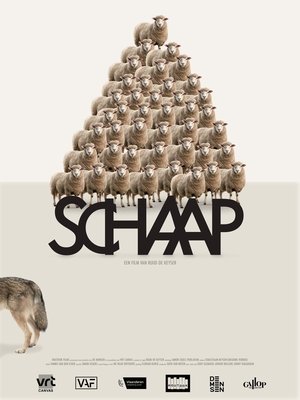
In the lush fields of northern Belgium, as winter tightens its grip, the sheep of Eddy, Jeroen, and Johny become silent witnesses of a hidden drama when a wolf is driven to the edges of human lands in search of sustenance. With the three human protagonists doing anything within their power to patronize their rights of existence, this film stands up for the least heard voice in Belgium’s brand new wolf territory: that of the bleating sheep.
Fleeing religious persecution, resilient Jewish immigrants arrive in Toronto and begin building affordable, quality housing in a growing metropolis.
In 1900, the eyes of the whole world are on Paris. The World's Fair welcomed 50 million amazed visitors, and the city celebrated itself in a glamorous era. This period went down in history as the "Belle Époque." Elaborately restored and colorized historical photographs bring to life the exciting life in Paris between the end of the 19th century and the beginning of World War I in 1914. Bicycles, cars, airplanes, moving pictures, newly founded film studios, revolutionary composers and painters, avant-garde ballet performances, fashion houses, summer resorts on the Atlantic coast – life was intoxicating. People celebrate in the variety shows, cabarets, and revue theaters of Paris. Moulin Rouge, Folies Bergères, Bal Tabarin—in Paris, the nights are long and life is too short to sleep through. It is a dance on the volcano, given the political developments in the world.
Marina Carrère d'Encausse lifts the veil on the intimate questions that preoccupy her as well as society at large: those related to the end of life. The doctor-journalist introduces Antoine, her partner, who is suffering from Charcot's disease, an incurable illness, and who wishes to choose how he ends his life. Is the current law in France sufficient? Should it simply be better enforced, allowing better access to palliative care? Should assisted suicide and euthanasia be legalized? Marina meets with patients concerned about the end of life, caregivers, and politicians in France, as well as in Belgium, Switzerland, and Canada, countries where euthanasia and assisted suicide are legal.
As the Internet finally arrives in tiny Bhutan, documentarian Thomas Balmès is there to witness its transformative impact on a young Buddhist monk whose initial trepidation gives way to profound engagement with the technology.
A short anecdotal documentary about the nature of destruction, a debilitating deadlock of humanity.
Five scientists and a hairdresser, tackling climate change, one stick at a time.
Documentary which follows the construction of a trailblazing 36,000-tonne steel structure to entomb the ruins of the nuclear power plant destroyed in the 1986 Chernobyl disaster.
Frustrated by watching Black patients suffer due to end-of-life healthcare inequities, two determined allies – a chaplain and a doctor – work to transform a broken medical system, one patient at a time.
October 1st, 1957. Dusk descends on Tiananmen Square, Peking. Fireworks crackle light across the night sky, above a city alive with National Day festivities and celebrations. Two intrepid New Zealand film-makers - Rudall and Ramai Te Miha Hayward - are there, documenting the life and times of communist China. The distinction of being the first English speaking foreigners to film unfettered in communist China was significant. The invitation to visit China was facilitated through the New Zealand China Friendship Society. They filmed in Canton, Shanghai, Peking (Beijing) and Wuhan. It was a small window of opportunity for Westerners to gaze on a country that was largely a mystery to the outside world since 1949. The unfortunate irony was that two of the documentaries; “Wonders of China”, and “Inside Red China”, were considered to be communist propaganda, and were not distributed outside of New Zealand.
Short film about inuits
Takes us to locations all around the US and shows us the heavy toll that modern technology is having on humans and the earth. The visual tone poem contains neither dialogue nor a vocalized narration: its tone is set by the juxtaposition of images and the exceptional music by Philip Glass.