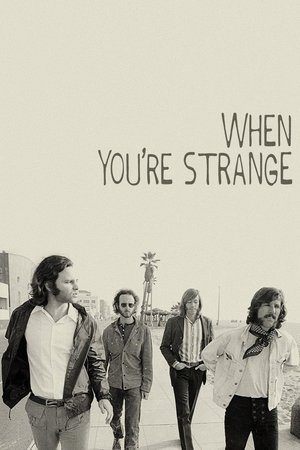
The creative chemistry of four brilliant artists —drummer John Densmore, guitarist Robby Kreiger, keyboardist Ray Manzarek and singer Jim Morrison— made The Doors one of America's most iconic and influential rock bands. Using footage shot between their formation in 1965 and Morrison's death in 1971, it follows the band from the corridors of UCLA's film school, where Manzarek and Morrison met, to the stages of sold-out arenas.
Jani is one of the youngest children ever diagnosed with schizophrenia. At age 9, she's seen great improvements and some setbacks. But now her parent's attention turns toward her brother, Bodhi. At age 4, is he showing signs of schizophrenia too?
The documentary about the Library is C-SPAN’s original feature on America’s iconic government institutions and buildings. This in-depth examination of the Library takes an intimate look at the oldest U.S. federal cultural institution, providing a behind-the-scenes glimpse into the history of the world’s largest library and its vast collection of books, photographs, maps and manuscripts. The documentary also examines how the Library is using science and technology to protect the nearly 150 million items in its collections. The Library of Congress is the only library in the world with its own preservation-science laboratory. Founded in 1800, the Library of Congress is the nation’s oldest federal cultural institution. Many of the Library’s rich resources can be accessed through its website at www.loc.gov.
Tells the history and importance of The National Film Registry, a roll call of American cinema treasures that reflects the diversity of film, and indeed the American experience itself.
In common with many L.A. Rebellion films, Snake touches on such themes as institutionalized racism, colonialism and the plight of women of color. Narrated in the first person by the filmmaker as an epistle to her son, The Snake in My Bed tells Diegu's story as a Nigerian woman in Lagos who is romantically pursed by a German national who has “gone native.” Despite his secretive and duplicitous actions, she eventually agrees to marry him and has his child, only to learn that he is a bigamist with a German wife and child.
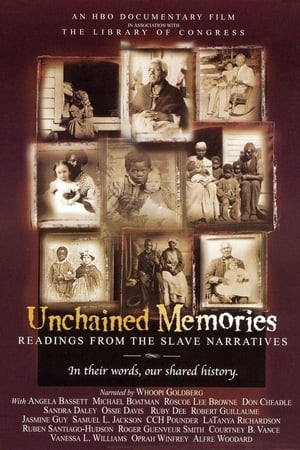
When the Civil War ended in 1865, more than four million slaves were set free. Over 70 years later, the memories of some 2,000 slave-era survivors were transcribed and preserved by the Library of Congress. These first-person anecdotes, ranging from the brutal to the bittersweet, have been brought to vivid life in this unique HBO documentary special, featuring the on-camera voices of over a dozen top African-American actors.
Jani, now 11, is showing improvement in keeping her hallucinations at bay. But the same cannot be said for Bodhi, now 6. His dangerous outbursts have landed him in the hospital; leaving the doctors and family with a puzzling diagnosis.
This documentary charts the complexity and genius of the NBA's all-time leading scorer Kareem Abdul-Jabbar's legendary career, both on and off the court. Spotlighting a six-time MVP and six-time world champion, the film examines his controversial and landmark moments, his outspoken feelings about race and politics, and the evolution of the game.
The story of the Schofield family, whose daughter January was diagnosed as schizophrenic at five-years old, making her one of only two children to ever receive that diagnosis.
A reenacted short from 1899 produced by Thomas Edison’s company during the Philippine-American War. The film dramatizes an engagement in which Filipino forces are routed (defeated) by U.S. troops. It was part of a wave of patriotic war “actualities” designed to appeal to American audiences, stirring imperialistic sentiments.
Seduced and abandoned by the caddish Louis La Farge shepherdess Marie Beaupre is cast out of the village and forced to survive in the mountains alone. Driven mad she becomes known as “the witch woman” until hypnotist Dr. Cochefort and his friend Delaunay encounter her while on a hunting trip, take her to Paris, and effectuate a cure at which time she becomes heir to Delaunay's fortune. All seems clear sailing until Marie is introduced to Louis's twin brother Maurice and mistaking him for Louis sets forth on a plan for revenge.
Sato (Sessue Hayakawa) faithfully works for importer James Thornton (James Neill). When the old man dies, he leaves his daughter Mildred (Vivian Martin) in Sato's care. Sato loves the girl, but as he is Japanese he cannot hope to ever marry her (at least not in the racially prejudiced era of the early 1900s). Besides, Mildred loves Harry Maxwell (Tom Forman), who was raised alongside her.
Crooked banker Peter V. Wilkinson intentionally drives his own company into bankruptcy and puts the bank's deposits into a secret account he has set up using his daughter Leslie's name. A series of events occurs in which Leslie finds out what her father has done and sets out to get him to return all the money he has stolen.
Minister John Hodder becomes rector of a prestigious church in the Midwestern city of Bremerton but finds dissension and malfeasance among his congregation. When he calls it out both tragedy and a way forward are revealed.
In a jealous rage dancer Anna Janssen shoots her common-law husband Alastair De Vries in a cafe when she discovers him with a chorus girl. Fleeing to Tahiti she is tracked by detective Thomas McCarthy who arrests her. On their return journey they are marooned on a deserted island. After 2 years together, they realize their love and take marriage vows, but when a ship is sighted, she insists, against his wishes, that she return to face trial.
The redemption journey of Moll O'Hara, a woman struggling with alcoholism and a challenging past. Moll, rescued from a life of drinking and fighting by Ruth Thompson, a settlement worker, finds love with Bill Hubbell, a saloon-keeper, and embraces a new life free from alcohol. However, her past and a rival, Douglas Ames, threaten her happiness.
Maud March, the rebellious daughter of a millionaire, goes to New York to see her sweetheart Geoffrey who left town years ago. Her aunt Carolyn wants Maud to marry her son Reggie and sends the Maud's brother Percy after her to act as chaperone. Maud, trying to escape, enters a taxi where she meets handsome composer George Bevan. The man falls in love with the young lady who, when she sees how Geoffrey has changed, soon agrees to marry George.
Mendoza, who had an affair with the star of the original production of La Vie parisienne in 1900, returns in 1935 with his son and granddaughter. His granddaughter is engaged to a young Frenchman, but Mendoza's strait-laced and puritanical son initially forbids the marriage. The core conflict involves Mendoza and his old Parisian friends conspiring to change the son's mind and convince him to embrace the titular "Parisian life".
One time “plain Jane” Daphne Carrol returns from Paris a "polished" flapper. She sets her cap for her sister's brother-in-law, Custis Lee even though he is indifferent to her. When Custis’s brother, Jack, managing editor of the local newspaper prints a story of Daphne's return her picture accidentally appears over a news item about the escape of Sally Long from an insane asylum. Daphne gains entrance to Custis' house and poses as Sally, claiming him to be her husband. Fearful for his life, he humors her until he can engage a nurse to watch her. Daphne enjoys the joke until she discovers that her nurse is actually Sally--and Sally's husband tries to rob the Custis home. In the merry mix-up Daphne faints in Custis' arms and is forced to declare that she is his wife; after the complications are resolved, they decide to make the arrangement legal.
Rich cousins marry after they are both bankrupted.