Georgian mezzo-soprano Anita Rachvelishvili gives a dynamic performance as Bizet’s iconic gypsy, the woman who lives by her own rules. Aleksandrs Antonenko is Don José, the soldier who falls under her spell, and Ildar Abdrazakov plays Escamillo, the swaggering bullfighter who takes Carmen away from Don José—an action that seals Carmen’s tragic fate. Anita Hartig is Micaëla, and Pablo Heras-Casado conducts Richard Eyre’s hit production, set in 1930s Spain.
Part folklore, part opera-ballet, this féerie presents local pagan traditions on the day of the summer solstice and historical events from Cossack times to the more recent 2014 Ukrainian Revolution of Dignity.
The legendary director Ruth Berghaus created this staging of Carl Maria von Weber’s Der Freischütz as a gripping theatrical experience for the Zurich Opera in 1993. Its revival in 1999 was a roaring success. With sets by Hartmut Meyer and costumes by Marie-Louise Strandt, Berghaus’ staging avoids the local peasant colour conventionally associated with Weber’s opera. Chorus and orchestra of the Zurich Opera House are conducted by Nikolaus Harnoncourt, universally celebrated for the structural transparency of his interpretations, his intellectual penetration and his emotional understanding of both music and opera plot. And last but not least an all-star cast made this production a highly memorable event: the dramatic soprano Inga Nielsen as Agathe, one of her best roles, the Swedish soprano Malin Hartelius as Ännchen, the sought-after Heldentenor Peter Seiffert, who gives a convincing passionate Max, and many others.
NORMA tells the tragic story of a supposedly chaste druidic priestess, who is driven to murderous jealousy by her lover's inconstancy. But she forgoes vengeance, protects innocence, and sees to it that the guilty atone for their crimes. Fiorenza Cedolins, Sonia Ganassi, Vincenzo La Scola, and Andrea Papi star in this 2007 Gran Theatre Del Liceu/Grand Theatre de Geneve co-production of the Bellini opera.
Vivian, Roe, JJ, Ines and a mysterious French man through a 20 year musical memory of New York City. As people and places in their lives drift away, visual impressions meld with sound and narrative stories to reveal a complex yet moving tableau. As the characters recall their own personal histories, conflicting images reveal their past, present and future.
The young soldier Don José intends to marry Micaëla, a girl from his home village. But when he meets the sensual and high-spirited Carmen, he sacrifices everything to be with her. Carmen grows tired of Don José and falls in love with the toreador Escamillo. Unable to bear her leaving him, Don José tracks Carmen down to a bullring where Escamillo is fighting and murders her.
Lucia’s brother Enrico is horrified to learn she has fallen in love with his sworn enemy Edgardo. He hastily arranges her marriage to his associate Arturo. Edgardo and Lucia privately exchange rings before he leaves to fight in France. Enrico tricks Lucia into believing that Edgardo has been unfaithful. Longing for death, she signs the contract with Arturo – moments before Edgardo returns. Lucia murders Arturo in their wedding bed. His death is followed first by Lucia’s, and then by Edgardo’s.
Figaro uses every trick he can muster to outwit Dr Bartolo and ensure his master wins his chosen bride. He meets his match in the would-be-bride Rosina, who has schemes of her own. Glyndebourne favourite Danielle de Niese adds the crafty Rosina to her growing list of bel canto heroines. Directed by Annabel Arden with playful energy springing from Rossini’s joyous music, this new production heralds the welcome return of a masterpiece not seen at Glyndebourne Festival since 1982.
Nabucco, King of Babylon, takes Jerusalem in his war with the Israelites – but his daughter Fenena loves the Israelite Ismaele. She releases their prisoners, leading her vengeful half-sister Abigaille to plot to take power. Nabucco declares himself a god and is struck by a bolt of lightning. Abigaille tricks the now feeble king into signing a death warrant for the Israelites, including Fenena and Ismaele. Nabucco prays to the God of Israel for forgiveness; his sanity is restored and he saves the prisoners from death. He converts himself and his people, while Abigaille commits suicide.
Axel Köhler’s production of Der Freischütz at the Dresden State Opera was described by Die Presse as “a minor miracle in Dresden”. In the words of the Salzburger Nachrichten, Köhler “scored a bulleye” with his sombre and satanic interpretation of Weber’s Romantic opera about love, temptation, souls sold to the Devil, obsession andfaith. According to the Financial Times, Christian Thielemann and the Dresden Staatskapelle conjured up a sense of “mortal terror from the orchestra pit. […] Thielemann is in command of every detail. That makes for utterly gripping listening.”
Cio-Cio-San, the young Japanese bride of dashing American officer Lieutenant Pinkerton, finds her romantic idyll shattered when he deserts her shortly after their marriage. She lives in hope that one day he will return. Three years later, Cio-Cio-San and her little son see Pinkerton’s ship in the harbour. She excitedly expects his visit – but Pinkerton and his American wife Kate have come only to take the boy away, to raise him in America. Cio-Cio-San bids her son farewell and then takes her own life.
Dorothea Roeschmann, Katharina Kammerloher, Hanno Mueller-Brachmann, Werner Guera, Daniela Bruera, and Roman Trekel star in this 2002 Deutsche Staatsoper production of the Mozart opera conducted by Daniel Barenboim.
"William Christie and Les Arts Florissants propel this exuberant production of Jean-Philippe Rameau's second opera to great heights. Andrei Serban's extravagant, highly baroque staging presents the four exotic love stories vibrantly. In 'Le Turc généreux' Osman sets free his captive, Emilie, whom he loves, so that she may be reunited with her former lover, Valère; 'Les Incas de Pérou' is all about the rivalry of the Inca Huascar and the Spaniard Don Carlos, both in pursuit of Princess Phani; 'Les Fleurs' offers a Persian love intrigue, as the Sultana Fatime tries to detect whether her husband Tacmas has his eye on the lovely Atalide; and 'Les Sauvages' takes us to North America, where a Spaniard and a Frenchman compete for the love of Zima, daughter of a native chief, who prefers one of her own people." — from the DVD cover
Lumee, one of the two main characters (of the opera p r i s m), sings this aria while smoking outside a nightclub in the second act, providing a window into her selfish fantasies. Not a recorded section of the opera, but a companion piece meant to depict the character's imagined realities.
In the Summer of 2009, the British director Nigel Lowery and the Iranian choreographer Amir Hosseinpour brought to the stage of the Berlin State Opera Unter den Linden, with colour and full of humour, the fantastic and imaginative adventures of "Racing Roland". On the occasion of the 200th anniversary of the death of Joseph Haydn, the composer's most renowned opera during his lifetime,Orlando Paladino, was performed, a heroic-comical stage piece based on Ariost's famous Versepos. Singers such as Marlis Petersen (Angelica), Tom Randle (Orlando), Alexandrina Pendatchanska (Alcina), Pietro Spagnoli (Rodomonte), Sunhae Im (Eurilla) and Victor Torres (Pasquale) performed under the musical direction of period-music specialist René Jacobs. The Freiburg Baroque Orchestra completed this high-class production giving the music a beautiful sound and lively swing.
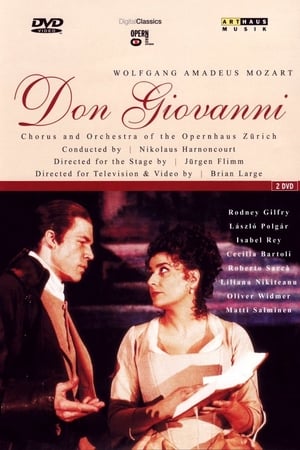
Every woman wants him, every man wants to be him: Mozart’s version of the irresistible rogue who brings excitement with him and leaves destruction it his wake has always attracted top singing actors, as in this performance brilliantly led by James Levine. Samuel Ramey is Don Giovanni, pursued by the incandescent Karita Mattila (Donna Elvira) in her Met debut season and role, and by the white-hot avenging fury of Carol Vaness (Donna Anna.) Ferruccio Furlanetto delivers a masterful comic turn as the Don’s servant, Leporello.
TANNHÄUSER UND DER SÄNGERKRIEG AUF WARTBURG is a grand opera by Richard Wagner in three acts. After experiencing boundless sensuality and freedom with the fun-loving Venus (soprano), the singer Tannhäuser (Tenor) finds it impossible to conform to the cultured setting of his betrothed Elizabeth (soprano), who loves him. During a singing contest, Tannhäuser describes the affair with Venus as the ultimate love experience and because of that, he is cast out from the established society. Thanks to Elizabeth's intervention, he is allowed to undertake a pilgrimage to the Pope to ask for the Holy Father's pardon. If the Pope accepts to forgive him, he would be allowed to take back his place in society. Tannhäuser accepts. But fate will not allow him to meet with his beloved Elizabeth again in this life. This is a recording of the legendary staging by Götz Friedrich for the 1978 Bayreuth Festival conducted by Sir Colin Davis.
A 1985 performance of Luchino Visconti's 1958 staging for the Royal Opera House, Covent Garden. Bernard Haitink memorably directs a superb cast that includes Ileana Cotrubas at the height of her powers and Luis Lima, unequalled in his tortured introspection, in the title role. (5-act version, sung in Italian)
Richard Eyre’s elegant production, which opened the Met’s 2014–15 season, sets the action of Mozart’s timeless social comedy in a manor house in 1930s Seville. Ildar Abdrazakov leads the cast as the resourceful Figaro set on outwitting his master, the philandering Count Almaviva, played by Peter Mattei. Marlis Petersen sings Susanna, the object of the Count’s affection and Figaro’s bride-to-be, Amanda Majeski is the Countess, and Isabel Leonard gives a standout performance as the pageboy Cherubino. Music Director James Levine on the podium brings out all the humor, drama, and humanity of Mozart’s score.
Famous opera singer Dmitry Hvorostovsky performs live songs from his album 'Deja vu' by composer Igor Krutoy about life, love, music, fate and even death at the Kremlin Palace.