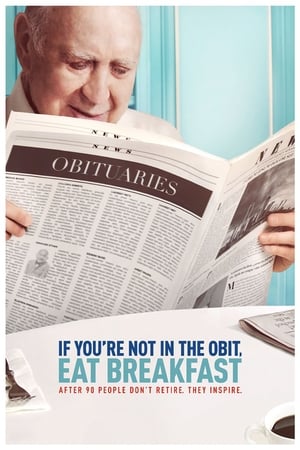
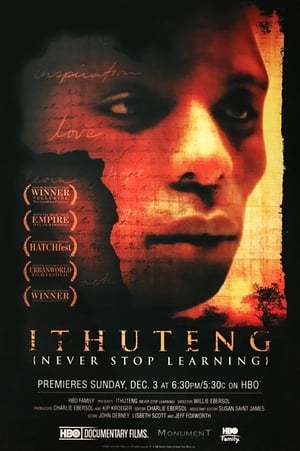
In the 1920s, former coal miner Harry Hoxsey claimed to have an herbal cure for cancer. Although scoffed at and ultimately banned by the medical establishment, by the 1950s, Hoxsey's formula had been used to treat thousands of patients, who testified to its efficacy. Was Hoxsey's recipe the work of a snake-oil charlatan or a legitimate treatment? Ken Ausubel directs this keen look into the forces that shape the policies of organized medicine.
With this two-part feature documentary, Shlomi Elkabetz shares a poignant love letter to his sister, the late actress and director Ronit Elkabetz, and delivers a rare cinematic experience.
How are the sex scenes filmed? What tricks are used to fake the desire? How do the interpreters prepare and feel? Spanish actors and directors talk about the most intimate side of acting, about the tricks and work methods when narrating exposed sex. In Spain the general rule is that there are no rules. Each film, each interpreter, faces it in very different ways.
The history of Bruguera, the most important comic publisher in Spain between the 1940s and the 1980s. How the characters created by great writers and pencilers became Spanish archetypes and how their strips persist nowadays as a portrait of Spain and its people. The daily life of the creators and the founding family, the Brugueras. The world in which hundreds of vivid colorful paper beings lived and still live, in the memory of millions, in the smile of everyone.
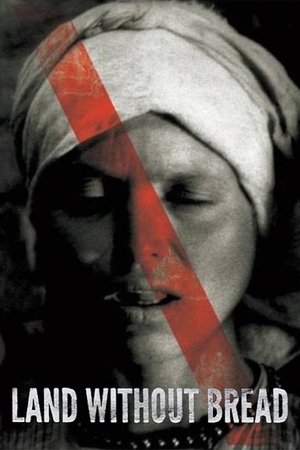
An exploration —manipulated and staged— of life in Las Hurdes, in the province of Cáceres, in Extremadura, Spain, as it was in 1932. Insalubrity, misery and lack of opportunities provoke the emigration of young people and the solitude of those who remain in the desolation of one of the poorest and least developed Spanish regions at that time.
A documentary about the Synthwave scene, nostalgia and the universe of creating sounds. A love letter to human fascination and the collective memories of a universe, that never existed.
Los 5 Faust de F. W. Murnau
Gonzalo Suárez: Sam Peckinpah, director salvaje (TV)
Albert Camus, la tragédie du bonheur
THE ARYANS is Mo Asumang's personal journey into the madness of racism during which she meets German neo-Nazis, the US leading racist, the notorious Tom Metzger and Ku Klux Klan members in the alarming twilight of the Midwest. In The ARYANS Mo questions the completely wrong interpretation of "Aryanism" - a phenomenon of the tall, blond and blue-eyed master race.
A two parts making of documentary, following José Augusto Silva and his film crew during the shooting of a university short film called Castelo.
Echo of the Mountain takes a look at the life and work of Santos de la Torre, a great Huichol artist who, like his people, lives in oblivion. Despite having made a great mural for the metro station Palais Royal – Musée du Louvre, Santos lives isolated and ignored in his country. This documentary follows his pilgrimage to Wirikuta, where he asks gods for permission to make a new mural; his journey across 385 miles of the Peyote Route, and Santos's creative process during the making of a new mural which aims to illustrate the history, mythology and religious traditions of the Huichol people.
Talented teen musicians from around the USA spend a week working with Grammy nominated professionals
A view of the religious tensions between Muslims and Buddhist through the portrait of the Buddhist monk Ashin Wirathu, leader of anti-Muslim movement in Myanmar.
It's a condition known as "hypertrichosis" or "Ambras Syndrome," but in the 1500s it would transform one man into a national sensation and iconic fairy-tale character. His name: Petrus Gonsalvus, more commonly known today as the hairy hero of Beauty and the Beast.
Presents life in 18th century Spain as the painter Francisco de Goya showed it to us.
Documentary that reconstructs the professional life of the dancer through the thread of his own voice. A work that travels to the fundamental landscapes of the personal history of Gades with unpublished documents and the testimony of those who shared with him many pages of the book of his life and the history of Spanish dance in recent decades.
Leonardo da Vinci
In the spring of 1974, a camera team from Studio H&S succeeded against the explicit orders of the Junta’s Chancellery, entered into two large concentration camps in the north of the country - Chacabuco and Pisagua - leaving with filmed sequences and sound recordings.
Filmed to praise the work of the Spanish Ministry of Housing in solving the problem of shanty towns in Bilbao, it was made to be viewed by General Franco and not for public screening or distribution through the NO-DO newsreel. Although the short film was commissioned by the Ministry of Housing, director Jorge Grau produced a subtly critical work.