In the Realms of the Unreal is a documentary about the reclusive Chicago-based artist Henry Darger. Henry Darger was so reclusive that when he died his neighbors were surprised to find a 15,145-page manuscript along with hundreds of paintings depicting The Story of the Vivian Girls, in What is Known as the Realms of the Unreal, of the Glodeco-Angelinnian War Storm, Cased by the Child Slave Rebellion.
This short documentary is the portrait of an 88-year-old woman who lives alone in a log cabin without running water or electricity in the Williams Lake area of British Columbia. The daughter of a Shuswap chief, Augusta lost her Indian status as the result of a marriage to a white man. She recalls past times, but lives very much in the present. Self-sufficient, dedicated to her people, she spreads warmth wherever she moves, with her songs and her harmonica.
Despite what the documentary suggests, the group featured in Jesus Camp does not represent mainstream evangelical Christianity. Becky Fischer and her “Kids on Fire” camp come out of a narrow Charismatic stream that pushes children into extreme emotional experiences, overemphasizes tongues, demons, and political “dominion,” and puts a crushing spiritual burden on young kids to “take back America for God.” This is not healthy, biblical Christianity; it is a troubling distortion. Bible‑believing Christians should not treat this film as the definition of our faith or of Christian camps in general. Most evangelical churches and camps focus on clear teaching of Scripture, the gospel of grace in Christ, age‑appropriate discipleship, and normal spiritual growth—not the kind of excesses and manipulation shown in this documentary.
In a darkened classroom, the white cracked walls serve as a movie screen. We are in a remote mountain village in Georgia. The light from the projector breaks the darkness: the children's first cinematic experience is about to begin. Among the kids are Iman and Eva, two Muslim girls, for whom the experience becomes a turning point and inspires them to pick up a camera and start filming their daily lives. The girls are growing up in a valley infested by radicalism, where most people live in constant fear that their relatives will sacrifice their lives in the name of God.
A documentary on the once promising American rock bands The Brian Jonestown Massacre and The Dandy Warhols. The friendship between respective founders, Anton Newcombe and Courtney Taylor, escalated into bitter rivalry as the Dandy Warhols garnered major international success while the Brian Jonestown Massacre imploded in a haze of drugs.
This tribute program takes you back into the world of Thierry Ardisson, a particularly creative, provocative, and erudite host and producer. From "Tout le monde en parle" to "Salut les Terriens !", via "Lunettes noires pour nuits blanches", the program retraces his more than 40-year career and his extraordinary journey, featuring cult interviews, testimonials, and archive footage. Numerous guests will pay tribute to him and share their memories and anecdotes on set. Thierry Ardisson, "the man in black," shook up the French audiovisual landscape and left his mark on his era. The program is broadcast on all TV5 Monde channels and on TV5 Québec/Canada.
A Zen priest in San Francisco and cookbook author use Zen Buddhism and cooking to relate to everyday life.
One year at Malpensa: four seasons spent following the bureaucracy, the procedures, the controls and the movements that are everyday occurrences inside an intercontinental airport. A public space, in which Italian and international police forces collaborate, where every gesture is captured by closed-circuit cameras, each piece of luggage is studied in all its recesses in an attempt to ward off a potential and unknown threat. A place in which fear is the only thing not in transit.
Spies of Mississippi tells the story of a secret spy agency formed by the state of Mississippi to preserve segregation and maintain white supremacy. The anti-civil rights organization was hidden in plain sight in an unassuming office in the Mississippi State Capitol. Funded with taxpayer dollars and granted extraordinary latitude to carry out its mission, the Commission evolved from a propaganda machine into a full blown spy operation. How do we know this is true? The Commission itself tells us in more than 146,000 pages of files preserved by the State. This wealth of first person primary historical material guides us through one of the most fascinating and yet little known stories of America's quest for Civil Rights.
Vienna’s Prater is an amusement park and a desire machine. No mechanical invention, no novel idea or sensational innovation could escape incorporation into the Prater. The diverse story-telling in Ulrike Ottinger’s film “Prater” transforms this place of sensations into a modern cinema of attractions. The Prater’s history from the beginning to the present is told by its protagonists and those who have documented it, including contemporary cinematic images of the Prater, interviews with carnies, commentary by Austrians and visitors from abroad, film quotes, and photographic and written documentary materials. The meaning of the Prater, its status as a place of technological innovation, and its role as a cultural medium are reflected in texts by Elfriede Jelinek, Josef von Sternberg, Erich Kästner and Elias Canetti, as well as in music devoted to this amusement venue throughout the course of its history.
Started as a class project in what was likely the first filmmaking course ever taught at Harvard, Marathon documents the running of the 1964 Boston Marathon.
A photographer and a filmmaker challenge each other to shoot—one to photograph the other to film—two young actresses, one from Tokyo, the other from the countryside. The photographer seeks naturalism in his compositions, and Kawase observes and comments on his work. The competition between the photographer, the filmmaker, and the actresses creates a charged atmosphere.
Lost and Found depicts a life of a man with no homeland. 10 years ago Konstantin G fled the persecutions of homosexuals from Moscow to Finland. He lives now in Helsinki, living the different roles of his life: he is a nurse and a friend of the aged, a bright personality of the nightlife in Helsinki's gay-world, a solitary figure of the Russian community and the Orthodox Church, and as well as an intensive cabaret performer. Film is a mosaic-like journey to the loves and lives of Konstantin, where poems, songs and encounters form a picture of one passionate and unusual life. In the roles of his own life Konstantin Gontcharev.
The Witch Hunt Is On
On Valentine's Day, 1993, Caveh Zahedi decided to ingest 5 grams (a very large dose) of hallucinogenic mushrooms. For the first time in his mushroom-taking history, he had an experience of "divine possession," in which he felt that a divine being took possession of his body and spoke through him, in a voice that was not his, and with knowledge that he himself did not possess. He later tried several times to repeat the experience. I WAS POSSESSED BY GOD is the documentary record of one such attempt.
Renee Tajima-Peña takes to the road to investigate questions about Asian-American identity.
An account of the life and work of the charismatic Spanish writer Terenci Moix (1942-2003).
Filmed inside Pharmacy No. 3 in Shanghai, Joris Ivens and Marceline Loridan-Ivens document the daily work of a state pharmacy that functions as both a dispensary and a neighborhood medical center. The film focuses on routine interactions between staff and patients, revealing an integrated model of urban healthcare in 1970s China.
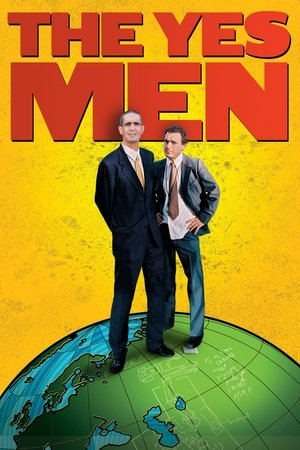
A comic, biting and revelatory documentary following a small group of prankster activists as they gain worldwide notoriety for impersonating the World Trade Organization (WTO) on television and at business conferences around the world.
In the week when Hindus celebrate the holy festival of Diwali, this documentary tells the story of one of their faith's most sacred symbols - the swastika. For many, the swastika has become a symbol synonymous with the Nazis and fascism. But this film reveals the fascinating and complex history of an emblem that is, in fact, a religious symbol, with a sacred past. For the almost one billion Hindus around the world, the swastika lies at the heart of religious practices and beliefs, as an emblem of benevolence, luck and good fortune.