Lyla and Louis, a singer and a musician, fall in love, but are soon compelled to separate. Lyla is forced to give up her newborn but unknown to her, he grows up to become a musical genius.
A documentary that explores the potential dangers of toxic chemicals in consumer products and the recent spike in unexplained health phenomena.
Beneath Hong Kong's glittering facade, Filipina domestic helpers work in relative anonymity and for near-slave wages. In a beauty pageant like no other, five helpers give themselves makeovers for a day and gleefully reclaim their dignity.
The drought in the American West is predicted to be the worst in 1,000 years. Join five Academy Award-winning filmmakers as they explore the environmental crisis of our time and how to fix it before it's too late.
Started as a class project in what was likely the first filmmaking course ever taught at Harvard, Marathon documents the running of the 1964 Boston Marathon.
The alien abduction phenomenon, told by those who experienced it, with the weight of a Pulitzer Prize-winning Harvard psychiatrist at their back.
"My Own Breathing" is the final documentary of the trilogy, The Murmuring about comfort women during the World War II directed by BYUN Young-joo. This is the completion of her seven years work. BYUN's first and second documentaries spoke of grandmothers' everyday life through the origin of their torment, while My Own Breathing goes back to their past from their everyday life. Deleting any device of narration or music, the camera lets grandmothers talk about themselves. Finally, the film revives their deep voices trampled by harsh history.
Spies of Mississippi tells the story of a secret spy agency formed by the state of Mississippi to preserve segregation and maintain white supremacy. The anti-civil rights organization was hidden in plain sight in an unassuming office in the Mississippi State Capitol. Funded with taxpayer dollars and granted extraordinary latitude to carry out its mission, the Commission evolved from a propaganda machine into a full blown spy operation. How do we know this is true? The Commission itself tells us in more than 146,000 pages of files preserved by the State. This wealth of first person primary historical material guides us through one of the most fascinating and yet little known stories of America's quest for Civil Rights.
Vienna’s Prater is an amusement park and a desire machine. No mechanical invention, no novel idea or sensational innovation could escape incorporation into the Prater. The diverse story-telling in Ulrike Ottinger’s film “Prater” transforms this place of sensations into a modern cinema of attractions. The Prater’s history from the beginning to the present is told by its protagonists and those who have documented it, including contemporary cinematic images of the Prater, interviews with carnies, commentary by Austrians and visitors from abroad, film quotes, and photographic and written documentary materials. The meaning of the Prater, its status as a place of technological innovation, and its role as a cultural medium are reflected in texts by Elfriede Jelinek, Josef von Sternberg, Erich Kästner and Elias Canetti, as well as in music devoted to this amusement venue throughout the course of its history.
Ulrike Ottinger’s provocative mélange of ethnography, stunning tableaux and baroque vignettes was inspired by what she calls the “well-stocked miracle” of Korean wedding chests, assembled according to time-honored customs. This exploration of love and marriage in South Korea looks closely at ancient and present-day rituals, revealing what is old in the new and new in the old. Her inquiry leads us from shamans, temples and priests, to the enchanted maze of 21st-century Seoul, where vendors of medicinal herbs co-exist with high-tech beauty salons for wedding couples and secular marriage palaces. Using film much like a canvas, Ottinger creates a modern fairytale flush with mythological heroes, traditional rites, ancestral symbolism, dreams of eternal love, and a whole lot of Western kitsch. One of her most acclaimed documentaries, it captures the amazing phenomenon of new mega-cities and their contradictory societies caught in a balancing act.
At the sea shore, a goat, a child, and a naked man. This is a photograph taken in 1954 by Agnès Varda. The goat was dead, the child was named Ulysses, and the man was naked. Starting from this frozen image, the film explores the real and the imaginary.
There are places that we don’t want to know anything about, places that we would rather pretend don’t exist at all. One such place is a dumpsite. From the humans’ point of view, it is a ghastly place, a stinking desert of trash. But it’s a desert that is teaming with life.
The film is a commemoration of the lost livelihood of the earth, the lost lives of the War and to the work of two of the cinema’s greatest artists.
China's top drama academy stages the American musical "Fame," China's first official collaboration with Broadway, as the graduation showcase for its senior class. During the eight-month rehearsal, five students compete for roles, struggle with pressure from family and authority, and prepare to graduate into China's corrupt entertainment industry.
A descent into Eastern Europe's haunted woodlands uncovers the secrets, fairy tales, and bloody histories that shape our understanding of man's place in nature.
Two religious maniacs, Judas and Corned Beef, are visited by two aliens, Madeline Virbasius and Dion. Virbasius, dressed as the Virgin Mary, tells the two to kill people for Jesus and to drain the puss from their heads and bring it back to them. Fleming and Hammer set out to bring "the Virgin Mary" back as much puss as possible in a bucket.
Uncovering the profiteering of the state's water barons and how they affect farmers, average citizens, and unincorporated towns throughout California.
Follows the behind-the-scenes work of Studio Ghibli, focusing on the notable figures Hayao Miyazaki, Isao Takahata, and Toshio Suzuki.
Beyond Silence is about a family and a young girl’s coming of age story. This German film looks into the lives of the deaf and at a story about the love for music. A girl who has always had to translate speech into sign language for her deaf parents yet when her love for playing music grows strong she must decide to continue doing something she cannot share with her parents.
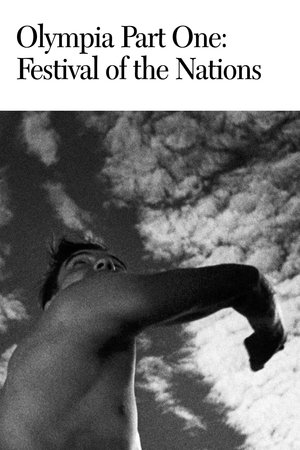
Starting with a long and lyrical overture, evoking the origins of the Olympic Games in ancient Greece, Riefenstahl covers twenty-one athletic events in the first half of this two-part love letter to the human body and spirit, culminating with the marathon, where Jesse Owens became the first track and field athlete to win four gold medals in a single Olympics.