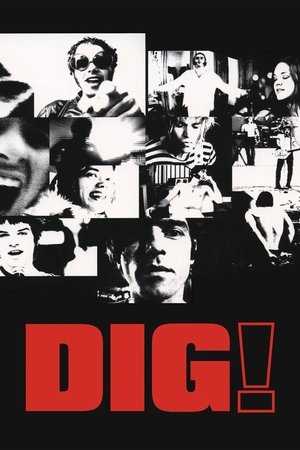
Documentery from 1991 where The 2 Live Crew, Chuck D (Public Enemy), Too Short, Ice-T, Geto Boys, H.W.A. drop real talk on different topics.
In early 1970s, the graphic designer Tuulikki Pietilä had seen enough of stative visual art and purchased a film camera from Japan. She filmed the games and chores of the artist couple in their beloved hideout, the island of Klovharun.
Starting with a long and lyrical overture, evoking the origins of the Olympic Games in ancient Greece, Riefenstahl covers twenty-one athletic events in the first half of this two-part love letter to the human body and spirit, culminating with the marathon, where Jesse Owens became the first track and field athlete to win four gold medals in a single Olympics.
Part two of Leni Riefenstahl's monumental examination of the 1938 Olympic Games, the cameras leave the main stadium and venture into the many halls and fields deployed for such sports as fencing, polo, cycling, and the modern pentathlon, which was won by American Glenn Morris.
In 1920 a group of young Montreal women artists formed the nucleus of what would later become known as the Beaver Hall Hill Group. Members recount how they created an artistic environment of mutual support that lasted for more than three decades.
The film is a commemoration of the lost livelihood of the earth, the lost lives of the War and to the work of two of the cinema’s greatest artists.
"My Own Breathing" is the final documentary of the trilogy, The Murmuring about comfort women during the World War II directed by BYUN Young-joo. This is the completion of her seven years work. BYUN's first and second documentaries spoke of grandmothers' everyday life through the origin of their torment, while My Own Breathing goes back to their past from their everyday life. Deleting any device of narration or music, the camera lets grandmothers talk about themselves. Finally, the film revives their deep voices trampled by harsh history.
A descent into Eastern Europe's haunted woodlands uncovers the secrets, fairy tales, and bloody histories that shape our understanding of man's place in nature.
A chronicle of the production problems — including bad weather, actors' health, war near the filming locations, and more — which plagued the filming of Apocalypse Now, increasing costs and nearly destroying the life and career of Francis Ford Coppola.
A look at the state of the global environment including visionary and practical solutions for restoring the planet's ecosystems. Featuring ongoing dialogues of experts from all over the world, including former Soviet Prime Minister Mikhail Gorbachev, renowned scientist Stephen Hawking, former head of the CIA R. James Woolse
This short documentary is the portrait of an 88-year-old woman who lives alone in a log cabin without running water or electricity in the Williams Lake area of British Columbia. The daughter of a Shuswap chief, Augusta lost her Indian status as the result of a marriage to a white man. She recalls past times, but lives very much in the present. Self-sufficient, dedicated to her people, she spreads warmth wherever she moves, with her songs and her harmonica.
At the sea shore, a goat, a child, and a naked man. This is a photograph taken in 1954 by Agnès Varda. The goat was dead, the child was named Ulysses, and the man was naked. Starting from this frozen image, the film explores the real and the imaginary.
There are places that we don’t want to know anything about, places that we would rather pretend don’t exist at all. One such place is a dumpsite. From the humans’ point of view, it is a ghastly place, a stinking desert of trash. But it’s a desert that is teaming with life.
Ulrike Ottinger’s provocative mélange of ethnography, stunning tableaux and baroque vignettes was inspired by what she calls the “well-stocked miracle” of Korean wedding chests, assembled according to time-honored customs. This exploration of love and marriage in South Korea looks closely at ancient and present-day rituals, revealing what is old in the new and new in the old. Her inquiry leads us from shamans, temples and priests, to the enchanted maze of 21st-century Seoul, where vendors of medicinal herbs co-exist with high-tech beauty salons for wedding couples and secular marriage palaces. Using film much like a canvas, Ottinger creates a modern fairytale flush with mythological heroes, traditional rites, ancestral symbolism, dreams of eternal love, and a whole lot of Western kitsch. One of her most acclaimed documentaries, it captures the amazing phenomenon of new mega-cities and their contradictory societies caught in a balancing act.
APPROACHING THE ELEPHANT is a feature-length documentary about The Teddy McArdle Free School, where classes are optional and rules are made by democratic vote. Summerhill, founded 90 years ago by A. S. Neill, was the first free school - now there are more than 200 worldwide. Approaching the Elephant chronicles a free school in the making - spanning two years, from Teddy McArdle's first day when there were no rules or classes, through the changing of the school's director and the expulsion of a student by democratic vote, to the last day of the second year, APPROACHING THE ELEPHANT is an intimate portrait of a small group of people from a range of educational backgrounds, come together to forge a place where children are treated as equals, at liberty to spend their days however they please.
Tells the true story of one woman's quest to help two elephant landmine survivors-Motala and Baby Mosha-walk on their own four legs.
Learn the origins and rise of modern day hula-hooping through eight extraordinary stories of hoop devotees who have embraced it as an art form, a teaching aid, and even an instrument of redemption. From the streets, to intimate clubs, to giant arenas, we alternate between self-filmed video diaries, verité documentary footage, and spectacularly filmed performances in an attempt to celebrate the healing power of movement and the spirit of human inventiveness.
An account of the life and work of the charismatic Spanish writer Terenci Moix (1942-2003).
Houda al-Habash, a conservative Muslim preacher, founded a Qur'an school for girls in Damascus, Syria when she was just 17 years old. Every summer, her female students immerse themselves in a rigorous study of Islam, in addition to their secular schooling. A surprising cultural shift is underway-women are claiming space within the mosque, a place historically dominated by men. Challenging tradition, Houda insists education for women is a form of worship. Using Qur'anic teachings, she encourages her students to pursue higher education, jobs, and public lives, while remaining committed to an interpretation of Islam prioritizing women's role as wives and mothers. In a world rarely seen, The Light In Her Eyes tells the story of a leader who challenges the women of her community to live according to Islam, without giving up their dreams. Shot right before the uprising in Syria erupted, the film is an exclusive look at a social movement thriving in a country controlled by a repressive regime
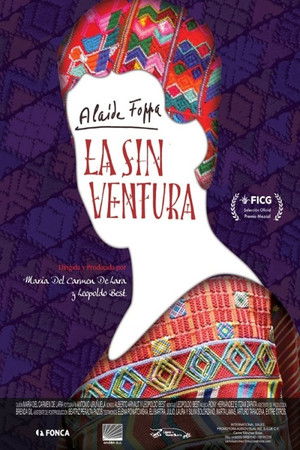
A documentary on the war between the Guatemalan military and the Mayan population, with first hand accounts by Nobel Peace Prize winner Rigoberta Menchú.