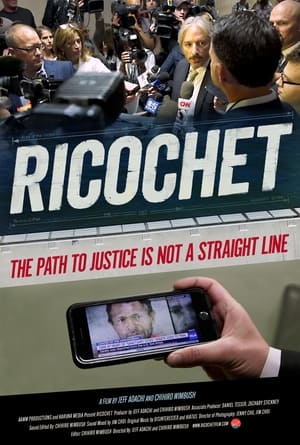
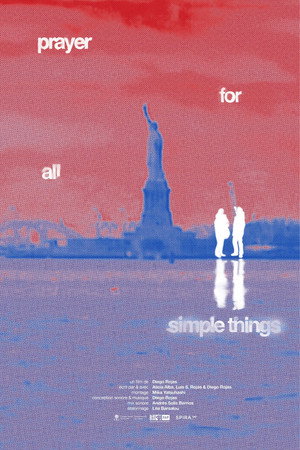
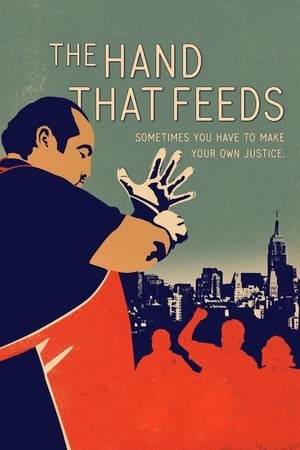
When a young woman is shot by an undocumented immigrant on Pier 14 in San Francisco, the incident ignites a political and media furor that culminates in Donald Trump’s election as President of the United States. In the eye of this storm, two public defenders fight to reveal the truth.
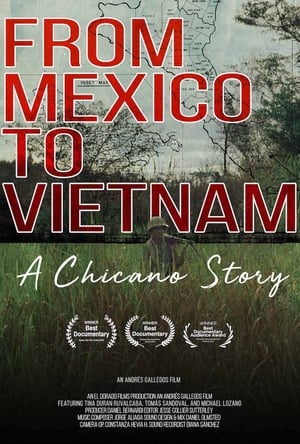
"From Mexico to Vietnam: A Chicano Story" is an inspiring documentary that chronicles the life of Jesus S. Duran, a Mexican immigrant who became a decorated U.S. Army soldier during the Vietnam War. Born in Juarez, Mexico, Duran moved to the United States as a child and enlisted in the Army in 1968. On April 10, 1969, while serving as an M-60 machine gunner with Company E, 2nd Battalion, 5th Cavalry, 1st Cavalry Division (Airmobile), he displayed extraordinary bravery by rescuing several wounded comrades during an intense enemy ambush in Tay Ninh, Vietnam. His valorous actions led to a posthumous Medal of Honor by President Barack Obama. Directed by Andrés Gallegos, the film delves into Duran's personal journey, his family's migration from Mexico, and the broader impact of the Vietnam War on the Chicano and Latino communities.
Les Filles sans joie des petites routes
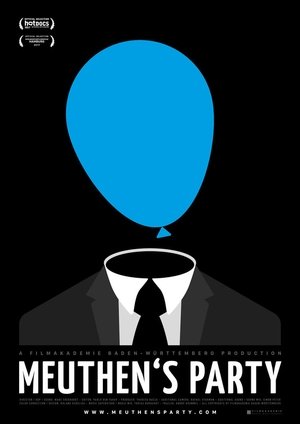
MEUTHEN'S PARTY unmasks the rise of the provincial politician Dr. Jörg Meuthen who doesn't shy away from spreading racist sentiments with a smile on his face.
As a Palestinian refugee, Ahmad escaped from Lebanon to Germany 40 years ago. In a conservative and strict way, he raises his six children in Berlin Neukölln. His oldest son, the filmmaker, talks to his father, interviews his siblings and tries to understand how war, escape and exile affect a human being.
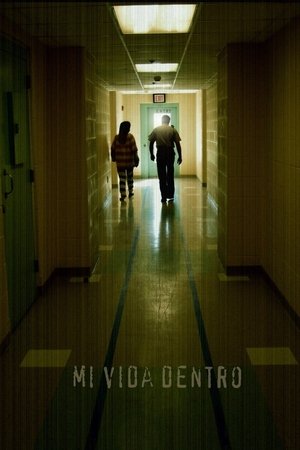
Rosa is a Mexican woman who, at the age of 17, migrated illegally to Austin, Texas. Some years later, she was jailed under suspicion of murder and then taken to trial. This film demonstrates how the judicial process, the verdict, the separation from her family, and the helplessness of being imprisoned in a foreign country make Rosa’s story an example of the hard life of Mexican migrants in the United States.
Over a decade, a family struggles for U.S. citizenship, confronting fear and sacrifice while forging an identity beyond legal status in a hostile immigration climate.
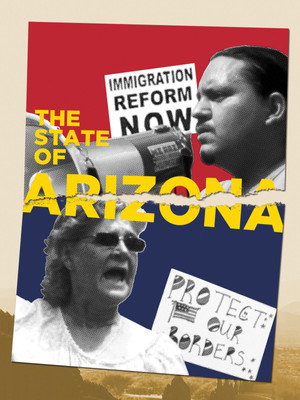
From PBS: Arizona's enforcement-led policy, which grew out of its unique position as a frontline border state, is reshaping the national conversation around immigration reform. With dozens of states considering a similar approach, THE STATE OF ARIZONA holds up a mirror, asking Americans who they are, and who they want to be.
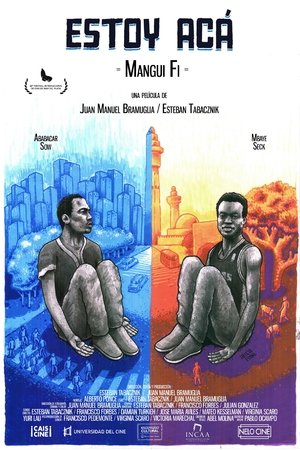
For Ababacar and Mbaye - two Senegalese immigrants who met and established a great friendship in Buenos Aires - the challenge goes beyond adapting to the customs and living conditions in Argentina, or dealing with the indifference and racism they suffer on a daily basis: both came to an instance of their lives in which they must define a course, and in turn accept that their identities and needs have become more complex. The decision to leave their country was driven by the urgent objective of financially supporting their families, but the stay in Buenos Aires crossed them with new people, new ways of seeing things, and even an economic situation different from that which they found at home. Their different ways of seeing things allow them to see in each other a different version of themselves.
Behind the scenes of a popular deli on New York's Upper East Side, undocumented immigrant workers face sublegal wages, dangerous machinery, and abusive managers. Mild-mannered sandwich maker Mahoma López has never been interested in politics, but in Jan. 2012, he convinces a small group of his co-workers to fight back. Risking deportation and the loss of livelihood, the workers team up with a diverse crew of innovative young organizers and take the unusual step of forming an independent union, launching themselves on a journey that will test the limits of their resolve. In one rollercoaster year, they must overcome a shocking betrayal and a two month lockout. Lawyers will battle in backroom negotiations, Occupy Wall Street protesters will take over the restaurant, and a picket line will divide the neighborhood. If they can win a contract, it will set a historic precedent for low-wage workers across the country. But whatever happens, Mahoma and his compañeros won't be exploited again.
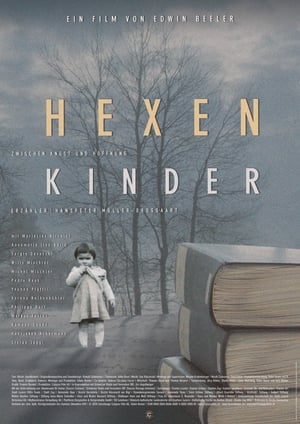
The movie recalls children who suffered mental and physical harm both during the last century, particularly in religious orphanages, and during the time of early modernperiod witch-hunts. It shows that the mindsets and behavioural patterns of both time periods are more alike than one might think.
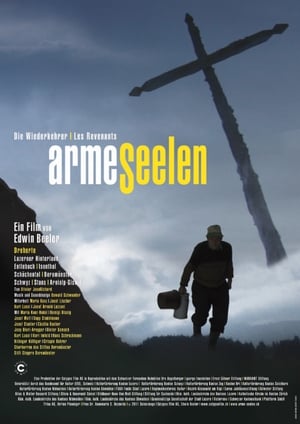
The filmmaker travels to the mysterious land of the “poor souls.” He visits eyewitnesses in rural areas of Central Switzerland. They offer their account of mystifying experiences in connection with the afterlife, of evil deeds by people who passed away long ago in need of atonement. The film investigates the hidden signs of mountain magic and reminds us of our own myths, ghosts and primal images. It also looks for paths to self-awareness that could be revealed to us within and under layers of centuries-old Catholic cultural sediment.
Football is both the place, the crystallization of sporting passion and the witness of identity imaginations. It is also an interesting and relevant area for discussing the migration issue. From the 1930s to the present day, football, notably with the composition of the French team, has reflected the plurality of the French population. Raymond Kopa, Michel Platini, Zinedine Zidane, Basile Boli... these four footballers alone illustrate the four major waves of immigration that France has experienced.
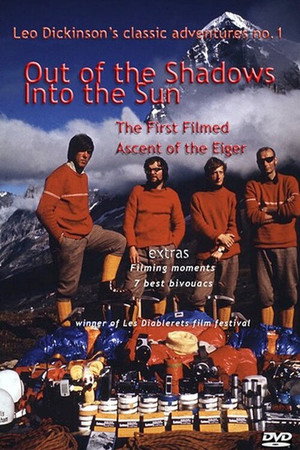
Leo Dickinson’s first ever film records the actual ascent of the Eiger North Face in 1970 by Eric Jones, Cliff Phillips, Peter Minks and Dickinson, who carried two 16mm cine cameras and 5000ft of film to document the ascent. On an early attempt Cliff Phillips slipped on a steep icy slope and fell 200 feet. Either by chance or perhaps intuition, Leo had his camera running and filmed the fall. After two thwarted attempts and six weeks of waiting, fine weather arrived and the team finally started their final ascent. Dickinson remastered and re-edited the film in 2010.
A documentary about Antti Jalava, a Swedish-Finnish writer who was among the first to write about the immigrant experience in Sweden.
In preparation for a feature-length film about windmills, an assistant director travels through the Vaud region to search for locations with windmills. The research leads to a serious engagement with the meaning and purpose of windmills, which has something Don Quixote-like about it in the age of nuclear power stations. The transitions between document and fiction flow constantly and result in a charming and intellectual mixture of seriousness and fun, determination and coincidence, weightlessness and the weight of meaning.
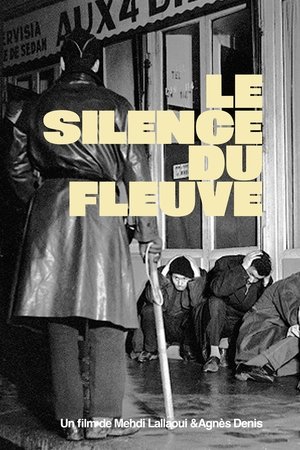
“Forgetting is complicit in recidivism,” says the commentary of this film dedicated to the demonstration of October 17, 1961 in Paris and the savage repression that followed. 11,538 Algerians will be arrested, which is reminiscent of the great Vel d’hiv roundup of July 16 and 17, 1942 where 12,884 Jews were arrested. The film brings together eyewitnesses including a priest, a peacekeeper, a couple of workers sympathetic to the Algerian cause, a lawyer, Paris municipal councilors including Claude Bourdet (then one of the leaders of the PSU and journalist to France Observateur), Gérard Monatte, the future police union leader, and the editor and writer François Maspero.
Cyriaque Kouenou was forced to leave his country and fled to the Netherlands. Staying there he has now entered his fourth year on a surrealistic trip with no end in sight, with stopovers in a tent camp, an empty church, an old office building and a former prison. A no man's land where you are stuck after being told that you aren't allowed to stay but also can't be sent back.
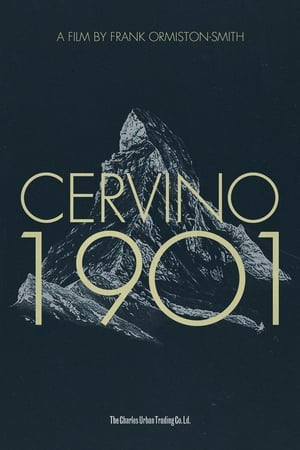
On September 28th, 1903, the Urban Mountaineering Expedition, headed by Frank Ormiston-Smith, left Zermatt to attempt the conquest of the Matterhorn. On the 29th, the conquest was completed by the filming of the panorama from the actual summit of the mountain. The film consists of 20 scenes and illustrates the whole ascent from Zermatt through the Hornli Ridge. A copy of the film was found in Zermatt in 1953 and was was erroneously attributed to Frederick Burlingham and dated 1901. Since then, the film has been widely publicized as the first mountain film under the title of 'Cervin 1901', but this is incorrect. Ormiston previously had made 'Alpine series' (1901), 'The ascent of Mont Blanc' (1902), 'Climbing the Great Schreckhorn' (1902) and 'Ascent of the Jungfrau' (1903). The pictures and descriptions of the Charles Urban Trading 1903 film catalogue show without any doubt that 'Ascent of the Matterhorn' and 'Cervin 1901' are the same film.
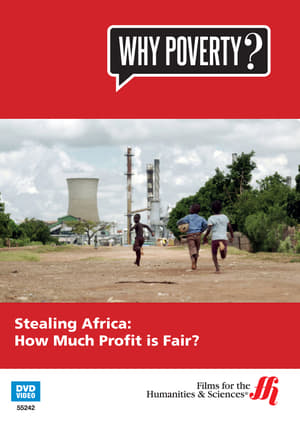
Zambia's copper resources have not made the country rich. Virtually all Zambia's copper mines are owned by corporations. In the last ten years, they've extracted copper worth $29 billion but Zambia is still ranked one of the twenty poorest countries in the world. So why hasn't copper wealth reduced poverty in Zambia? Once again it comes down to the issue of tax, or in Zambia's case, tax avoidance and the use of tax havens. Tax avoidance by corporations costs poor countries and estimated $160 billion a year, almost double what they receive in international aid. That's enough to save the lives of 350,000 children aged five or under every year. For every $1 given in aid to a poor country, $10 drains out. Vital money that could help a poor country pay for healthcare, schools, pensions and infrastructure. Money that would make them less reliant on aid.