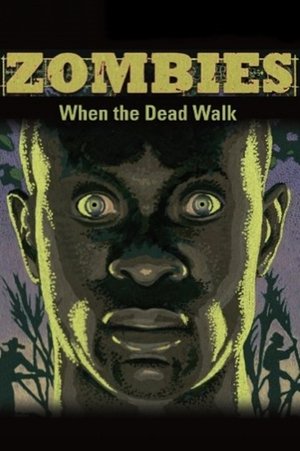
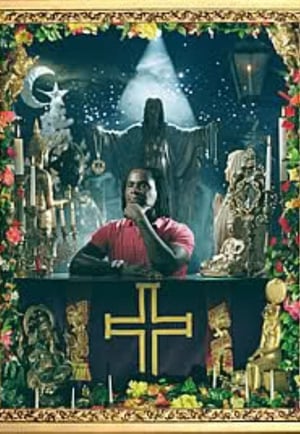
The documentary follows the story of two brothers who were sexually abused by the same priest of Polish Catholic Church.
Kanonici bieleho rúcha
In 2008 French filmmaker Julie Gali traveled to the US to film the election of Barack Obama. In spite of this victory for civil rights, it soon became apparent that the rights of another minority were under threat. In California the passing of Proposition 8 marked the only time in U.S. history that a civil right was actually taken away after it had been granted. Upon seeing this, Ms. Gali decided to immerse herself in the growing grassroots struggle of the gay community, which culminated in the October 11, 2009 March for Equality in Washington DC.
The filmmaker travels to the mysterious land of the “poor souls.” He visits eyewitnesses in rural areas of Central Switzerland. They offer their account of mystifying experiences in connection with the afterlife, of evil deeds by people who passed away long ago in need of atonement. The film investigates the hidden signs of mountain magic and reminds us of our own myths, ghosts and primal images. It also looks for paths to self-awareness that could be revealed to us within and under layers of centuries-old Catholic cultural sediment.
The movie recalls children who suffered mental and physical harm both during the last century, particularly in religious orphanages, and during the time of early modernperiod witch-hunts. It shows that the mindsets and behavioural patterns of both time periods are more alike than one might think.
A rare close-up of the Abakuá —an Afro-Cuban religious brotherhood that has been hidden from outsiders until recently. A symbol of resistance for over 200 years, the Abakuá society has managed to survive slavery, the Spanish domination and the Revolution, spite of all the bias and misunderstandings about their traditions and rituals.
Part documentary, part expose, this film follows one-time child evangelist Marjoe Gortner on the "church tent" Revivalist circuit, commenting on the showmanship of Evangelism and "the religion business", prior to the start of "televangelism". Preserved by the Academy Film Archive in 2005.
This intimate ethnographic study of Voudoun dances and rituals was shot by Maya Deren during her years in Haiti (1947-1951); she never edited the footage, so this “finished” version was made by Teiji Ito and Cherel Ito after Deren’s death.
A series of interviews are conducted concerning people's beliefs towards the possibility of an afterlife. The interviews are filmed against a set of strange backdrops, and are intercut with clips from classic films and a variety of stock footage.
The Quran is the Holy Book of Islam, a religion shared by more than a billion followers worldwide. For the Muslim tradition, since its revelation to the Prophet Muhammad between the year 610 and 632 of the Christian era in Mecca and Medina, the Koran is immutable, and has remained maintained. However, recent discoveries of Koranic manuscripts analyzed by scientists, dated around the year 680 - the oldest known in the world - revealed that the Koran has a history. During the first century of Islam, and before the canonical version of the Caliph Uthman imposed itself, the holy book of Islam would have known competing versions, a different organization of the suras, variable readings due to a writing, in its beginnings, very rudimentary… It is to this meeting of knowledge, at the crossroads between the Muslim tradition and scientific research, that this journey to the origins of the Koran invites.
The history of nuns mirrors the history of all women -- in what we are taught about the past, women are almost invisible. Although today's one million nuns outnumber priests two to one, they must struggle to be heard by the all-male Roman Catholic hierarchy from which they are excluded. Behind the Veil: Nuns is the first film ever to record from a global perspective the turbulent history and remarkable achievements of women in religion, from pre-Christian Celtic communities to the radical sisters of the 1980s. Contemporary nuns of strength, dignity and commitment speak of their lives and of their predecessors.
The inspiring story of a young Indian Muslim woman who trades her burka for dreams of playing on the Mumbai Senior Women's Cricket Team and how the harsh realities for women in her country creates an unexpected outcome for her own family, ultimately shattering and fueling aspirations.
A poignant documentary exploring the unexpected bond between Malcolm X and Ahmed Osman, a young Sudanese student. Through personal reflections and rare footage, the film traces their friendship, culminating in Osman's emotional return to Harlem, where he revisits the legacy of Malcolm X and his meaningful connection to the Sudanese people.
Abdul Rohman is a student and one of the caretakers in the Kaliopak Cultural Islamic Boarding School. He has spent these last two years there. Process of finding true self, peace, and knowledge, he found in this place. Kaliopak Cultural Islamic Boarding School has become a ‘savannah’ of knowledge and art for him. This space has helped him in the process of channeling his idealism in his ideology of thought and views on life.
Flight Number 884 is a film about the wishes and desires of Muslim immigrants. Every year thousands of bodies of Turkish immigrants are flown back from Europe to small villages - villages they had left long ago. The film follows the dead body of a Muslim on its last journey from Vienna to a graveyard in Turkey.
Would Jesus Wear a Sidearm?
Yes, here he is, the best preacher in the world, here to warn the country about the dangers of Satanism in America. Plenty of interviews with "victims of ritual abuse" recounting "true experiences" of their lives being destroyed by secret Satanic cults.
Brendan is a pastor in a small, evangelical church, and he has a secret. He doesn't believe in God anymore. His wife is still a true believer - and she just told the wrong person. Losing Our Religion is a feature length documentary about preachers who are not believers, and what atheists do when they miss church. Allowed access to the 600 members of The Clergy Project - a safe haven for preachers from all faiths who no longer believe - the documentary follows ex-members and clergy who are still undercover. They are not just losing their religion, for many they are losing their friends, community and even family. As well as their job. As events unfold that change lives forever, their stories also connect with secular communities that are growing in surprising places. New groups are experimenting in ways to have church without god, and asking the same question as unbelieving clergy - "what's next?"
While seething mobs converged around them, the Prophet Joseph and his brethren quietly submitted themselves to imprisonment in Carthage Jail. Now, as never before, audiences are invited to witness the events of the days preceding the martyrdom. Based on documents handed down through the generations, Carthage offers a glimpse into the turmoil and testimony of the men whose place in history was forever defined by what was to come - a jailer seeking to protect his charges, a governor caught between the persecuted and their persecutors, and a group of Saints whose faith and brotherhood stands as the ultimate witness of the restoration of the gospel of Jesus Christ.
In this true-life twist on a holiday fable, Jeremy Morris brings a whole new meaning to Christmas spirit when his extravagant seasonal display sparks a dispute with his neighbors that lands them all in court.