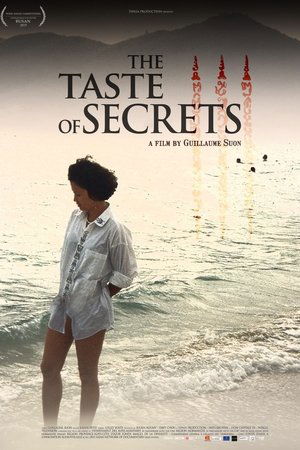
My mother always refused to speak about her childhood during the Cambodian genocide. Upset by her silence, my brother and I decide to follow Antoine, a grandson of Armenian genocide survivors, photographing the ghosts of his ancestors in the Middle East.
On April 17, 1975, the face of Cambodia would forever be changed. As Khmer Rouge soldiers marched into the capital city of Phnom Penh, the unsuspecting people of Cambodia had little idea they would be forced into a living nightmare that would last nearly four years. Rain Falls From Earth is a story of courage, a story of survival and a story of eventual triumph over the Communist regime that was responsible for the deaths of over two million people. The voices of many Cambodians are heard as they convey their thoughts, ideas and emotions - the very things they were forced to abandon in the "killing fields" of Cambodia. Their stories are an eyewitness account to genocide.
In China more people are on death row than the rest of the world combined. The children of the convicts are often left alone, stigmatized and living in the streets. Grandma Zhang, as the kids call her, is a former prison guard who has founded an orphanage in Nanzhao.
The atrocities Sok Chea witnessed as a child during the rule of Pol Pot continue to haunt to this day, nearly thirty years later. So she is shocked when she suddenly comes across the man who was in charge of her prison and whom she holds responsible for murdering most of her family. Once again he holds a prominent position, this time as Deacon of Death or leader of cremation ceremonies. She decides to collect evidence against him. He must stand trial. But can she succeed in a country still ruled by fear. Besides which, Cambodians believe in karma and forgiveness. Wrongdoers are punished after their death anyway and will suffer for many lives to come. Sok Chea'ss quest leads her to a confrontation with Karoby, in the same pagoda where the atrocities occurred.
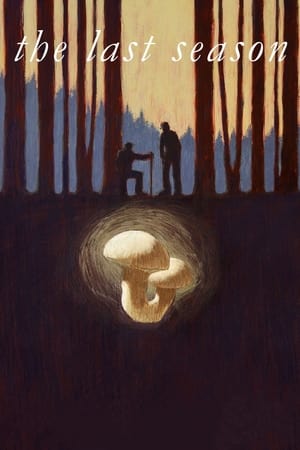
In search of the lucrative matsutake mushroom, two former soldiers discover the means to gradually heal their wounds of war. Roger, a self-described 'fall-down drunk' and sniper in Vietnam, and Kouy, a Cambodian refugee who fought the Khmer Rouge, bonded in the bustling tent-city known as Mushroom Camp, which pops up each autumn in the Oregon woods. Their friendship became an adoptive family; according to a Cambodian custom, if you lose your family like Kouy, you must rebuilt it anew. Now, however, this new family could be lost. Roger's health is declining and trauma flashbacks rack his mind; Kouy gently aids his family before the snow falls and the hunting season ends, signaling his time to leave.
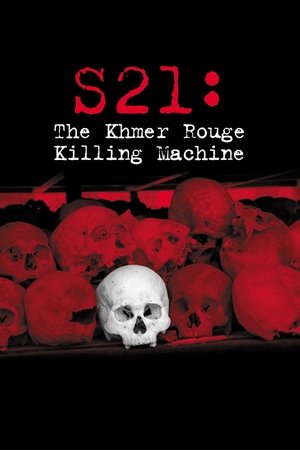
Documentary of the S-21 genocide prison in Phnom Penh with interviews of prisoners and guards. On the search for reasons why this could have happened.
The story of Pastor Lucy and her husband Duncan Ndegwa, who began feeding and sheltering children from the streets of Nairobi, Kenya in 1996.
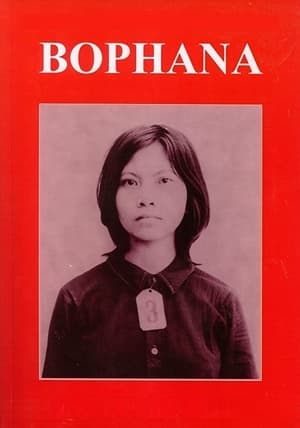
Based upon documentation of forced confessions made during the Khmer Rouge era in Cambodia, this film reconstructs the relationship of a young woman, Hout Bophana, and Ly Sitha before they were tortured in executed in 1977.
Documentary about Cambodia featuring a long interview with Pol Pot
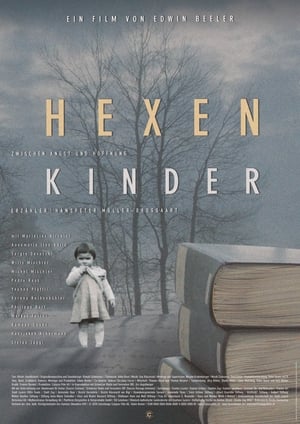
The movie recalls children who suffered mental and physical harm both during the last century, particularly in religious orphanages, and during the time of early modernperiod witch-hunts. It shows that the mindsets and behavioural patterns of both time periods are more alike than one might think.
The film's protagonists are the orphaned children taken into custody by the state and institutionalized at Children's House no. 6 from Bucharest. For Mészáros, the concern for the situation of children left orphaned during the Second World War is autobiographical: the director directly experienced the absence of parents in her own childhood.
Cambodian refugee Ted Ngoy builds a multi-million dollar empire by baking America's favourite pastry: the doughnut.
Kinshasa, générations Matuidi
After the collapse of the Communist regime in 1989, over 100,000 children were discovered living in Romanian orphanages. Follow Nori Vito, one of those orphans, as she journeys from her adopted American home to Romania and Greece to find the family she lost almost 30 years ago.
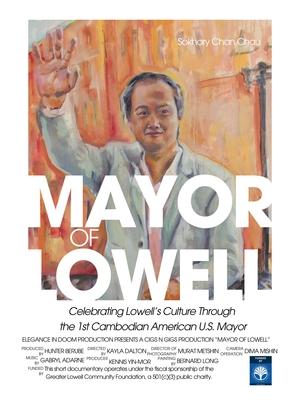
This short documentary chronicles the culture and arts of Cambodian Americans and the Lowell, MA community through the eyes of Sokhary Chau, the first Cambodian American Mayor in the United States. Chau immigrated to the U.S. at seven years old to escape the Khmer Rouge genocide. Through this unique story that showcases the best of Lowell—immigrant success, assimilation, history, and the development of the arts—we see a man born into a war-torn country who comes to America to be a first-in-the-nation leader.
In the Namunyak Wildlife Conservancy in Kenya drought is a menace to both humans and animals. This documentary follows two Elephant Guardians in their tireless work to protect this endangered species.
Rithy Panh uses clay figures, archival footage, and his narration to recreate the atrocities Cambodia's Khmer Rouge committed between 1975 and 1979.
Between April, 1975 and January, 1979, Pol Pot and the Khmer Rouge were responsible for the deaths of 1.7 million people in Cambodia. A quarter of the population were wiped out in one of the most brutal and virulent genocides of the twentieth century. This new film explores the life of Pol Pot, the ever-smiling, obsessively secretive leader of the Khmer Rouge. What drove him to inflict such a radical experiment on his own people? How did the Khmer Rouge turn from a band of nationalist revolutionaries into a ruthless killing machine? And why did the West stand by and let it happen? As an international tribunal in Cambodia finally brings the surviving leaders of the Khmer Rouge to justice, it's time to re-examine the gruesome legacy of Pol Pot.
CAMBODIA: THE PRINCE AND THE PROPHECY explores the years of Prince Norodom Sihanouk’s rule, his juggling for peace, his charisma and contradictions. Following the Prince’s overthrow in 1970, the film traces Cambodia’s destruction during the five years of war before Pol Pot’s Khmer Rouge came to power and launched their revolution… As a central theme, the film and its sequel CAMBODIA/KAMPUCHEA feature exclusive interviews with Prince Sihanouk, and focus on his pivotal role in shaping Cambodia’s fate.
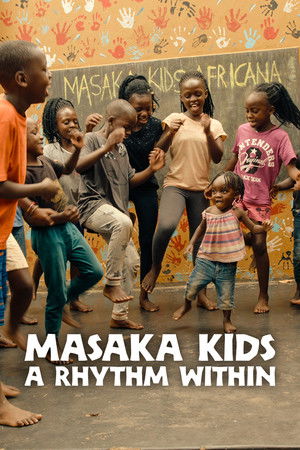
The story behind the Uganda-based YouTube dance sensations who have endured devastating personal loss from famine and war, and use the power of dance and song to overcome hardship.