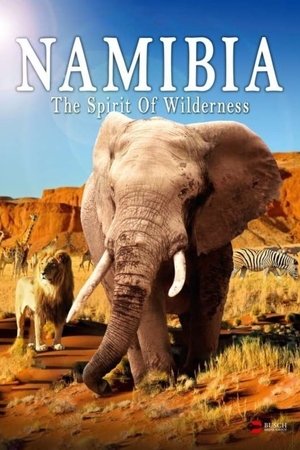
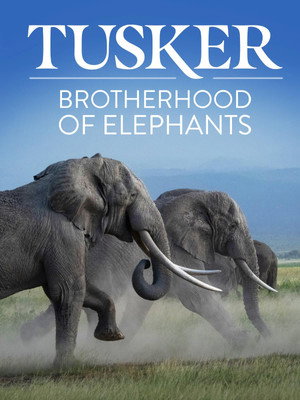
This in-depth look into the powerhouse industries of big-game hunting, breeding and wildlife conservation in the U.S. and Africa unravels the complex consequences of treating animals as commodities.
This documentary will explore the Afro-Caribbean dance, ‘whining’ alongside the practice of twerking to analyze respectability politics, pressures to accommodate whiteness, and gendered criticism of sexual expression within the Black diaspora. Using archival footage of West African dance, expert opinion from dancing and gender studies professors, and the active participation of partygoers in a dance experiment, Watkins will paint the picture of the defiance, autonomy, and ancestral veneration intrinsic to these traditional movement styles.
Andrea and Krisztina Marics are 28-year-old identical twins with a teaching degree that have lived together since birth. They work together at a touring circus, doing joint artistic performances. After a long circus tour abroad, Andrea leaves the close relationship and ends their work together. She feels that she can succeed on her own. Krisztina still lives and works in the circus but struggles to find her place there without Andrea. After the winter tour, Krisztina has to decide if she stays at home with her sister or continues the life of a wanderer.
Brenda Way, founder and artistic director of ODC, is a recipient of the San Francisco Foundation Community Awards "for creating a community hub through dance. She built the largest, most comprehensive contemporary dance center in the nation, and through it she inspires dancers and audiences, cultivates artists, and engages the community. Brenda is a choreographer, writer, and community activist who strengthens our region's cultural connections." - San Francisco Foundation
The San Francisco Foundation Community Leadership Awards presents Bishop Yvette A. Flunder, founder and director of Ark of Refuge, with the Robert C. Kirkwood Award for courageously addressing the issues of HIV/AIDS prevention, response, and care within the African American faith community. As a pastor, scholar, teacher, and activist, she has united gospel and social ministries to create unique programs that improve the quality of life of some of the most marginalized in our community.
This documentary explores the history of Canada’s first major migration of non-European and non-white refugees who arrived in 1972 when Ugandan President Idi Amin expelled all South Asians from the country. Their story of struggle and hope became part of Canada’s conversations about refugees and cultural pluralism, and informed the Canadian response to future refugee movements.
Anma (The Masseurs) is a representative and historical work by the creator of Butoh dance, Tatsumi Hijikata in his early period in the 1960s. The film is realized not only as a dance document but also as a Cine-Dance, a term made by Iimura, that is meant to be a choreography of film. The filmmaker "performed" with a camera on the stage in front of the audience. With the main performers: Tatsumi Hijikata and Kazuo Ohno, the film has the highlights such as Butohs of a soldier by Hijikata & a mad woman by Ohno. There is a story of the mad woman, first outcast and ignored, at the end joins to the community through her dance. Inserted descriptions of Anma (The Masseurs) are made for the film by the filmmaker, but were not in the original Butoh. The film, the only document taken of the performance, must be seen for the understanding of Hijikata Butoh and the foundation of Butoh.
Honorable Ronald V. Dellums, winner of the San Francisco Foundation 2005 Community Leadership Awards (Robert C. Kirkwood Award) - for his decades of courage, leadership, and vision in championing peace, justice, diversity, and economic equality, both locally and globally, and for his impact in moving the AIDS pandemic and its solutions to the top of the global agenda.
The senior year of a girls’ high school step team in inner-city Baltimore is documented, as they try to become the first in their families to attend college. The girls strive to make their dancing a success against the backdrop of social unrest in their troubled city.
A personal, scientific, mystical exploration of Amazonian curanderismo, focus on Ayahuasca and Master Plants, their healing and visionary properties and risks, along with the Shipibo people and their songs.
Voices of Positive Women is a ground-breaking documentary examination of the impact of HIV and AIDS on the lives of women working from material published in the book "Positive Women", a collection of personal accounts of women from all over the world living with AIDS and HIV. Bravely sharing their experiences publicly in what until now has been a void of information and support, and in some cases medical and bureaucratic denial that women are even at risk, the nine women presented in Voices of Positive Women speak compellingly on their own terms of their personal struggles for survival and voice.
In a continuation of her first film We Are Not Speaking the Same Language, Danika explains what it feels like to be displaced Indigenous urban.
Festival panafricain d'Alger is a documentary by William Klein of the music and dance festival held 40 years ago in the streets and in venues all across Algiers. Klein follows the preparations, the rehearsals, the concerts… He blends images of interviews made to writers and advocates of the freedom movements with stock images, thus allowing him to touch on such matters as colonialism, neocolonialism, colonial exploitation, the struggles and battles of the revolutionary movements for Independence.
German iconoclast filmmaker and gay-rights activist Rosa vonPraunheim examines his own life and career in the documentary Phooey Rosa! With a quickly paced editing style, the film is a mix of personal banter, candid interviews, and clips from his filmography. It also includes footage from his early film Bed Sausage to his later work Neurosia. At the age of 60, vonPraunheim reveals intimate details about his past relationships and his childhood growing up after WWII. He also implicates some of his friends and inspirations, including Luzi Kryn and Rainer Kranach.
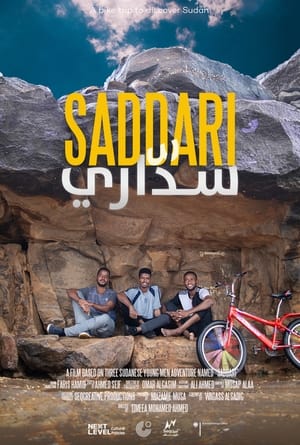
Biniam Girmay’s recent successes have shown that African cycling is on the up, ready at last to follow athletics and football into the big time. But why has it taken so long, and what’s needed to take it all the way? Set against the beauty and battles of the Tour du Rwanda, we explore the past, present and future of riders from Eritrea, South Africa, Rwanda and more, meeting Girmay and the rising stars hot on his heels, as well as the people passionate about giving these riders the opportunities they deserve. This is the story of the next great continent in cycling - Africa.
Through interviews with key AIDS Healthcare Foundation (AHF) stakeholders from over the years coupled with archival video footage culled from AHF's 30 years of advocacy, care and activism, 'Keeping the Promise' tells a compelling story of AHF's history while offering a glimpse of, and road map to its future.
David and Judith MacDougall are exploring the marriage rituals and roles of Turkana women in this ethnographic documentary. The film's biggest part is taken up by talks between the Turkana people. As one of the first ethnographic documentaries "A Wife Among Wives" subtitles these talks so that the viewer can get a better and probably more personal understanding of the life of the Turkana.
The Goose Lake International Music Festival held August 7–9, 1970 in Leoni Township, Michigan, "was one of the largest music events of its era", and featured many of the top rock music bands of the period. Songs performed include: Savage Grace - All Along The Watchtower, John Sebastian - Darling Be Home Soon, Harmonica Solo - Teegarden & Van Winkle, Ten Years After - Sweet Little Sixteen, The Stooges - 1970, Mountain - Ain't Got A Dime Jam, Mississippi Queen.
Filmmaker Christopher Quinn observes the ordeal of three Sudanese refugees -- Jon Bul Dau, Daniel Abul Pach and Panther Bior -- as they try to come to terms with the horrors they experienced in their homeland, while adjusting to their new lives in the United States.
A Luta Continua explains the military struggle of the Liberation Front of Mozambique (FRELIMO) against the Portuguese. Produced and narrated by American activists Robert Van Lierop, it details the relationship of the liberation to the wider regional and continental demands for self-determination against minority rule. It notes the complicit roles of foreign governments and companies in supporting Portugal against the African nationalists. Footage from the front lines of the struggle helps contextualize FRELIMO's African socialist ideology, specifically the role of the military in building the new nation, a commitment to education, demands for sexual equality, the introduction of medical aid into the countryside, and the role of culture in creating a single national identity.