"Never Again?" seeks to educate others on the horrors and consequences of anti-Semitism. The film follows the journey of a Holocaust Survivor and former radical Islamist as they seek to leave behind a legacy of love over hate.
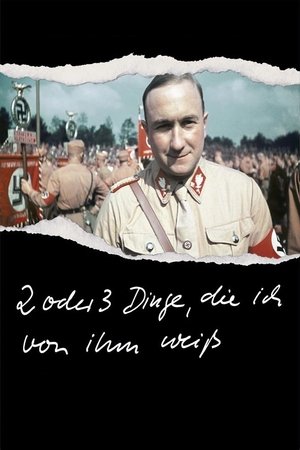
What would your family reminiscences about dad sound like if he had been an early supporter of Hitler’s, a leader of the notorious SA and the Third Reich’s minister in charge of Slovakia, including its Final Solution? Executed as a war criminal in 1947, Hanns Ludin left behind a grieving widow and six young children, the youngest of whom became a filmmaker. It's a fascinating, maddening, sometimes even humorous look at what the director calls "a typical German story." (Film Forum)
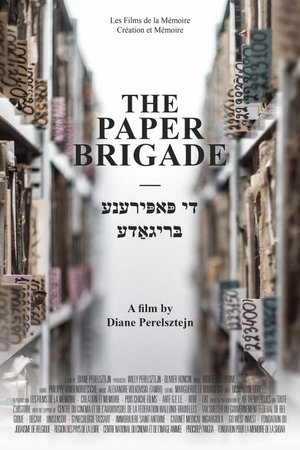
Lithuania, 1941, during World War II. Hundreds of thousands of texts on Jewish culture, stolen by the Germans, are gathered in Vilnius to be classified, either to be stored or to be destroyed. A group of Jewish scholars and writers, commissioned by the invaders to carry out the sorting operations, but reluctant to collaborate and determined to save their legacy, hide many books in the ghetto where they are confined. This is the epic story of the Paper Brigade.
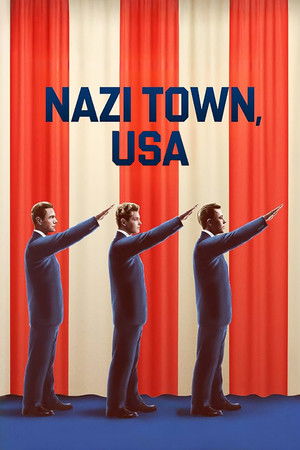
Archival footage of an American Nazi rally that attracted 20,000 people at Madison Square Garden in 1939, shortly before the beginning of World War II.
In 1961, history was on trial... in a trial that made history. Just 15 years after the end of WWII, the Holocaust had been largely forgotten. That changed with the capture of Adolf Eichmann, a former Nazi officer hiding in Argentina. Through rarely-seen archival footage, The Eichmann Trial documents one of the most shocking trials ever recorded, and the birth of Holocaust awareness and education.
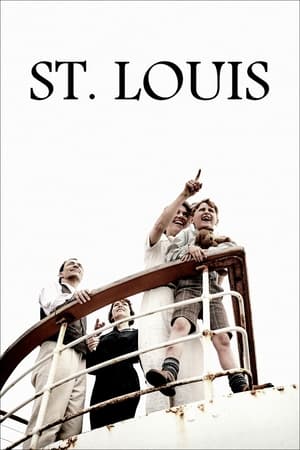
After his father is murdered by the Nazis in 1938, a young Viennese Jew named Ferry Tobler flees to Prague, where he joins forces with another expatriate and a sympathetic Czech relief worker. Together with other Jewish refugees, the three make their way to Paris, and, after spending time in a French prison camp, eventually escape to Marseille, from where they hope to sail to a safe port.
When indie comic character Pepe the Frog becomes an unwitting icon of hate, his creator, artist Matt Furie, fights to bring Pepe back from the darkness and navigate America's cultural divide.
A key overview of twentieth-century American fascism and antifascism produced in 1991 by the John Brown Anti-Klan Committee.
Documentary edited from testimonies on the torture of people who experienced the war. Some witnesses were tortured by Jean-Marie Le Pen. These testimonies will help defend the newspaper Le Canard Enchaîné in court against Jean-Marie Le Pen for defamation. The film was shown in 1985 during the trial and some witnesses also came to support the newspaper. But the 1963 amnesty law protects the politician, prohibiting the use of images that could harm people who served during the Algerian war.
January 1953: On the eve of his death Stalin finds himself yet another imaginary enemy: Jewish doctors. He organizes the most violent anti-Semitic campaign ever launched in the USSR, by fabricating the "Doctors' Plot," whereby doctors are charged with conspiring to murder the highest dignitaries of the Soviet Regime. Still unknown and untold, this conspiracy underlines the climax of a political scheme successfully masterminded by Stalin to turn the Jews into the new enemies of the people. It reveals his extreme paranoia and his compulsion to manipulate those around him. The children and friends of the main victims recount for the first time their experience and their distress related to these nightmarish events.
Between 1933 and 1945 roughly 1200 films were made in Germany, of which 300 were banned by the Allied forces. Today, around 40 films, called "Vorbehaltsfilme", are locked away from the public with an uncertain future. Should they be re-released, destroyed, or continue to be neglected? Verbotene Filme takes a closer look at some of these forbidden films.
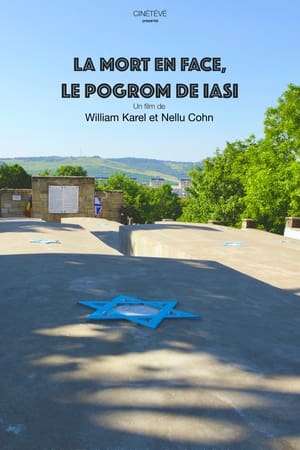
In Iasi, Romania, from June 28 to July 6, 1941, nearly 15 000 Jews were murdered in the course of a horrifying pogrom. At the time, the programmed extermination of European Jews had not yet began. After the war, the successive communist governments did all they could to ensure the Iasi pogrom would be forgotten. It was not until November of 2004 that Romania recognized for the first time its direct responsibility in the pogrom. All that remains of this massacre are about a hundred photographs taken as souvenirs by german and romanian soldiers, and a few remaining survivors.
A documentary about the rise of anti-Semitism in the USA after the terrorist attacks of September 11, 2001.
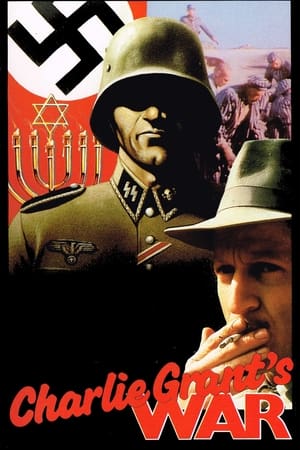
A Canadian artist turned diamond merchant in Vienna, Austria risks his life to smuggle Jews out of the Third Reich.
Chosen and Excluded - Jew Hatred in Europe
A 38 minute documentary that investigates why antisemitism exploded in Bay Area High Schools after Hamas attacked Israel on October 7. This comes after years of anti-Asian hate and anti-white hate.
Samuel Willenberg and Kalman Taigman, the last two survivors of the Nazi extermination camp Treblinka, recount the horrors they experienced during the war and talk about their lives after their escape in a prisoner uprising in 1943. Willenberg would go on to become a hero of the 1944 Warsaw uprising while Taigman would be called as a witness during the infamous trial of Adolf Eichmann.
World War II, June 1940. France has fallen and suffers the relentless boot of Nazi Germany. But Algeria, the prized French colony in North Africa, remains part of the territory controlled by the Vichy regime of Marshal Pétain. A strict colonial order is maintained: the French of European origin rule, while local Jews are stripped of French citizenship and discrimination against the mainly Muslim population increases.
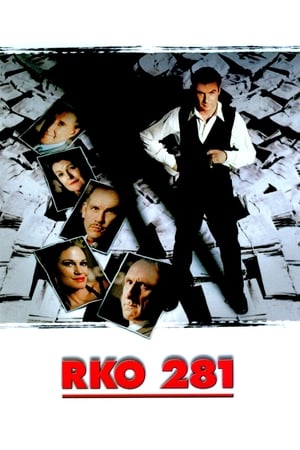
In 1939, boy-wonder Orson Welles leaves New York, where he has succeeded in radio and theater, and, hired by RKO Pictures, moves to Hollywood with the purpose of making his first film.
Chaja Florentin and Mimi Frons have been best friends for 83 years. Born and raised in Berlin, they had to escape from the Nazis to Palestine with their families in 1934. They talk about their complicated relationship with Berlin in a Tel Aviv café where they meet everyday. A film about friendship, homeland and identity.