Mandela’s legend is built on his absence, during his 27- year incarceration. In 1990, when Nelson Mandela is released, South Africa is waiting for their Messiah. But he doesn’t know it yet, he is the most famous political prisoner of the Planet. Will he be up to the challenge?
American dancer and choreographer Hermes Pan recalls his life and work as he relives the glorious history of the Hollywood musical.
This first documentary about the pop group ABBA was made around the time of the release of their fourth album 'Arrival'. It contains unique archive footage filmed at the secret location where they made the record, concert footage, specially made promotional videos, photos from the group members' private collection and interviews in Swedish with each of them: Agnetha Fältskog, Björn Ulvaeus, Benny Andersson and Anni-Frid Lyngstad. Stig was also interviewed briefly and was shown playing and singing part of Tivedshambo on acoustic guitar.
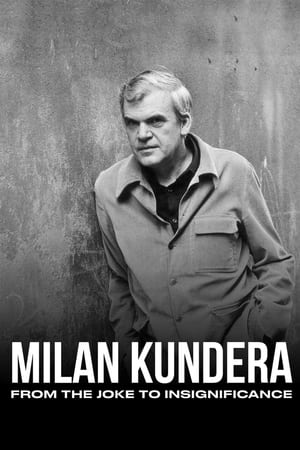
The brilliant Czech writer Milan Kundera has not given an interview in thirty years; nor does he appear in public. How did he become a legendary author? What is so unique about his books?
Paris, France, February 2, 1922. The novel Ulysses, by Irish writer James Joyce (1882-1941), is published by US poet Sylvia Beach (1887-1962), owner of the small bookstore Shakespeare & Co. The book, whose writing consumed seven years of Joyce's life, years in which his family was in financial need, would have a profound and unprecedented impact on 20th century literature and culture.
The final creative chapter of one of music’s most iconic artists. Featuring rare interviews with those who knew and worked alongside Bowie as well as famous fans and figures who have been inspired by his artistry, the film will uncover the strategy behind Bowie’s artistic resurrection and the inexhaustible extraordinary creativity that defined his final decade, in which he released his critically acclaimed album Blackstar just two days before he died. This was an emergence from the turbulence of the 1990s, when Bowie had found himself at odds with a changing industry but pushed on to headline Glastonbury in 2000.
Shipyard is a landmark documentary covering the creation and life of Bellingham, Washington's wooden boat shipyard, which was built in response to the Axis threat of WWII, it's continued growth through the '50's and '60's, as well as it's innovative role in the development and production of fiberglass boats, including patrol riverboats for the Vietnam war.
Antonio Gaudi, portrait d'artiste
Gaudi, Le dernier bâtisseur
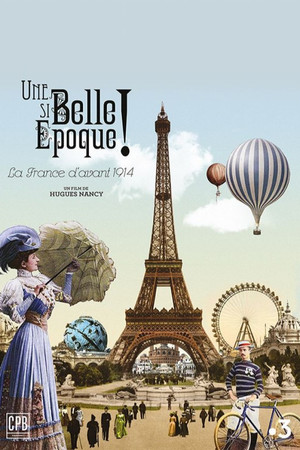
In 1900, the eyes of the whole world are on Paris. The World's Fair welcomed 50 million amazed visitors, and the city celebrated itself in a glamorous era. This period went down in history as the "Belle Époque." Elaborately restored and colorized historical photographs bring to life the exciting life in Paris between the end of the 19th century and the beginning of World War I in 1914. Bicycles, cars, airplanes, moving pictures, newly founded film studios, revolutionary composers and painters, avant-garde ballet performances, fashion houses, summer resorts on the Atlantic coast – life was intoxicating. People celebrate in the variety shows, cabarets, and revue theaters of Paris. Moulin Rouge, Folies Bergères, Bal Tabarin—in Paris, the nights are long and life is too short to sleep through. It is a dance on the volcano, given the political developments in the world.
Everyone knows his name. The novels on the life and crimes of Hannibal Lecter are a worldwide phenomenon, and so are the movies and the TV show. Not mentionning the parodies, the plays... and even a wine named after him! He has become an icon of evil, but also of intelligence and refinement. Let's look back on the incredible Hannibal Lecter phenomenon.
A portrait of the brilliant American writer Truman Capote (1924-84) and the New York high society of his time.
Shadows have followed Harvey Keitel wherever he went, from his blasphematory childhood, to the army and his iconic roles in films such as Scorsese’s Mean Streets and Taxi Driver. Treated as an outcast after being fired from the set of Apocalypse Now, he made a triumphant return with directors such as Tarantino and Jane Campion.
A new light on American filmmaker Steven Spielberg, Hollywood’s greatest director, offering a unique perspective on his work and digging into his personal influences.
In 1948, French singer Charles Aznavour (1924-2018) receives a Paillard Bolex, his first camera. Until 1982, he will shoot hours of footage, his filmed diary. Wherever he goes, he carries his camera with him. He films his life and lives as he films: places, moments, friends, loves, misfortunes.
He is the most sought-after man in Europe in the 1960s. Lex Barker embodies the flawless hero in his films and, as Old Shatterhand, becomes a role model for generations of fans. Revered in Europe, misunderstood and almost forgotten in his native America. But who was this American who rode through Yugoslavia in a leather costume for the European audience? In 1973, Lex Barker died of a heart attack on the streets of Manhattan in New York. But no one recognizes the man who was Tarzan in Hollywood. Nobody knows him or cares about that he, as Winnetou's friend, is revered as an icon in Europe. Lex Barker's European western adventures are just a footnote in American film history. On the occasion of the 50th anniversary of his death, the documentary tells the story of one of the most beautiful men who ever flickered across Europe's cinema screens, for whom European cinema proved to be a stroke of luck and for whom a failed Hollywood career took him via Italy to Germany.
Nous les ouvriers
A two-hour documentary special Robin Williams: Behind Closed Doors which gives viewers an intimate look at his life from his childhood in the suburbs of Chicago to small comedy clubs in Los Angeles, his breakthrough role on the TV show Happy Days as Mork from Ork and his big screen triumphs.
An account of the life and work of the Spanish clown, mime, acrobat and actor Marcelino Orbés (1873-1927), known as Marceline, who, between 1900 and 1914, was unanimously acclaimed as the best in the world.
With an original staging of text and music, Orlando follows the trail of one of the greatest composers of the Renaissance: Orlando di Lasso (also known as Roland de Lassus). His life and masterful oeuvre continue to move people to this day. Although he was a European star at the time, di Lasso had to endure the indignities of his social status as a servant. This documentary explores the relationship between art and power, musically accompanied by the ensemble La Tempête.