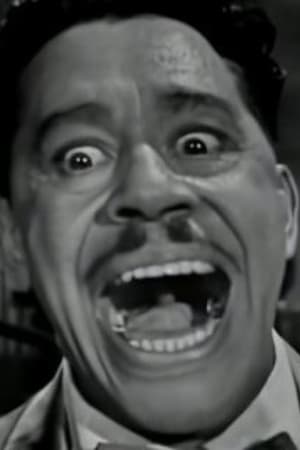
Cab Calloway performing his famous hit "Minnie the Moocher".
A lively, crowded tavern is the setting for this soundie where the title song is performed while the while couples are energetically dancing the polka.
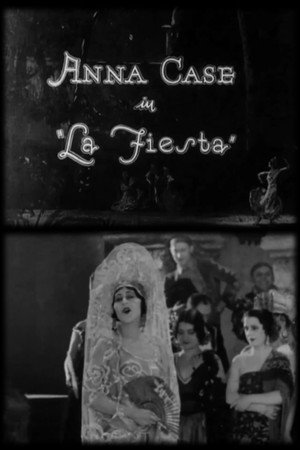
Anna Case sings a song while the Cansino family dances in the background.
Jack White serves as an energetic and highly vocal emcee and bandleader, rapid-firing jokes and enthusiastic commentary between songs. The group performs catchy musical numbers, including the tunes "Crazy for You" and "Mean to Me". The 10-minute short also highlights vocal performances by artists Mary Lee, Billy (or Billie) Lee, and Ruth Petty.
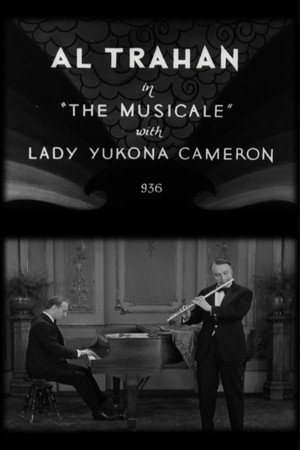
A variety-style short built around the eccentric comedy and piano-playing of Al Trahan, featuring supporting performances from Yukona Cameron and Helen Hawley.
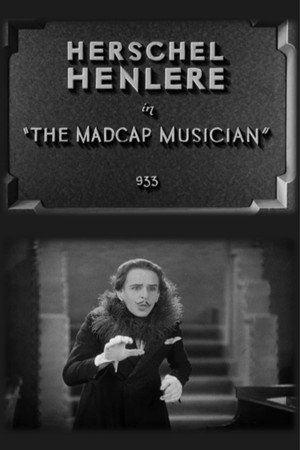
Henlere plays piano in the style of various “masters” and other instruments as a one-man band.
Stan Kenton and his Orchestra perform "This Love of Mine" with Cyd Charisse and other dancers
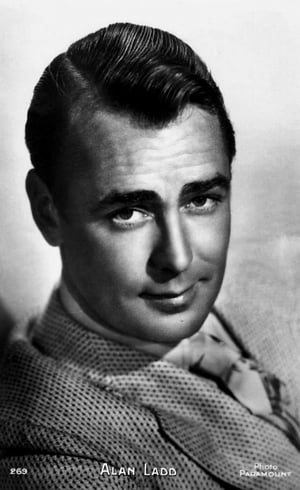
Alan Ladd was discovered by Sue Carol for his incredible voice in radio. And then she married him. In I Look At You, he is sweet and graceful. And at the very beginning of his career in film. He sings and leads Rita Rio's all-girl band while she dances around him.
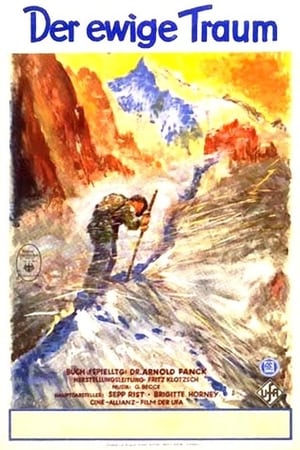
At the end of the 18th century, the wealthy French scholar Saussure comes to a small Alpine village and offers 1,000 pieces of gold to anyone who can lead him to the summit of Mont Blanc. The young farmer's son Jacques Balmat wants to take on the dangerous task, even though his father has told him from an early age about the mighty mountain spirits who guard a legendary treasure of gold on the mountain peak.
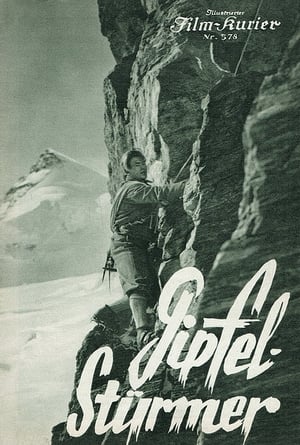
The two unemployed engineers Franzl and Bertl want to be the first to climb the Matterhorn from the dangerous north face. They travel by bicycle with Mizzl and Traudl but without telling them about their intentions. The women accompany them on the assumption that it is a touristical trip. All four camp in a tent at the foot of the Matterhorn and Franzl and Bertl secretly begin the dangerous ascent. The girls will have to follow the ascent together with the residents of the village and the guests of the mountain hotel using binoculars. The role of Franzl is played by Franz Schmid, the actual conqueror of the north face of the Matterhorn together with his brother Toni in 1931.
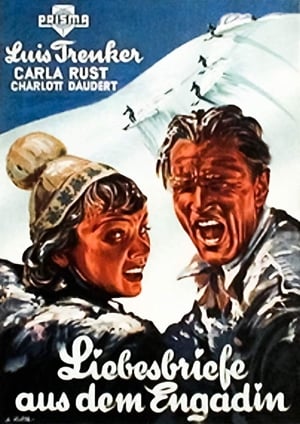
Constance, the young widow of a wealthy American, gets a love letter from the Engadine region, signed by the famous guide Toni Anewater she had met during a holiday in the previous year. Constanze and her friend Dorothy therefore go to Switzerland for winter sports. But identical love letters to other ladies in London, Paris and Rome have been sent. Toni does not know anything about the letters. Everything seems to be a cunning of the hotel owner to attract tourists.
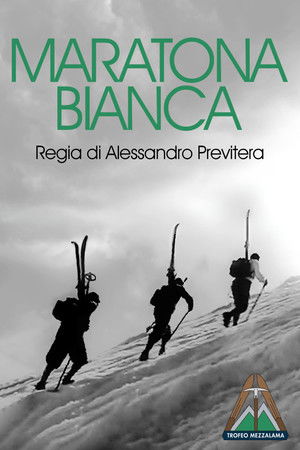
Documentary on one of the first editions of the Trofeo Mezzalama, the highest ski mountaineering race in Europe, at more than 4,200 meters above sea level, which takes place on the glaciers of Monte Rosa, from Breuil to Gressoney-La-Trinité, crossing the summits of Castor (4,199 meters) and Nez du Liskamm (4,100 meters). The film recounts the last hours of feverish preparation before the start, the teams preparing for the race linked in ropes, then follows the stages of the competition by following the groups of skiers from a plane. Created in 1933, the Trofeo Mezzalama was contested until 1938, before falling into oblivion during the war. A second version was organized from 1970 to 1973. A third biannual version has been organized since 1997.
The legend says that the summit of Mont Blanc is covered in gold. This ancestral belief has obsessed Jacques Balmat, a mountain guide, from his childhood. Now only he believes in the legend, and is the laughingstock of the villagers. Determined to prove that he is right, he takes advantage of the interest of the Swiss naturalist and physicist Horace Benedict de Saussure, who promises a reward of a thousand pieces of gold for the first who reaches the summit. The determination of Jacques Balmat will overcome the numerous obstacles that will arise during the ascent. French version of the film 'Der Konig vom Mont Blanc', in which the second-tier actors are different.
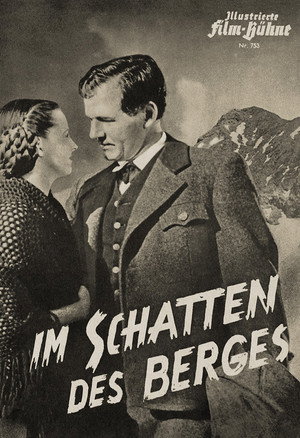
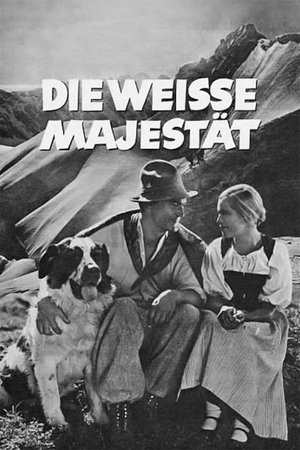
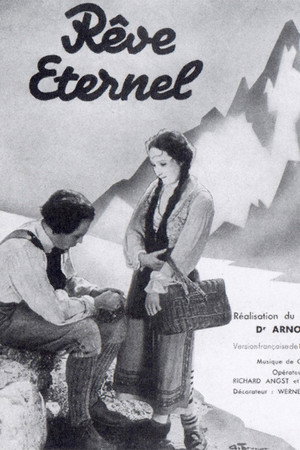
The mountain guide Jakob is a controversial figure. His supposed father dies and leaves behind a great heritage to the people. In the town they consider Jakob a bastard, because his parents were not married, which means that without a testament, the lands in which he lives do not belong to him. But the testament indicates that the inheritance corresponds him under a single condition, he must be the first person to climb the east face of Monte Verità. French version of Die weisse majestat, shot the year before in German with the same script in the Eiger/Jungfrau region but with different actors and by a different director.
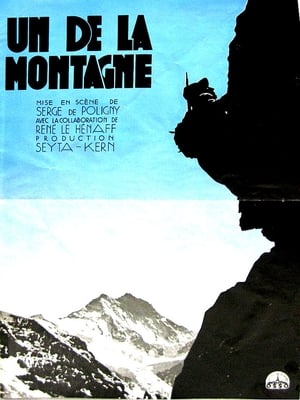
The mountain guide Jakob is a controversial figure. His supposed father dies and leaves behind a great heritage to the people. In the town they consider Jakob a bastard, because his parents were not married, which means that without a testament, the lands in which he lives do not belong to him. But the testament indicates that the inheritance corresponds him under a single condition, he must be the first person to climb the east face of Monte Verità. There is a French version of the film, titled 'Un de la montagne', shot the year after with the same script but with different actors and by a different director.
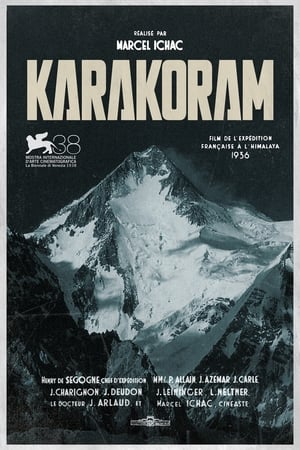
Account of the first French expedition to the Himalayas, which attempted to climb the hidden peak (Gasherbrum I) in 1936, from the preparations for the trip to the end of the ascent. After a long approach walk through quasi-desert regions, then on a huge glacier, the caravan of 700 porters arrives at the foot of Hidden Peak. The expedition was led by Henry de Ségogne, with Jean Charignon, Pierre Allain, Raymond Leininger, Jean Carle, Jean Deudon, Louis Neltner, Jacques Azémar, doctor Jeand Arlaud and director Marcel Ichac. Weather conditions, logistical problems and a strike among Sherpas forced the team to retire at 6900m on the south face. The film received the Silver Lion at the Venice Film Festival in 1938.
A soundie featuring The Balators, Jack and June Blair, and Dorn & Delsa.
During an early, unsuccessful attempt at climbing the Matterhorn, Edward Whymper finds himself rescued by an italian guide, Jean Antoine Carrel. The two men quickly build a friendship and agree to reach the peak together. However, local villagers ploto to divide the alliance of Whymper and Carrel and both men join rival teams as they set out in a race to conquer the mountain. A mountaineering drama based on the novel by Carl Haensel and inspired in the dramatic true story of Edward Whymper, who led the first successful ascent of the Matterhorn in 1865. There is another version of the film titled The Challenge, shot the same year in English.
Story of the trials and tribulations of a German who emigrates to the US during the Great Depression.
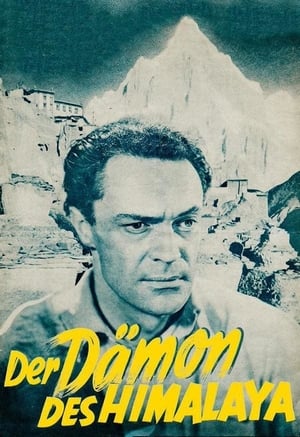
German film about a Himalayan expedition and the search for a mountain spirit, who guarded, according to the tradition of the locals, the peaks of high mountains. The long-lost and recently rediscovered and restored film is now a unique cinematic document because it is the first feature film that was shot directly in the Himalayas (up to 6400 m altitude). Hans Ertl even turned his Bell & Howell to the main summit of Sia Kangri, 7422m. Likewise, the film contains footage from India and Tibet, from a time long before the emergence of mass tourism. Some of the footage was later recycled in ‘Lost horizon’ (1937) by Frank Capra and in ‘Storm over Tibet’ (1952).