Tap Tap
During a game of catch-the-boy-and-kiss-him, Emmy, a precocious ten-year-old, kisses another little girl, Alice.
The life of two characters who follow each other beyond the walls.
Set in a high school in Nishi-Izu slated to close next spring, the story follows members of the school’s broadcasting club as they face their “final summer.” It quietly captures their everyday moments as they try to leave something behind—an imprint of youth, memory, and time. Originally composed as the main theme for Kikujiro (1999), Joe Hisaishi’s timeless piece “Summer” has long been cherished in Japan as the soundtrack of nostalgic summer memories. Now, this beloved masterpiece is reimagined as a short film.
A 1941 Ministry of Information propaganda film set to the tune of The Lambeth Walk, a popular song from the musical Me and My Girl.
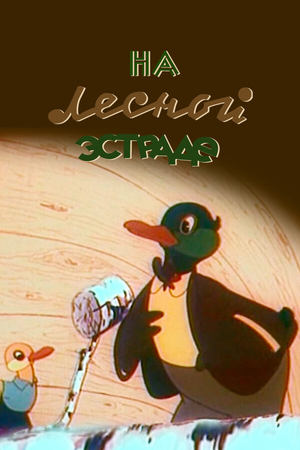
The animated film was created based on the fables of Sergey Mikhalkov "Cautious birds" and "Hare in the hops." Drake with his assistants arranges a performance on the forest stage for animals. He tells fables about forest dwellers from the stage.
Malena, a young photographer, finds a box of family memories while helping clean her parents' house. Among the objects, she discovers some old VHS tapes that belonged to her grandfather, whom she never met. Through these recordings, Malena delves into her grandfather's passions for tango, embarking on an intimate journey that also leads her to self-discovery.
No Me Digas Wey
A short film about an aging artist displaying how to properly create a hip-hop track from scratch by using harmonies and creativity.
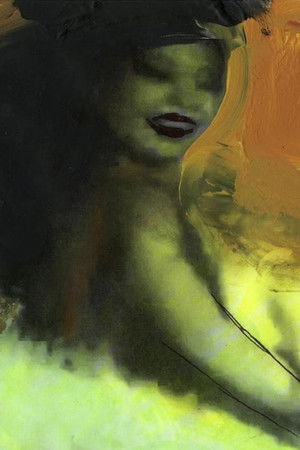
Short film to a song of love lost and rediscovered, a woman sees and undergoes surreal transformations. Her lover's face melts off, she dons a dress from the shadow of a bell and becomes a dandelion, ants crawl out of a hand and become Frenchmen riding bicycles. Not to mention the turtles with faces on their backs that collide to form a ballerina, or the bizarre baseball game.
Cosmopolitan mixture of variety acts are presented in an international café: Spanish dance, Hawaiian song, Italian street singer, Cossack sword-dancer, swing version of an Indian folk dance, African Voodoo dance and a Chinese girl dancer.
Apprivoisé
The Yacht Club Boys sing at a private party for George Mellon and his daughter. There are four of them, one of whom plays the piano, two play the guitar, and fourth plays the violin.
On a summer day in the 1950s, a native girl watches the countryside go by from the backseat of a car. A woman at her kitchen table sings a lullaby in her Cree language. When the girl arrives at her destination, she undergoes a transformation that will turn the woman’s gentle voice into a howl of anger and pain.
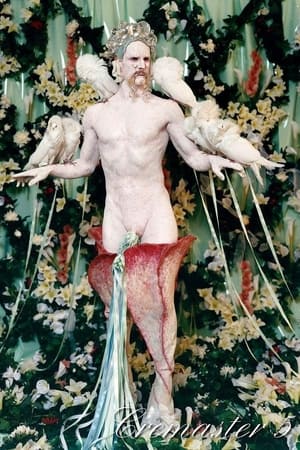
Cremaster 5 is a five-act opera (sung in Hungarian) set in late-ninteenth century Budapest. The last film in the series, Cremaster 5 represents the moment when the testicles are finally released and sexual differentiation is fully attained. The lamenting tone of the opera suggests that Barney invisions this as a moment of tragedy and loss. The primary character is the Queen of Chain (played by Ursula Andress). Barney, himself, plays three characters who appear in the mind of the Queen: her Diva, Magician, and Giant. The Magician is a stand-in for Harry Houdini, who was born in Budapest in 1874 and appears as a recurring character in the Cremaster cycle.
Smooth Criminal
Wonderwall Guy brings his guitar to a party to impress girls and just won’t leave. A group of the fed up partygoers band together to try and get him out of there, but something unexpected happens…
Ça va, ça va
Stop for Bud is Jørgen Leth's first film and the first in his long collaboration with Ole John. […] they wanted to "blow up cinematic conventions and invent cinematic language from scratch". The jazz pianist Bud Powell moves around Copenhagen -- through King's Garden, along the quay at Kalkbrænderihavnen, across a waste dump. […] Bud is alone, accompanied only by his music. […] Image and sound are two different things -- that's Leth's and John's principle. Dexter Gordon, the narrator, tells stories about Powell's famous left hand. In an obituary for Powell, dated 3 August 1966, Leth wrote: "He quite willingly, or better still, unresistingly, mechanically, let himself be directed. The film attempts to depict his strange duality about his surroundings. His touch on the keys was like he was burning his fingers -- that's what it looked like, and that's how it sounded. But outside his playing, and often right in the middle of it, too, he was simply gone, not there."
A project assembled to musically support William Plomer's (1903-73) book of poems called 'The Butterfly Ball and Grasshoppers Feast'; in which Alan Aldridge had provided the illustrations. British Lion had secured the rights, and commissioned Glover, through Tony Edwards (the Deep Purple manager), to add the musical dimension that it required if it were to be made into a 26-part animated cartoon series, suitable for TV. (Discogs) This is the music video for the song Love Is All, performed by Ronnie James Dio.