Ali is not a citizen. He drives a taxi using another man’s license and relies on the GPS to negotiate his way around a city he doesn’t know. His passenger, Esther is an old woman who can’t remember where she is going. She is angry because she has been stripped of everything that is familiar to her and she doesn't recognise the world anymore. They travel through the night in search of a vague destination while surveillance cameras mark their journey, coldly omitting the human element, defining who belongs and who does not, who is safe and who is not. What they have in common is their damage – she can’t remember and he can’t forget.
A journalist documents the experiences of three different people who lived through the tragic Salvadoran civil war of the 1980s, which lasted twelve years.
A girl revisiting her ex inside her memory realms to self-reflect on her longing for the past. She expects this visit to make her feel loved again, only to discover that this is the last time.
A quiet boy, full of thoughts, leaves his house holding a toy airplane. He boards a bus and, while playing with the model, arrives at Parco Perotti in Bari, where the memorial stele for Tuninter Flight 1153 stands — a flight that took off from Bari and ditched off the coast of Sicily near Capo Gallo on August 6, 2005 — air disaster that claimed 16 lives and deeply affected the 23 survivors.
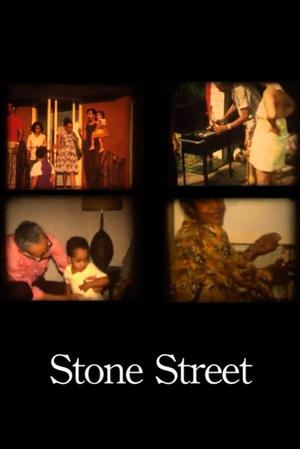
Stone Street documents the life and experiences of a Trinidadian diaspora family and their enduring connection to the long standing family home in Port of Spain. Through the intersecting journeys of this extended and extensive family, the filmmaker explores themes of home, belonging and identity in a life defined by the fragmentary nature of a migratory Caribbean culture. This experimental documentary combines a lyrical first person voice with a family archive of home made audio visual artifacts, interviews and events. As the documentary explores the fragmentary nature of Caribbean identity, it simultaneously celebrates the fragments of domestic memorializing found in home movies, videos and photographs. Stone Street uses these various forms to evoke the experience of a complex and diverse Caribbean and Caribbean diaspora identity.
In the city of Soli, ruled by Anfa 8, where night is eternal, Horus hunts a renegade cult of solar worshippers who are desperately searching for the sun.
Filmed immediately after the end of the civil war in Angola, Há Sempre Alguém Que Te Ama records the return of Pocas Pascoal to the country where she was born, in an attempt to reconstruct the episode that, in 1975, led to the capture of the director along with her mother and sisters. An intimate documentary about memory and self-(re)construction.
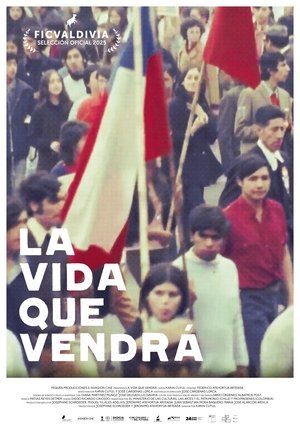
This documentary, made entirely of archival footage shot mainly by amateurs, revisits 50 years of Chilean history. A fascinating lesson in memory, this personal montage adopts a popular, even fringe, perspective to help write a more complete national memory. As the filmmaker asserts in her narration, there’s the history we’re told, the history we live, and the history we tell ourselves. Between the coup d’état of September 11, 1973, and the recent double failure of the new constitution project, this film shows that the people of Chile have long oscillated between excitement and disappointment, accumulating shattered hopes. Rejecting the pessimism that would trap us in collective immobility, Karin Cuyul instead draws on the past to ask how we can continue to dream of the necessary social and political changes.
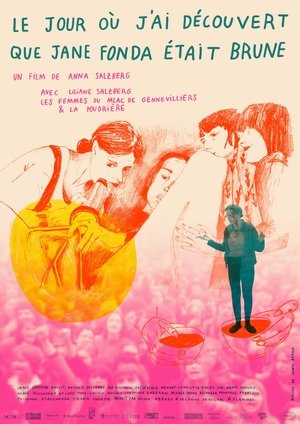
“I ask my mother about her past feminist commitment, and why she made a child on her own. She doesn’t answer me. I want to pierce the mystery of my mother. I discover the women’s movement of the 1970s, an activist feminist cinema, and the woman filmmaker that I am changes. I meet and testify to the transmission of a memory of feminist struggles through collective cinematographic practices.” Anna Salzberg
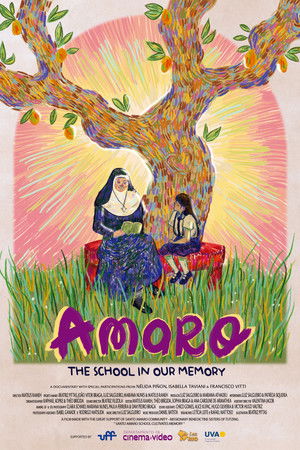
About to turn 100 years old, Santo Amaro School closed its doors in 2020, amid the pandemic, leaving former students in deep sorrow. The story of the school is now told by different generations of students, teachers, nuns and employees, who return to the school building to remember their time over there: an unreachable past, which, through memories, becomes present once again.
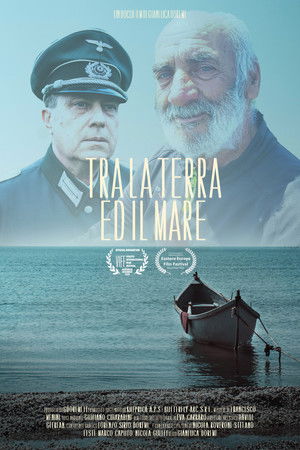
Tra la Terra ed il Mare
Avelino Chillarón was 12 or 13 years old when he realized that his surnames and those of his cousins didn't match, so he decided to ask his uncle. This is how he learned that, although his father and aunt were siblings, they didn't have the same father, so he and his cousins didn't share the same grandfather. In this way, Avelino realized that there was a part of his family he didn't know. The protagonist of this story feels partially mutilated from a part of his family history, a part that was taken away from him by a regime that established, over the years, a long period of widespread social amnesia about a series of corpses and missing persons throughout the spanish geography.
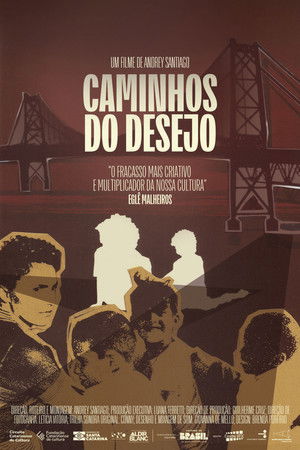
Caminhos do Desejo
For DJs, life revolves around records. Around sounds. Every life is a story, every DJ is a narrator. Every stack of records is an endless collection of stories, myths, and memories. Can we know someone’s life through their records? For some, we can even know their impact.
Corpo d'Água
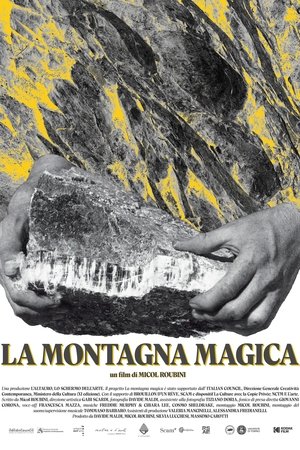
La montagna magica
A group of student researchers go camping deep in the Florida Everglades. While entering forbidden Native American territory after being advised not to, the group encounters the infamous Swamp Ape.
Seo-rin learns that life can be cruel when she is abandoned by her mother in a movie theater as a child. She grows up on the streets and eventually meets the insomniac Jeong-il and is charmed by his innocence. Although their initial encounter is brief, it launches them on a quest for love and a search for each other
Rescued from a burning house as a child, John Wesley believes the experience marked him for a higher purpose, a 'brand from the burning'. The film follows Wesley's years at Oxford and as a clergyman, his disagreements with the church over the social position of the clergy, his mission to America, the founding of Methodism, and his bringing of the Gospel into the lives of ordinary people.