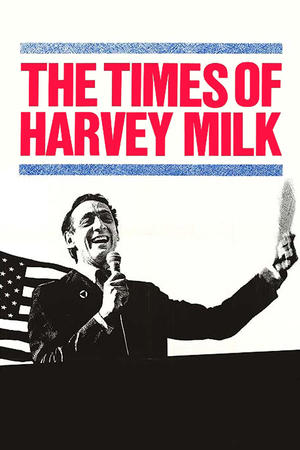
Harvey Milk was an outspoken human rights activist and one of the first openly gay U.S. politicians elected to public office; even after his assassination in 1978, he continues to inspire disenfranchised people around the world.
Tells the story of lesbian bar Café Tabac's No Day Like Sunday parties in the 1990's
At a time when the far right is ascending to power around the world, the 2020 Brazilian municipal elections saw a surprising and unprecedented record of LGBT candidates. This film follows four young queer politicians during their electoral campaigns and reveals their struggle to affirm their rights to exist and be heard.
Tracing the U.S. military's long history of discrimination against the gay community and one couple's personal journey for acceptance.
Set against the backdrop of the repeal of the "Don't Ask, Don't Tell" policy, the film chronicles the journey of Lt. Col. Linda Campbell, an Air Force veteran who grappled with hiding her true self during her service tenure. While the national policy shift towards LGBTQ+ rights marks a progressive era, Linda's personal story serves as a powerful testament to the individual battles fought in the shadows of such policies. Subjected to suspicion, prejudice, and threats from her comrades due to her perceived homosexuality, Linda's resilience remain undeterred. Her unwavering love and commitment to her partner, Nancy Lynchild, culminate in a poignant milestone: their eternal rest together in Willamette National Cemetery. Intertwined with this narrative is the account of Linda's brother, Bob Campbell, who delves into their family's conservative roots, Linda's tumultuous coming out, and the eventual familial reconciliation that showcases the transformative power of love and understanding.
A non-binary folk watches the handover of the first non-binary ID in the history of Chile. As they try to do the paperwork, they will face the bureaucracy of the legal proceeding.
From the sweaty basement bars of 70s New York to the glittering peak of the global charts, how disco conquered the world - its origins, its triumphs, its fall and its legacy.
Black women had extremely limited options during Jim Crow. Odessa’s story explores how an African American woman born in a time with limited options leveraged her incredible mind and quick wit to become wealthier than she ever should have been able to This film takes a look at choices that were made, a wild ride Odessa had as an underworld queen, and consequences from her choices Odessa Madre’s life was a mix of resilience and bookend by the vicissitudes of luck, a contrast of economic success within
In 2008 French filmmaker Julie Gali traveled to the US to film the election of Barack Obama. In spite of this victory for civil rights, it soon became apparent that the rights of another minority were under threat. In California the passing of Proposition 8 marked the only time in U.S. history that a civil right was actually taken away after it had been granted. Upon seeing this, Ms. Gali decided to immerse herself in the growing grassroots struggle of the gay community, which culminated in the October 11, 2009 March for Equality in Washington DC.
Originating in Curitiba in 2013 and spreading to Portugal, Spain, Mexico and Brazil, “Basket das Excluídas” consists of an LGBTQIA+ group gathering to play basketball on a public court in the city. They vogue and resist with their bodies around the city, challenging norms and celebrating diversity while engaging in a game that expresses identity and a form of resistance.
Two men undertake a thought-provoking journey to parenthood. Not by adoption or surrogacy, but by Frankie, a trans man, carrying their baby. Made with support from NZ on Air.
During the women's demonstration on March 8, 1972, Mariasilvia SPOLATO was there with a placard: Liberazione omosessuale. A month later, Simone de Beauvoir came to Rome to give an interview, and this placard illustrated her article. Mariasilvia could no longer teach, ended up homeless and spent her life on the trains.
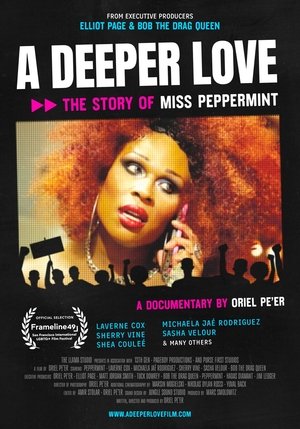
The intimate journey and unpublished backstory of BeBe Zahara Benet – a charismatic drag performer originally from Cameroon, and the very first winner of the culture-changing phenomenon, RuPaul’s Drag Race. With over a decade of unprecedented access, we observe BeBe’s struggles with celebrity, authenticity, success, and failure.
By issuing marriage licenses to same gender couples, San Francisco Mayor Gavin Newsom uproots the status quo and attempts to change the way the nation looks at life, love, and marriage.
In the first person, a documentary that shows us the experience of Vida Rodriguez, formerly Inocente Duke, in situations that the Trans Law favors: what happens when entering a sauna, locker room, or a public service (even in the Congress of Deputies). An experience that, with respect and large doses of humor, brings us face to face with a law and its difficulties in its implementation.
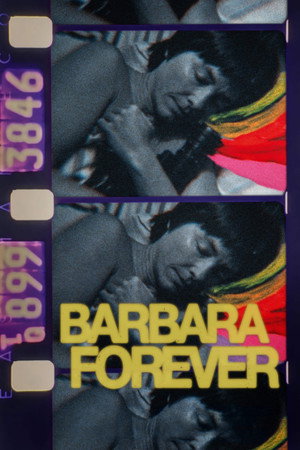
An archive-driven exploration of the life, work, and legacy of iconic, pioneering lesbian filmmaker Barbara Hammer.
With a fist full of credit cards, a lucky run at the horse track, and a title that called to mind a certain French film star, Franco Stevens launched the best-selling lesbian lifestyle magazine ever published, connecting her community in an unprecedented way. AHEAD OF THE CURVE is a new feature documentary about the extraordinary woman who started Curve magazine, and by doing so helped accelerate the political and social evolution of the nation.
In 'Sidosa', the director and actor Eduardo Casanova makes the most intimate and significant revelation of his life: he has HIV. There is no precedent in Spain for a public figure to disclose that he is living with HIV — a step that organizations and activists have been calling for for years to help end the social stigma still associated with the virus.
A group of queer Latinx skaters struggle with crippling mental health and societal expectations in Southern California. In their local skate community, they find cathartic release, chosen family and mastery of empowerment.
Mentally ill. Deviant. Diseased. And in need of a cure. These were among the terms psychiatrists used to describe gay women and men in the 1950s, 1960s, and early 1970s. And as long as they were “sick”, progress toward equality was impossible. This documentary chronicles the battle waged by a small group of activists who declared war against a formidable institution – and won a crucial victory in the modern movement for LGBTQIA+ equality.