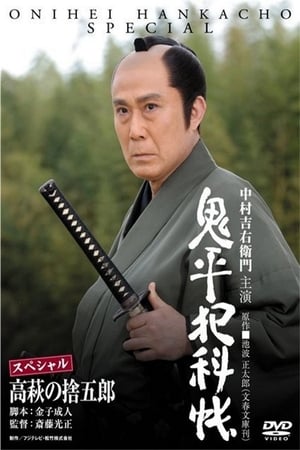
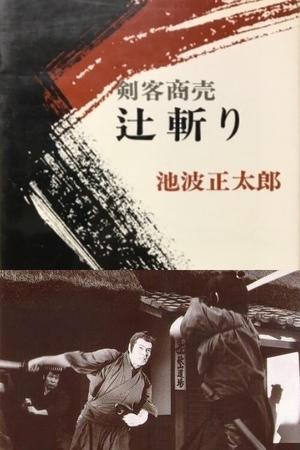
An old thief, Kuhei Sagiwara, used to visit his hometown at the foot of the Kurikara Pass in Kaga Province. Hiding from the rain, he overheard a secret conversation between three men, just like him, hiding from the rain. These three conspired to kill Heizo Hasegawa, the head of the arson and robbery police squad, and the head of these three is the outrageous villain, thief and murderer Jingoro Amikiri...
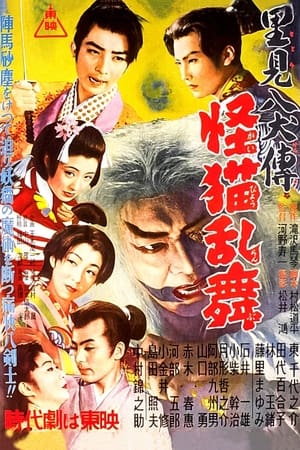
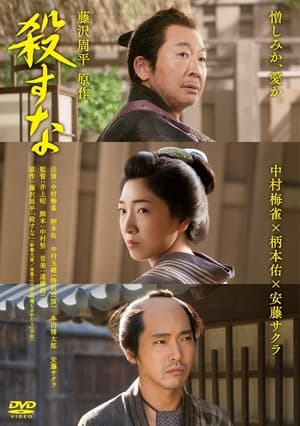
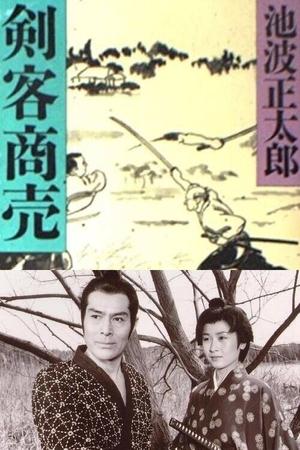
Heizo's cousin Senemon Misawa and his son Katsuzo visited Heizo's home. Heizo learns that Senemon has fallen in love with Katsutoshi, a woman who works at the Yamabukiya Tea House, and has asked her to marry him. Heizo decided to visit Yamabukiya, saying "I will try to find out if this woman is a bodhisattva or a demon." After meeting Katsutoshi Heizo, felt embarrassed and ordered Gorozo to inquire about her just in case. Gorozo, in turn, sends secret detective Rihachi to Yamabukiya with the task of keeping an eye on Katsutoshi...
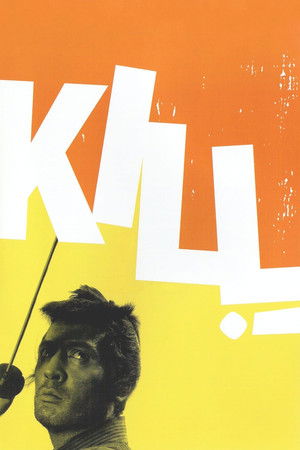
When the Shogunates greatest secret is stolen, the fate of the nation hangs in the balance. The Shogunate sends an incompetent cop, Tanaka, to Kyoto to act as a stalking horse. Hoping the thieves will kill Tanaka and the Ninja Spies will kill the thieves. But what the Shogunate doesn't realise is that Tanaka's even more incompetent assistant Mondo is in fact the leader of a gang of revengers for hire, there motto is "Sure Death" (or your money cheerfully refunded). Mondo doesn't know that everyone knows about the secret, but they all think he does. Poor Mondo, he not only has to deal with crazed Shogunate extremists, oddball ninjas, crooks who work for the Emperor and bicycle riding foreign death squads. He also have to deal with a wife and a crazy mother-in-law!
When feudal lord Itakura Katsuakira decides to prepare his samurai troops for the onslaught of modernization by having them compete in a marathon, his independent-minded daughter Yuki secretly joins the race.
A touching true story which portrays a doctor who selflessly dedicated his personal fortune to spreading the smallpox vaccination for saving people's lives.
A humble page fathers a child by the daughter of a clan official and is banished. Years later, the child, now a stable boy, is reunited with his father, but feudal codes threaten their happiness. Uchida’s poignant masterpiece condemns the inflexible class system and launches an indictment of values that favor symbolic objects over human life. The film’s focus is on character rather than swordplay, and charged performances - especially child actor Motoharu Ueki - add to the emotional power.
Shunnosuke Katagiri is a samurai and a bookworm. He receives a mission to help a daimyo move. With the assistance of Genemon Takamura and Oran, Shunnosuke Katagiri carries out his mission.
A samurai answers a village's request for protection after he falls on hard times. The town needs protection from bandits, so the samurai gathers six others to help him teach the people how to defend themselves, and the villagers provide the soldiers with food.
Blind traveler Zatoichi is a master swordsman and a masseur with a fondness for gambling on dice games. When he arrives in a village torn apart by warring gangs, he sets out to protect the townspeople.
In this first episode, we are introduced to Takezo, what Musashi used to be before he became the man of legend. His beginning are not exactly auspicious. He sides with the Toyotomi at Sekigahara, and as a result finds himself on the losing side of the historic battle. He and his friend Matahachi manage to escape the slaughter although the latter is wounded in his leg. They stumble across the young Akemi who makes her living with her mother Oko by robbing corpses of their armor and anything else they can sell. Oko takes it into her head to seduce Matahachi, which she does first by skillfully sucking the gangrene from his blood, and then just by sucking.
A poor peasant, after years of scraping, becomes a rich and powerful Osaka merchant. Mizoguchi Kenji's final project; he died before completing it and directing duties turned over to Yoshimura Kozaburo.
Four people recount different versions of the story of a man's murder and the rape of his wife.
Chushingura has been made into a movie several times before, but this time it will be presented in a widescreen version with all natural colors and a new look. Written by Masato Ide and directed by Tatsuo Osone. This is a magnificent scroll of images that depicts on a grand scale the triumph of the Genroku era that shook the citizens of Edo, the peaceful capital of Japan. The top stars of the film, shinpa, shingeki, and kabuki worlds at the time of production were lavishly cast, and a huge budget was invested to create a large set for this highly acclaimed and moving epic.
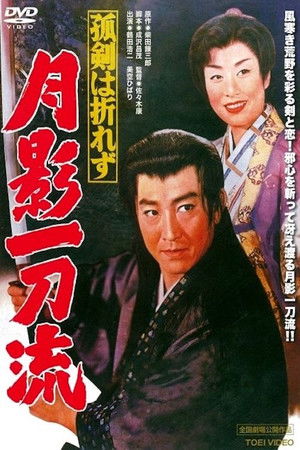
This is one of the many films based on the legend of Chuji Kunisada, a wandering gambler and a defender of the weak in the Edo period. In other words, he was the Japanese Robin Hood. In this film Kunisada (Chiezo Kataoka) arrives to a small town terrorized by an evil gang. He insists that he is not Kunisada, as the word is Kunisada has been executed, but of course the audience know better. Sonny Chiba plays an unusual supporting role as a helpless young man unable to defend himself from the gangsters. He does, however, get to play taiko drums and dance with Junko Fuji (who makes her film debut here). Chiba's father, an old judge who helps Kunisada, is played by Takashi Shimura. The film hardly anything exceptional, but it's a pretty decent jidai geki / yakuza drama.
The fate of Tokugawa’s world hangs in the balance as Yagyu Jubei is sent on a mission to discover what happened to 10 of the shogun’s spies that never returned. Matsukata Hiroki, one of the last surviving members of the Golden Age of Japanese Cinema proves that he has not lost a step as he portrays an older and wiser Yagyu Jubei in a movie that brings the best of samurai filmmaking into the 21st century. Summoned from semi-retirement by Shogun Iemitsu, Jubei is asked to take to the road and investigate a clan rumored to be preparing explosives for a rebellion. With help from a beautiful female ninja they head into the Shirakawa domain where the fighting skills of both are tested time and again as they strive to destroy a conspiracy that could bring a new Warring States Era. In the 1960's Yagyu Jubei was the signature role of the great Konoe Jushiro, father of Matsukata Hiroki. This brings the character full circle.
In 16th century Japan, peasants Genjuro and Tobei sell their earthenware pots to a group of soldiers in a nearby village, in defiance of a local sage's warning against seeking to profit from warfare. Genjuro's pursuit of both riches and the mysterious Lady Wakasa, as well as Tobei's desire to become a samurai, run the risk of destroying both themselves and their wives, Miyagi and Ohama.
Nakazo is forced by his foster mother, Shun, to practice dance intensively. He is bullied in the Kabuki world, and worries about his future as an actor.
During the reign of the eighth shogun of the Tokugawa shogunate, the Yunagaya Domain in the Tohoku region is a small han. But at the han, there is a gold mine. Suddenly, Masaatsu Naito of Yunagaya Domain receives an order to perform Sankin-kotai within 5 days. Sankin-kotai is a custom that requires the daimyo to visit the shogun in Edo. Unfortunately, the time needed to visit the shogun in Edo for Masaatsu Naito is 8 days. Masaatsu Naito also learns he received the order because a high ranking government official wants the gold mine. Also, the expense for Sankin-kotai is high and the Yunagaya Domain is such a small han that it seems impossible to complete. Nevertheless, Masaatsu Naito begins an unexpected operation to complete Sankin-kotai in 5 days.
A skilled country doctor's talents are such that he can even perform operations as difficult and novel as removing a patient's kidney for the first time in Japan. Unfortunately for him, however, his wife's addiction to gambling is of such a magnitude that he is down to selling his underwear to make money. The image sticks and he becomes known as the 'underwear doctor.' On the other hand, his successful surgery's patient is so grateful he himself wants to become a physician.
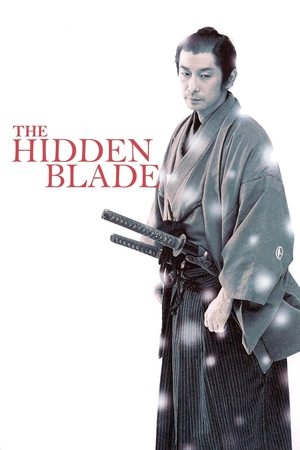
During the Edo period, a gifted swordsman was exiled from his clan when he questioned the misconduct of his leader. Years after, his dying wife wish was for him to go back to his clan.