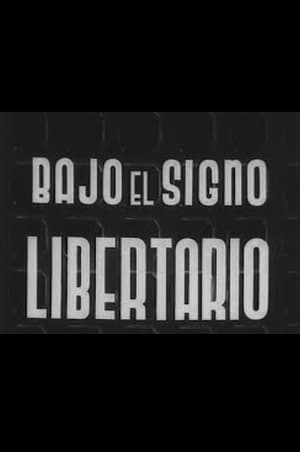
An exploration —manipulated and staged— of life in Las Hurdes, in the province of Cáceres, in Extremadura, Spain, as it was in 1932. Insalubrity, misery and lack of opportunities provoke the emigration of young people and the solitude of those who remain in the desolation of one of the poorest and least developed Spanish regions at that time.
Chris Marker and François Reichenbach document the massive anti–Vietnam War protest held in Washington, D.C., on October 21, 1967, where more than 100,000 demonstrators gathered at the Lincoln Memorial before marching on the Pentagon. Filmed amid the crowd, the short captures the tension, idealism, and growing radicalism of the American peace movement.
Exploring the art of Armenian portraitist Hakob Hovnatanyan, Parajanov revives the culture of Tbilisi of the 19th century.
Corral is a 1954 National Film Board of Canada documentary by Colin Low, partly shot in the Cochrane Ranch in what is now Cochrane, Alberta. In the film, a cowboy rounds up wild horses, lassoing one of the high-spirited animals in the corral, then going on a ride across the Rocky Mountain Foothills of Alberta.
Actor/cult icon Bruce Campbell examines the world of fan conventions and what makes a fan into a fanatic.
Until now, they have stood on the sidelines. They have not appeared before the cameras. They have not taken part in public discussion. It is mainly to them that the documentary film by the well-known journalist Ewa Ewart was devoted. It shows the face of the Smolensk catastrophe through the eyes of the victims' families. April 10, 2010 went down in the memory of Poles as a day of national drama. But for the characters in the film, it was the day of their greatest personal drama. Along with the presidential couple, their loved ones passed away in shocking circumstances. For most, the time passing since the Smolensk catastrophe does not bring relief. Ewa Ewart and her film crew accompany the families at various stages of their struggle with difficult emotions. The film is in the process of being made and will include sequences and stills that have not been used anywhere before.
Buzz One Four chronicles the ill-fated flight of a Cold War B-52 Stratofortress loaded with two 3-4-megaton nuclear bombs that crashed 90 miles from Washington DC in 1961. Information suggests that detonation came closer than official reports indicated. The full details of the crash have remained classified and otherwise repressed by the Air Force, but the filmmaker, Portlander Matt McCormick, grew up with this story because the pilot was his grandfather. As McCormick recounts the history of the era, aspects of this crash, and other little-know nuclear-weapons accidents, he leaves us wondering if the U.S. was in greater danger of nuking itself than of being attacked by the Russians.
Filmmaker Jonas Mekas follows the surrealist artist around the streets of New York documenting staged public art events.
An Oscar nominated documentary about a middle-class American family who is torn apart when the father Arnold and son Jesse are accused of sexually abusing numerous children. Director Jarecki interviews people from different sides of this tragic story and raises the question of whether they were rightfully tried when they claim they were innocent and there was never any evidence against them.
An overview of the best methods and techniques for taking nude photographs.
'Coffea arábiga' was sponsored as a propaganda documentary to show how to sow coffee around Havana. In fact, Guillén Landrián made a film critical of Castro, exhibited but banned as soon as the coffee plan collapsed.
In this tape, Ko Nakajima and Video Earth Tokyo interview a homeless man. The subject is initially angry and frustrated, but gradually opens up and shares stories about his life. Under A Bridge was later broadcast on cable television.
The 16th short film as part of the Magica series dealing with pre-cinema. Mr Seymour, the hero of the book by London doctor Mr Paris, shows his invention – the thaumatrope – to a little girl and explains how it works. The superimposition of the images is not perfect, so he invents the use of elastic instead of the usual string. Only by recording the two successive images of the thaumatrope on a title bench can they be viewed perfectly. Numerous examples are shown.
The story of an energetic Russian woman, Tamara Fedorovna who moved to Leninabad in the 1950s and, as a pensioner, became a trainer for a men’s soccer team and performed in the local amateur theater. Then, after three or four years, thousands of Russians would have to leave Tajikistan as would Tamara.
Set to a classic Duke Ellington recording "Daybreak Express", this is a five-minute short of the soon-to-be-demolished Third Avenue elevated subway station in New York City.
The moment the children left, the wind still blew across the rice fields, the river still flowed and time still passed. The parents continued their daily lives.
Short film about dangers for seniors in road traffic
During the Feria of Nîmes, a bullfight is filmed from the perspective of the animal, relegating the matador and public to off-screen spectators. A ritual at the frontiers of mysticism, carried by the sacrificial figure of the bull, revealer of our humanity.
Karlon, born in Pedreira dos Húngaros (a slum in the outskirts of Lisbon) and a pioneer of Cape Verdean creole rap, runs away from the housing project to which he had been relocated.
What would your family reminiscences about dad sound like if he had been an early supporter of Hitler’s, a leader of the notorious SA and the Third Reich’s minister in charge of Slovakia, including its Final Solution? Executed as a war criminal in 1947, Hanns Ludin left behind a grieving widow and six young children, the youngest of whom became a filmmaker. It's a fascinating, maddening, sometimes even humorous look at what the director calls "a typical German story." (Film Forum)