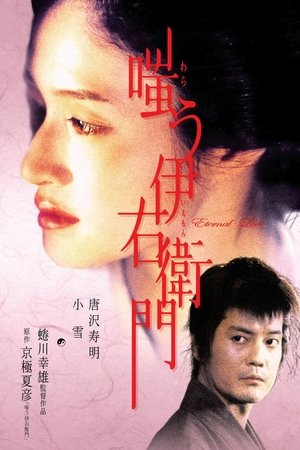
Kon Ichikawa's retelling of the classic true story of Samurai honor. When a young clan lord is forced to commit seppuku (ritual suicide), his loyal followers (now Ronin, masterless Samurai) dedicate their lives to avenging his death.
Struggling to elevate himself from his low caste in 17th century Japan, Miyamoto trains to become a mighty samurai warrior.
After years on the road establishing his reputation as Japan's greatest fencer, Takezo returns to Kyoto. Otsu waits for him, yet he has come not for her but to challenge the leader of the region's finest school of fencing. To prove his valor and skill, he walks deliberately into ambushes set up by the school's followers.
A humble and simple Takezo abandons his life as a knight errant. He's sought as a teacher and vassal by Shogun, Japan's most powerful clan leader. He's also challenged to fight by the supremely confident and skillful Sasaki Kojiro. Takezo agrees to fight Kojiro in a year's time but rejects Shogun's patronage, choosing instead to live on the edge of a village, raising vegetables. He's followed there by Otsu and later by Akemi, both in love with him. The year ends as Takezo assists the villagers against a band of brigands. He seeks Otsu's forgiveness and accepts her love, then sets off across the water to Ganryu Island for his final contest.
Oshidori kenkagasa
In the turbulent last days of the Edo period, Kawai Tsugunosuke, a Japanese samurai serving the Makino clan of Nagaoka, dreamt of independence from the restraints of vassalship. Despite his progressive views and his desire for his estate to remain neutral during the Boshin Civil War, he was bound by loyalty and duty to the clan and was compelled to choose sides.
In the third entry into this mega-hit series, Isshin Tasuke, a spirited fishmonger in Edo who looks just like Shogun Iemitsu undergoes a series of unforeseen troubles in his newly wedded life.
Ichibei, a thief known as "Yami no Kiba," and his daughter Oasa are caught by members of a street performer family with a nationwide organization when the kite they are riding falls deep into the mountains of Owari. Nitayu, the key person in the clan, learns of Ichibei's obsession to avenge his father's murder by the Tokugawas and promises to help him. When Ichibei learns of Shogun Ienari's plan to transport a pure gold statue of Prince Ieyasu from Sunpu to Edo Castle, he joins forces with the bandit Kojiro to steal it. ......
This is one of the many films based on the legend of Chuji Kunisada, a wandering gambler and a defender of the weak in the Edo period. In other words, he was the Japanese Robin Hood. In this film Kunisada (Chiezo Kataoka) arrives to a small town terrorized by an evil gang. He insists that he is not Kunisada, as the word is Kunisada has been executed, but of course the audience know better. Sonny Chiba plays an unusual supporting role as a helpless young man unable to defend himself from the gangsters. He does, however, get to play taiko drums and dance with Junko Fuji (who makes her film debut here). Chiba's father, an old judge who helps Kunisada, is played by Takashi Shimura. The film hardly anything exceptional, but it's a pretty decent jidai geki / yakuza drama.
Masked avenger Kurama Tengu and his young sidekick try to stop a mysterious adversary from assassinating a group of young warriors who want to bring down the Shogunate...
In the mountainous region of Koshu, Taikahara, there was an intense power struggle between the prominent families, Tamaki and Kakukura. Facing the steward of Kakukura, Kurokawa Senjiro, was Tamaki Daisaburo, who was skilled with a handgun. Daisaburo had granted protection to the charcoal maker, Miyoshi, safeguarding a few mountains passed down from their ancestors. Daisaburo's elder brother, Iori, who had completed his training in Edo, saved Kakukura's only daughter, Koyumi, on his way back home. However, while Daisaburo rushed to Iori's aid after Koyumi was attacked by Kurokawa and his men, their family home was set ablaze.
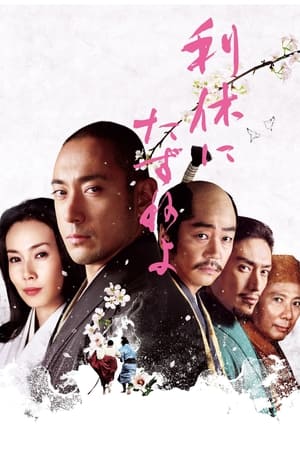
Sen no Rikyu (Ebizo Ichikawa) is the son of a fish shop owner. Sen no Rikyu then studies tea and eventually becomes one of the primary influences upon the Japanese tea ceremony. With his elegant esthetics, Sen no Rikyu is favored by the most powerful man in Japan Toyotomi Hideyoshi (Nao Omori) and becomes one of his closest advisors. Due to conflicts, Toyotomi Hideyoshi then orders Sen no Rikyu to commit seppuku (suicide). Director Mitsutoshi Tanaka's adaptation of Kenichi Yamamoto's award-winning novel of the same name received the Best Artistic Contribution Award at the 37th Montréal World Film Festival, the Best Director Award at the 2014 Osaka Cinema Festival, the 30th Fumiko Yamaji Cultural Award and the 37th Japan Academy Film Prize in nine categories, including Best Art Direction, Excellent Film and Excellent Actor.
In Edo-era Japan, a ukiyo-e artist languishes in his master’s shadow. Creatively stifled, he finds consolation in the company of a prostitute, and becomes entangled in a love triangle. A mystery emerges involving two portraits and the sudden disappearance of the artist Sharaku. Helmed by Cannes-selected director Tatsuji Yamazaki, the film employs kabuki-inspired sequences and stylised sets.
Yagyu Jubei, the finest swordsman in the land, is called upon to bare his blade to help Iemitsu keep his post. Meanwhile a fishmonger named Isshin Tasuke who bears an amazing resemblance to Shogun Iemitsu may be called upon to put his life on the line by acting as the Shogun's double. At the same time, the tragic story of Banzuiin Chobei and Mizuno Jurozaemon is unfolding.
Kanichiro Yoshimura is a Samurai and Family man who can no longer support his wife and children on the the low pay he receives from his small town clan, he is forced by the love for his family to leave for the city in search of higher pay to support them.
Kitagawa Utamaro is a famous ukiyo-e artist known for his paintings of beautiful women. The courtesan who became his model became even more popular. Ocho, a resident of an apartment building, hears about this and secretly plans to follow Otose, the owner of Mizuta-ya, who became famous as Utamaro's model. At this time, the Kano school, headed by Kano Eikawa, which was under the control of the shogunate, is dissatisfied with Utamaro's fame and tries to compromise him…
Down-on-his-luck veteran Tsugumo Hanshirō enters the courtyard of the prosperous House of Iyi. Unemployed, and with no family, he hopes to find a place to commit seppuku—and a worthy second to deliver the coup de grâce in his suicide ritual. The senior counselor for the Iyi clan questions the ronin’s resolve and integrity, suspecting Hanshirō of seeking charity rather than an honorable end. What follows is a pair of interlocking stories which lay bare the difference between honor and respect, and promises to examine the legendary foundations of the Samurai code.
A historical chivalric drama with tears and laughter, telling the story of Jirocho Shimizu's family, his confrontation with Katsuzo Kurokoma's family, right up to the final battle on the Tenryu River to avenge Ishimatsu Mori.
In 16th century Japan, peasants Genjuro and Tobei sell their earthenware pots to a group of soldiers in a nearby village, in defiance of a local sage's warning against seeking to profit from warfare. Genjuro's pursuit of both riches and the mysterious Lady Wakasa, as well as Tobei's desire to become a samurai, run the risk of destroying both themselves and their wives, Miyagi and Ohama.
His skill and courage were the best in Japan! The life story of Jirocho, a man who protected people on the Tokaido Road. The fearless Kinnosuke Nakamura enthusiastically plays the young Jirocho from Shimizu in this chivalrous story.