The Hypergaussian Wars is an AI-generated feature-length audiovisual work exploring algorithmic warfare, obsolete media and the transformation of images through repetition, saturation and collapse. Built from thousands of generated images, synthetic landscapes and references to 14th–16th century painting, the film stages a continuous conflict between historical visual culture and contemporary computational systems. Fragments of obsolete video games, ruined architectures, military simulations and post-human figures circulate through increasingly unstable environments. Rather than telling a linear story, the film operates as an image system in which visual excess progressively erodes meaning. The Hypergaussian Wars reflects on memory, obsolescence, artificial intelligence and the persistence of images after their original function has disappeared.
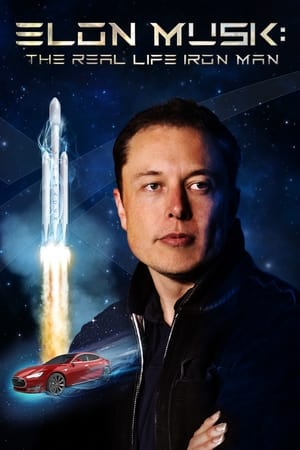
“Fear AI!” – “ warns Elon Musk back in 2014, joining other opinion leaders like Steve Wozniak, Noam Chomsky and Stephen Hawking in backing a petition against the development of autonomous weapons. As Vladimir Putin stated in 2017, “Whoever leads in AI, rules the world.”
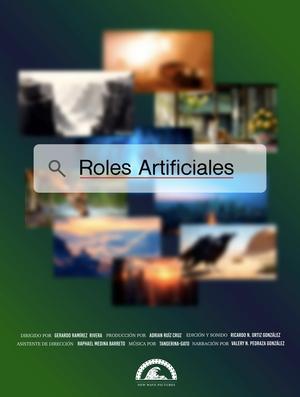
The search for René Descartes’ daughter Francine leads an internet user into the depths of an AI’s mental space. This intelligence generates limitless images from words given by humans, until it starts working by itself. An alternative, fleshless new world, containing all the world's memory, emerges.
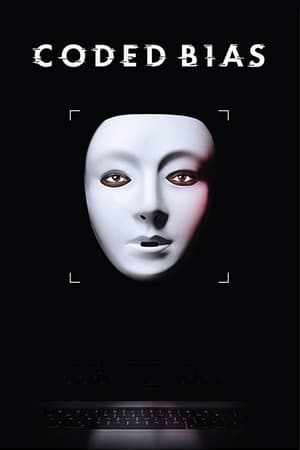
Exploring the fallout of MIT Media Lab researcher Joy Buolamwini's startling discovery that facial recognition does not see dark-skinned faces accurately, and her journey to push for the first-ever legislation in the U.S. to govern against bias in the algorithms that impact us all.
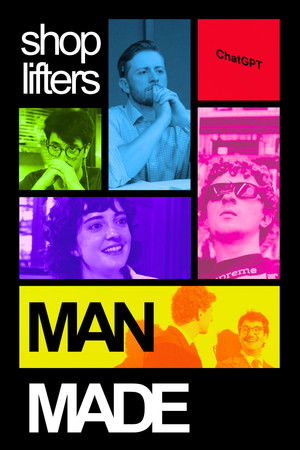
Things go awry when two filmmakers attempt to automate every aspect of their lives using ChatGPT.
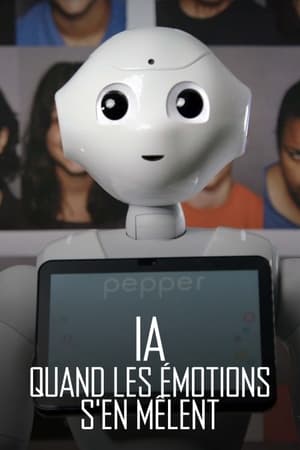
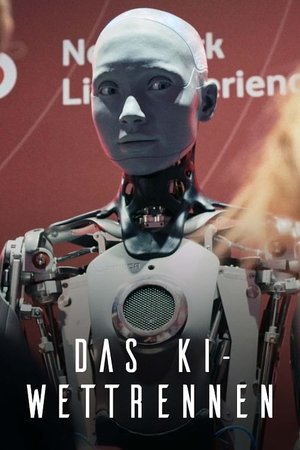
A journey into the world of artificial intelligence, to understand its operating logic and current and future applications. The TV program explains what AI is, its history, its current and future applications. It also illustrates the figure of Pepper, a humanoid robot that is the subject of important research at the University of Palermo. The TV program also talks about future developments of AI, the opportunities and possible social risks that it could entail: an aspect to focus on, both for the need to arrive at a correct algorithm, and to achieve an indispensable regulation of the sector.
“A Song Reborn” reveals the extraordinary 1994 reunion of Paul, George and Ringo, 24 years after The Beatles parted ways. A true collaboration became possible when Yoko Ono handed them an unfinished John Lennon composition. Crafted from never-before-seen studio footage, this short film captures the three Beatles rediscovering their bond as they shape John’s song into the GRAMMY-winning “Free As A Bird.”
Are we prepared for dealing with the prospect that humanity is not the end of evolution? Technocalyps is an intriguing three-part documentary on the notion of transhumanism by Belgian visual artist and filmmaker Frank Theys. The latest findings in genetics, robotics, artificial intelligence, bionics and nanotechnology appear in the media every day, but with no analysis of their common aim: that of exceeding human limitations. The director conducts his enquiry into the scientific, ethical and metaphysical dimensions of technological development.
With the rapid advancements in artificial intelligence, the line between humans and machines continues to blur, and everything is evolving at an astonishing pace as this technology offers tantalizing promises. However, some researchers, including 2024 Nobel Prize in Physics laureate Geoffrey Hinton, warn about its exponential power. A deep dive into the dizzying complexities of AI.
Destroy All Humans is a documentary exploring AI’s rise in art and media through an existential, experimental lens. At its center is HOVERBORG, a fictional band whose AI-generated music sparked questions about creativity and authenticity. Through interviews with musicians, artists, and media professionals, the film reflects on the unsettling shift toward hyperpersonalized media and asks: In a world shaped by algorithms, will we still recognize ourselves in the art we consume?
Egypt, nicknamed "the mother of the world" by its people, is unrecognizable. Gigantic construction sites have sprung up in the desert at an exponential rate, including roads, bridges, and megaprojects on the Mediterranean coast. This new Egypt is an illusion: in 10 years, the population has sunk into unprecedented poverty. The regime shows no mercy to the poor. Abdel Fattah el-Sisi, the new pharaoh, and his army have set up a pyramid-shaped financial system, built on subsidies from major international institutions—including the European Union—and foreign investment. The most populous nation in the Arab world finds itself on the brink of collapse.
Startups are using AI to create avatars that allow relatives to talk with their loved ones after they have died. An exploration of a profound human desire and the consequences of turning the dream of immortality into a product.
A college student searches for justice after she discovers deepfake pornography of herself circulating online.
An afterlife experience of a Brazilian poet. A work of a filmmaker, an artist worker, in harmony with nature and technology.
If you could create an immortal version of yourself, would you? Once the stuff of science fiction, A.I. experts now see it as possible. This feature documentary explores the latest thinking and technological advancements in AI.
"Se ti sabir" is a film reflecting on language, intelligence, and our relationship with new technologies and non-human species.
Therapie per KI?
A portrait of Austria captured with a broken camera, accompanied by an enhanced and AI-generated version of the national anthem.
The story of The Beatles' last song featuring exclusive footage and commentary.
Artificial Intelligence (AI) is possibly the most powerful technology of our time. It has the potential to solve humanity’s biggest challenges yet some fear AI will be our downfall. iHUMAN follows pioneers at the frontline of the race to develop the ever more sophisticated AI to find the questions we need to ask at this crucial point in history.