Letters, Riddles and Writs is a one act opera for television by Michael Nyman broadcast in 1991.
The historic Toscanini television concerts with the NBC Symphony Orchestra. Broadcast #9 was of a concert on March 22, 1952, at Carnegie Hall, featuring Beethoven's 5th Symphony and Respighi's Pines of Rome. (Concerts #8 and #9 were released on "Vol. 5" in the DVD series.)
Abbado Conducts Mahler No. 1 & Prokofiev Piano Concerto No. 3
A popular production from 2021, straight from the historic building of the National Theatre. This star-studded title is directed by experienced director Magdalena Švecová, with soloists, the National Theatre Orchestra and Choir, and conducted by Jaroslav Kyzlink. The Barber of Seville was composed by the then 23-year-old Gioachino Rossini in just three weeks, resulting in a witty and dynamic work that perfectly captures the genre of Italian opera buffa. Rossini based his work on the 1772 play The Barber of Seville, or The Misguided Precaution by French dramatist Pierre-Augustin Caron de Beaumarchais. The two-act opera tells the story of the young love between Rosina and Count Almaviva. However, her guardian Don Bartolo also has his eye on her. Almaviva does not give up and asks the local barber Figaro for help, who comes up with a daring plan to bring the couple to their dream wedding.
In Search of Beethoven offers a comprehensive documentary about the life and works of the great composer. Over 65 performances by the world's finest musicians were recorded and 100 interviews conducted in the making of this beautifully crafted film. Eleven interviews are included in the Extras and Six complete movements.
Chiaki is an aspiring conductor who faces the challenge of leading an orchestra which is made up of substitutes. Nodame gives her support to her beloved as she works hard towards achieving her dream to pass a promotion exam at their music conservatory. Will Chiaki be able to revive a broken down orchestra and launch his musical career? What will become of Nodame and Chiaki's relationship?
With an original staging of text and music, Orlando follows the trail of one of the greatest composers of the Renaissance: Orlando di Lasso (also known as Roland de Lassus). His life and masterful oeuvre continue to move people to this day. Although he was a European star at the time, di Lasso had to endure the indignities of his social status as a servant. This documentary explores the relationship between art and power, musically accompanied by the ensemble La Tempête.
Vita Dolce
Janine Jansen spielt Tschaikowskys Violinkonzert
After constantly moving, two students finally find the opportunity to start a family by adopting a stray dog.
There is hardly a better way to approach Ludwig van Beethoven than through his piano concertos. Beethoven’s own instrument was the piano, and in his improvisations – which made him the darling of the Viennese salons – he merged virtuosity and unbridled expression. The piano concertos give a clear idea of these performances. At the same time, they are prime examples of Beethoven’s ability to create large orchestral works with seemingly endless arcs of tension. The complete recording of all five works with Mitsuko Uchida and Sir Simon Rattle was one of the most spectacular projects of the Berliner Philharmoniker during the Rattle era – and at the same time the highlight of the collaboration between the orchestra and the pianist, which began in 1984.
A look back at the violent conflict between the two leading figures of musical modernity, Arnold Schönberg and Igor Stravinsky, in the first decades of the 20th century. Although Arnold Schönberg and Igor Stravinsky both had a decisive influence on the fourth art, their creations remained diametrically opposed. While the Austrian developed the dodecaphonic method, placing the twelve notes of the chromatic scale at the heart of the composition technique to the detriment of tonality, his Russian rival based his practice on stylistic eclecticism. Their supporters formed two opposing camps, and the two composers - one the father of the Second Viennese School, the other of Neoclassicism - became, in the wake of their successes, the figureheads of a conflict that marked the history of music by its duration and intensity.
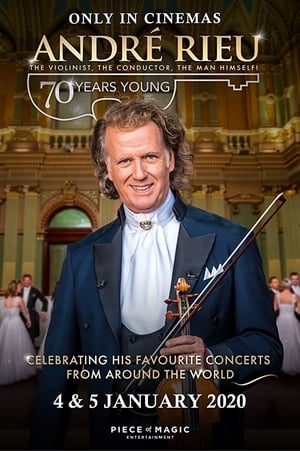
André Rieu returns with an all-new blockbuster show from New York's iconic landmark theater Radio City Music Hall for his first-ever U.S. taped special. Features performances by the world-renowned Harlem Gospel Choir.
Blending lively music and brilliant animation, this sequel to the original 'Fantasia' restores 'The Sorcerer's Apprentice' and adds seven new shorts.
Around 1536, at Windsor Castle, King Henry VIII of England fell in love with the young queen's lady-in-waiting, Jane Seymour. In order to free himself from his marriage to Anne Boleyn, the monarch decided to recall Anne's former lover, Lord Percy, from exile, as he still loved the queen. Both were unjustly sentenced to be beheaded for alleged adultery. The outcast Anne Boleyn spends her last moments in the Tower of London, from where she is led directly to the execution site...
In this short, Johnny Green leads the MGM Symphony Orchestra in a performance of the overture to Rossini's "La Gazza Ladra".
“Clarity was one thing that made this performance a marvel. Another was the flexibility of Barenboim’s speeds…. The flexibility of Barenboim’s tempi meant that Bruckner’s charm – an often overlooked aspect of his genius – shone through, especially in the genial Trio.” (The Telegraph) Bruckner’s 8th is the last symphony completed by the Austrian composer. Many of his contemporaries regarded the symphony as “the pinnacle of 19th century music”. Even today, this monumental work fascinates listeners with its virtuoso orchestral technique, its immensity of sound, and its inexhaustible richness of detail. Symphony No. 8 in C minor (second version 1887-90, Robert Haas Edition) Daniel Barenboim, Conductor Staatskapelle Berlin Recorded live at the Philharmonie Berlin, 26 June 2010
Can the darkest moments of life also lift our souls? Drawing on his own experience in a Siberian prison in the company of misfits, murderers and theives, Dostoevsky was inspired to write his novel Notes from a Dead House, telling his brother at the time: ‘Believe me, there were among them deep, strong, beautiful natures, and it often gave me great joy to find gold under a rough exterior.’ In Janáček’s hands, Dostoevsky’s inspiration and the raw material drawn from an appalling world of incarceration find an even more powerful form of expression in his last opera, From the House of the Dead. Unfettered by conventional story-telling, Janáček wrote his own libretto, freely weaving together a series of stories of everyday prison life and of the fates of individual convicts.
Priya, an exceptional yet obsessive pianist at Berklee School of Music, struggles to meet the demands of her professor’s unorthodox senior showcase assignment: to compose a piece that encapsulates her greatest fear.
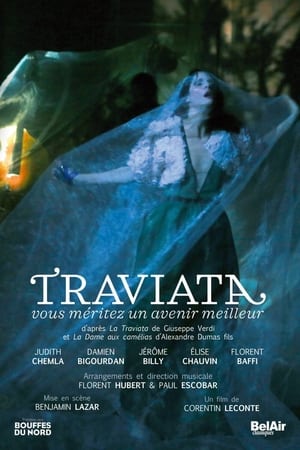
The audience is invited into Violetta’s privacy to have a close look at the fire to which she abandons herself among the guests of this musical and phantasmagorical celebration that blends theatre and opera, voices that speak and sing, and where the distinction between the instrumentalists and the singers becomes blurred, where Charles Baudelaire is seated next to Christophe Tarkos, and where the phantoms of this Paris in full industrial boom whose future we are living at present, sing and die.